Your ISO 27001 certification timeline includes months of preparation, not just the days spent with an auditor. DNV gives examples ranging from as little as three months for a small, simple organization to around 18 months for a large or complex one. Those are possible scenarios, not an industry average or a guaranteed deadline. Your starting point, scope, operating evidence, and certification body’s availability determine the actual schedule.
Table of Contents
This guide covers an organization’s first certification to ISO/IEC 27001:2022, rather than an individual’s training certificate. It explains the milestones and provides an illustrative six-month plan you can adapt before promising a date to a customer. DNV’s ISO/IEC 27001 certification guidance explains the factors behind its timing examples.
Separate the three date types · Copy the dependency record
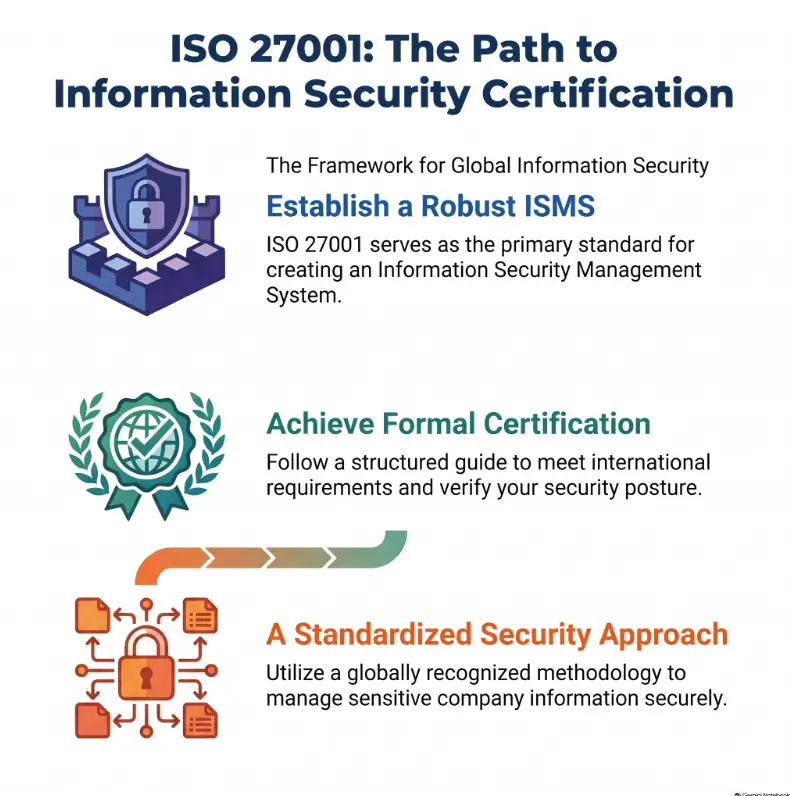
Separate preparation, auditing, and certificate issuance
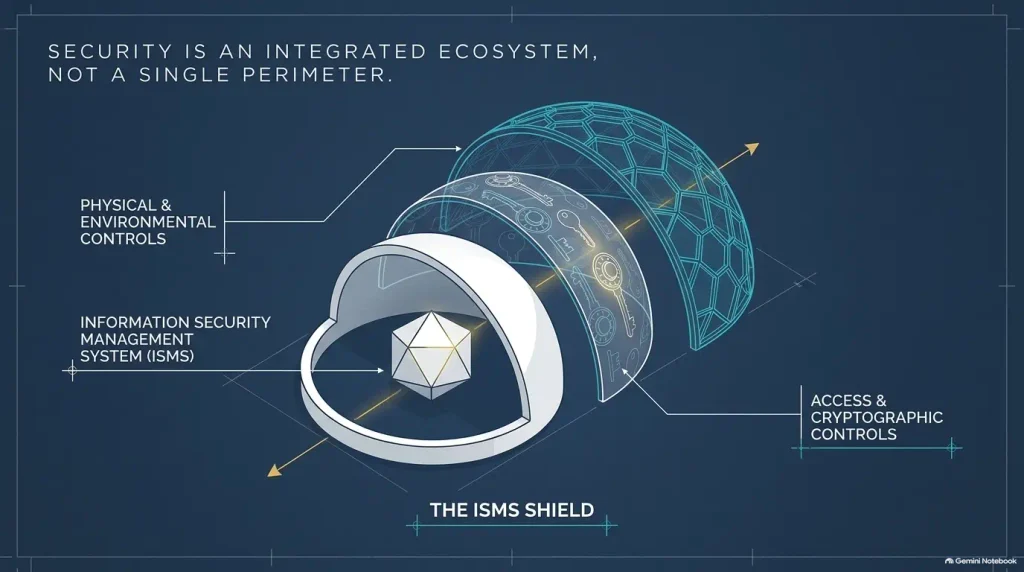
Your information security management system, or ISMS, is how your organization manages information security risks through people, processes, and technology. ISO/IEC 27001:2022 sets its requirements. Include the published 2024 climate action amendment when confirming the applicable requirements with your certification body.
Track three dates separately: when the ISMS should be ready, when the external audits are scheduled, and when a certificate might be issued. A quote for auditor-days describes audit effort; it does not tell you the elapsed time from project kickoff to certification. Likewise, a booked Stage 2 audit is not a confirmed certificate delivery date.
ISO develops standards but does not certify your organization. An independent certification body makes that decision. ISO’s certification guidance also explains accreditation, which provides independent recognition of a certification body’s competence. Check that a prospective provider’s accreditation covers ISO/IEC 27001 and that the proposed certificate scope meets your customer’s needs.
An illustrative six-month certification plan
The schedule below is an editorial planning example, not a measured average or an ISO requirement. It assumes a limited, stable scope, functioning security controls, available owners, and no major infrastructure replacement. Activities overlap. Confirm audit availability and evidence expectations early; if either conflicts with this plan, move the target date.
| Window | Main work | Readiness checkpoint |
|---|---|---|
| Month 1 | Confirm scope, ownership, gaps, and certification provider | Agreed boundary and funded work plan |
| Months 1–2 | Assess risks, select controls, and document the ISMS | Approved approach that matches actual operations |
| Months 2–4 | Operate controls and retain evidence | Records demonstrate implementation |
| Month 4 | Internal audit, management review, and corrective action | Results reviewed and material gaps addressed |
| Month 5 | Stage 1 and readiness follow-up | Proceed to Stage 2 as agreed with the auditor |
| Month 6 and contingency | Stage 2, findings response, and certification decision | Certificate issued following a positive decision |
For a hypothetical SaaS company, this could mean defining the production service and supporting teams in month one, operating the agreed processes from month two, and reviewing several months of records in month four. If an access-control redesign remains unfinished at that point, the readiness checkpoint has not been met. The calendar should reflect that dependency.
What to finish before the external audits
Define a scope that matches the business need
Identify the services, people, systems, locations, and dependencies covered by the ISMS. For planning purposes, put the proposed scope beside the customer’s request. A faster certificate for a boundary that excludes the service the customer buys may not solve the commercial problem.
Assign an executive sponsor and a working owner. Give engineering, IT, HR, procurement, and other relevant teams specific deliverables. An action such as “complete supplier reviews” needs an owner, a due date, and an agreed record of completion.
Connect risks, controls, and evidence
Assess information security risks, decide how to treat them, and prepare the Statement of Applicability. This document records necessary controls, their justification and implementation status, and reasons for excluding Annex A controls. Annex A is a reference set to consider, not an instruction to deploy every control identically. NQA’s ISO 27001 overview explains the relationship between risks and control selection.
Build evidence collection into the work. Useful records might include completed access reviews, training attendance, supplier decisions, recovery-test results, and tracked vulnerability remediation. Their relevance depends on your scope and selected controls. A policy describes intended behavior; a dated record helps demonstrate what happened.
For example, if your risk treatment includes stronger authentication, the MFA rollout guide can support implementation planning. For supplier work, the vendor security questionnaire template can help organize evidence, ownership, and follow-up decisions. Neither resource replaces your ISMS risk assessment.
Allow time to audit, review, and improve
Complete an internal audit and management review early enough to act on the results. DNV recommends these checks before the certification audit to establish that the ISMS operates effectively and remaining gaps are closed. Leave room for investigation, corrective work, and verification; scheduling the review immediately before an external audit leaves little recovery time.
ISO 27001 certification timeline: five readiness gates
A date becomes useful when the team can explain what must be true before it moves forward. The following gates are an editorial planning worksheet, not an additional ISO checklist or a certification-body approval. Use them to identify missing work before booking decisions become expensive.
| Gate | Useful evidence packet | Reason to revisit the date |
|---|---|---|
| Scope agreed | Approved boundary, service description, locations and dependencies; comparison with the customer request | A newly included service changes the people, systems or risks to assess |
| Risk treatment defined | Current risk assessment, treatment decisions, Statement of Applicability and accountable owners | Control selection is still detached from the risks or implementation status |
| Processes operating | Relevant dated records, exceptions and follow-up decisions from the actual scope | A policy exists but its process has not operated, or records cover the wrong service |
| Internal evaluation complete | Internal audit results, management review outputs and corrective-action evidence | Important findings remain unresolved or effectiveness has not been checked |
| External follow-up understood | Agreed audit arrangements, findings response responsibilities and decision-process expectations | The plan assumes immediate issuance or ignores follow-up work |
Keep a short index to the underlying records rather than copying sensitive evidence into a broad project dashboard. Each entry should identify the responsible owner, relevant period, scope and controlled location. Give auditors access through the agreed channel; an internal planning table is not a reason to publish access lists or confidential customer information.
A record can also reveal a failure. An access review that found an orphaned account is not useless evidence: retain the finding, removal decision and verification. Hiding the exception loses the trail that explains how the process identified and addressed the problem. Whether that evidence is sufficient for certification remains an assessment question.
Use the gates in a weekly review: what changed, which milestone is blocked, who can resolve it, and what decision is needed now? A green cell should point to evidence or an explicit decision. “The team is working on it” is progress commentary, not a completion criterion.
Do you need three months of operating evidence?
Ask your certification body what it requires and when. NQA’s published certification process requires a management system to have been fully operational for at least three months and to have undergone management review and a full internal audit cycle. That is a concrete provider requirement, not evidence that every organization must follow an identical ISO-mandated 90-day project.
Agree what “operational” means for your scope. Buying software or approving a policy does not establish that every relevant process began that day. Ask whether existing records are acceptable, which processes need further evidence, and what must be complete before each audit stage. Never backdate records to make a target appear achievable.
Stage 1, Stage 2, and the certification decision
Stage 1 examines documentation and readiness for the main assessment, including the implementation context needed to plan Stage 2. It is more than a document-upload appointment. Stage 2 examines implementation through evidence, interviews, and observation. DNV’s accredited certification process describes Stage 1 as typically occurring some weeks before Stage 2. Use the interval your certification body agrees for your circumstances.
Reserve time after Stage 2 for responding to findings and for the certification decision. DNV separates the auditor’s recommendation from its independent internal review. A favorable closing meeting therefore does not mean a certificate has already been issued.
Major nonconformities can prevent issuance until corrective action has been verified. NQA also identifies internal audit and management review nonconformities as barriers requiring sufficient evidence of effective implementation. Ask for the applicable response deadlines and verification process rather than assuming every finding can be resolved with an emailed action plan.
Shorten the timeline by removing dependencies
The most useful acceleration work is specific. Discuss provisional audit dates while preparing the ISMS. Get decisions on scope before collecting evidence across the wrong systems. Reserve time with managers before their reviews become urgent. Reuse existing records only after checking their scope, relevance, and quality.
Track unfinished work, the responsible owner, evidence needed and the milestone it blocks in a dependency register. For example, an incomplete restore test might block your readiness decision; an unavailable auditor might block Stage 2 even when the ISMS is ready. These problems need different actions.
Copy a dependency and date-commitment record
Use your actual scope and certification-body agreement. Mark a date proposed, booked or completed and keep the supporting reference beside it. An audit booking is different from a certification decision; leave unknown dates unresolved.
ISMS scope / business need / responsible owner:
Readiness target / status / conditions still open:
Stage 1 date / proposed or booked / provider reference:
Stage 2 date / proposed or booked / prerequisite evidence:
Findings response and verification steps / owner:
Certification decision or issuance estimate / provider confirmation:
Customer-requested date / approved communication owner:

Dependency or unfinished task:
Milestone it blocks:
Responsible owner and next action:
Evidence needed and person who accepts it:
Expected resolution date / confidence basis / unresolved assumption:
Date reviewed and resulting schedule change:
This is a blank editorial planning aid, not a certificate forecast. Update the record when scope, operating evidence, findings or auditor availability changes. Do not convert an illustrative month-by-month plan into a promised issuance date.
Software can organize evidence and reminders, while a consultant can help resolve implementation questions. Evaluate either against the actual bottleneck. Neither can supply missing operational history retroactively or guarantee a certification body’s decision.
Reforecast a delayed ISO 27001 certification timeline
Fictional planning example: Cedar Cloud has penciled in Stage 1 for week 16 and Stage 2 for week 20. At its week-12 review, the owner discovers that a privileged-access change is still being implemented and the planned internal audit has not examined that changed process. These week numbers illustrate dependencies; they are not recommended audit intervals.
The project owner first separates three issues. Engineering must finish the change and produce genuine operating records. The internal audit plan must cover the relevant implementation, with time to investigate and address findings. The certification body must confirm whether the proposed external dates remain appropriate and available. Adding two weeks to every task would not establish any of those facts.
The next plan therefore records an engineering completion target with its unresolved assumptions, a revised internal evaluation window, and external dates marked provisional pending provider discussion. Work that does not depend on the access change can continue: supplier follow-ups, scope clarification and arranging management availability. Work that does depend on it cannot be marked complete simply because a calendar invitation exists.
At the next review, the owner checks actual results and updates the forecast again. If implementation finishes but no suitable auditor slot is available, the bottleneck has changed from readiness to scheduling. If the external audit identifies a nonconformity, the remaining path includes the agreed corrective-action verification and certification decision. Do not reuse the old issuance estimate as if none of these events occurred.
Plan beyond the first certificate
NQA describes a three-year certification cycle maintained through annual surveillance and recertification. Keep process owners and recurring reviews in place after the initial project. Certification is an ongoing management commitment, so the operating calendar should continue beyond certificate delivery.
Before committing to a customer deadline, obtain a scoped proposal and confirm evidence expectations, Stage 1 and Stage 2 availability, findings follow-up, and certificate decision turnaround. Then compare those dates with your unfinished work. Promise a certification date only with a clear understanding of the dependencies and remaining uncertainty.
ISO 27001 certification timeline FAQ
Can we book audits while building the ISMS?
Discuss availability early, but identify which dates are provisional and which are confirmed. Ask about prerequisites, rescheduling terms and any deadlines in the agreement. Booking a date reserves an assessment opportunity; it does not establish readiness or guarantee certification.
Does buying compliance software start the evidence period?
No. Purchasing a tool does not show that the relevant processes are operating. Record when each process actually began, retain genuine evidence, and confirm the certification body’s expectations for your scope. Existing records may help where they are relevant and reliable.
Is the six-month plan a certification promise?
No. It is an illustrative sequence under stated assumptions. Use your actual starting point, remaining implementation, evidence expectations and provider availability to develop a forecast. Keep the customer-requested deadline separate from the date supported by those dependencies.
Is certification complete at the Stage 2 closing meeting?
Not necessarily. Follow-up on findings and the certification decision can remain after the audit. Track the outcome of those steps and actual certificate issuance separately. An auditor’s recommendation is not the issued certificate.
Reviewed November 16, 2026. Expanded the readiness gates, fictional delay example and date-status FAQ. Timing guidance was checked against the linked certification-body sources. Worksheets and examples are editorial planning aids; they do not report a certification audit performed by this site.