Beginner OSCP planning without the budget fog
OSCP Prep Budget Calculator
for Beginners
The OSCP budget problem rarely starts with the exam price. It starts in the quiet little expenses around it: one extra lab month, one retake, one better webcam, one paid practice platform, one weekend that disappears into enumeration notes and cold coffee. The sticker price is the lighthouse. Your real budget is the whole shoreline.
This guide is for beginners preparing for OSCP or PEN-200 who want a sober, practical number before buying. We will compare official purchase paths, practice labs, retake planning, hardware, note systems, time cost, and the small reliability items that matter on exam day. No hype confetti. No “just grind harder” sermon. Just a clear budget map.
The best OSCP prep budget is not always the cheapest. It is the one that protects your study time, reduces panic spending, and keeps you inside authorized labs where learning is legal, repeatable, and calm enough to become skill.
Compare the big fork
Course + Cert Bundle vs Learn One, without pretending every beginner studies at the same speed.
Plan the hidden costs
Retakes, hardware, notes, backups, internet, and time off work all get a seat at the table.
Decide when to buy
Use readiness checks so the lab clock starts after skill has warmed up, not before.
Goal: leave with a 15-minute OSCP budget snapshot that feels boring in the best possible way. 🧭
Snapshot
This article is for US and UK beginners budgeting for OSCP/PEN-200 before they buy. It helps you estimate official training cost, practice lab spend, retake reserve, hardware needs, and study-time cost so you can choose a purchase path without turning your bank account into a tiny incident response drill.
Table of Contents
Start With the Real OSCP Cost, Not the Sticker Price
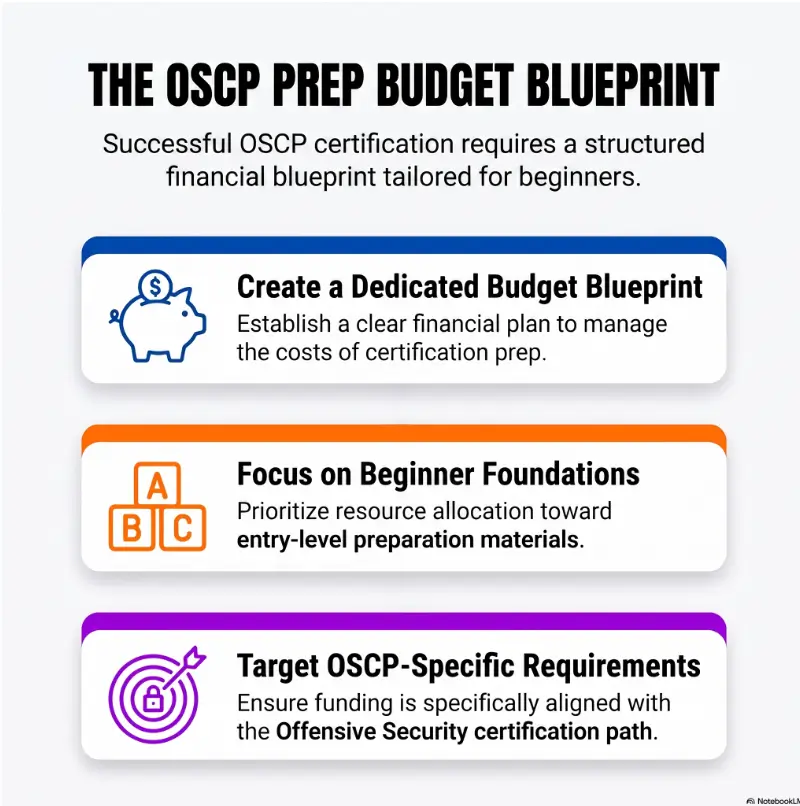
A realistic OSCP prep budget should include more than the official training purchase. The real number includes practice labs, retakes, hardware, note-taking tools, report-writing time, and your ability to keep studying when life throws a folding chair into the room.
As of this review, OffSec lists the Course + Cert Bundle at $1,749 as a one-time purchase with 90 days of access and one exam attempt. Learn One is listed at $2,749 per year with one year of access and two exam attempts for one 200-level or 300-level course. Regular exam retakes are listed by OffSec support resources at $249 after included attempts are used.
Those numbers matter, but beginners should treat them as starting points, not final totals. Prices, product names, exam names, included attempts, and validity windows can change, so verify the official page before you pay. Learn One is an annual subscription that auto-renews unless cancelled; include renewal dates, applicable taxes, and currency conversion in your cash budget. Keep opportunity cost separate from cash spending, and do not add a paid retake twice if your package already includes the attempt you plan to use.
Before you act
This guide is budgeting education, not career, legal, exam, or purchasing advice. Use it to compare costs and reduce surprises. Always confirm official OffSec pricing, exam rules, retake policy, proctoring requirements, and allowed tools before scheduling. Keep all practice inside authorized labs, your own systems, or written-permission environments.
The Official Purchase Paths Beginners Actually Compare
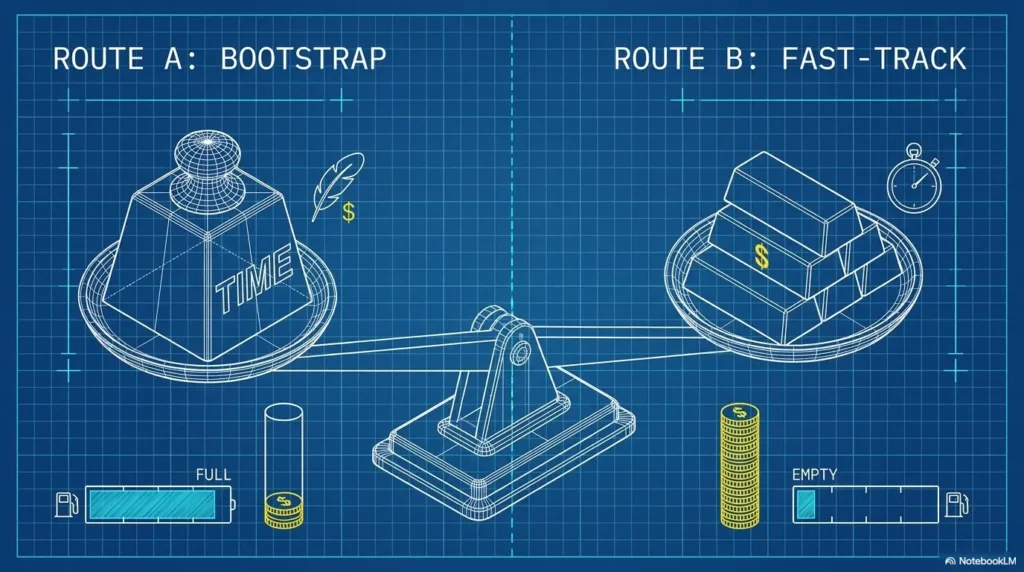
Most beginners compare two OSCP prep routes first: the Course + Cert Bundle and Learn One. The Course + Cert Bundle is the lower upfront official path, but it gives you a shorter lab window and fewer included attempts. Learn One costs more upfront, but the longer access window and second attempt can lower pressure for slower, busier, or career-changing learners.
There are other OffSec products, including standalone exam options and broader subscriptions, but first-time OSCP beginners usually need to answer one plain question: “Do I need more time, or do I need the lowest official entry price?”
Course + Cert Bundle vs Learn One: The Budget Fork
The bundle is a clean choice for someone who already has Linux comfort, basic networking, web fundamentals, and a consistent weekly study block. It is less forgiving for a beginner who still loses an evening to basic routing confusion or can only study in irregular scraps.
Learn One is not automatically “better.” It is better when time risk is your biggest risk. If you work full-time, have family obligations, are switching careers, or learn best by circling a topic several times, the longer access window may be worth more than the difference in price.
| Purchase path | Best fit | Main budget risk | Beginner note |
|---|---|---|---|
| Course + Cert Bundle | Learners with strong fundamentals and disciplined study time | Shorter access window, one included attempt | Cheaper upfront, but less room for drift |
| Learn One | Busy adults, career switchers, cautious first-timers | Higher upfront cost | More time can reduce retake and panic-study pressure |
| Standalone exam route | Experienced candidates who do not need training | Training gaps discovered too late | Usually not the friendliest path for true beginners |
The Retake Line Item Most Beginners Pretend Is Optional
A retake reserve is not a pessimism jar. It is pressure control. If your entire plan collapses financially after one failed attempt, you are not budgeting for OSCP. You are wagering on a perfect first run while sleep-deprived.
Budgeting one retake does not mean you expect to fail. It means you are giving yourself permission to learn from the first attempt if needed. That emotional difference can show up in better decisions during the exam.
What “Included” Does and Does Not Mean
Included lab access does not include your laptop upgrade, your quiet room, your backup internet, your report practice, your study notes, your coffee budget, or the lost Saturday you spend rebuilding a broken virtual machine. These are not glamorous costs, but they keep the machine humming.
Before buying, read the official exam guide and proctoring requirements. Tiny technical surprises become large emotional bills when discovered the night before the exam.
The Beginner Budget Calculator: 7 Numbers to Enter Before You Buy
Your OSCP prep budget calculator can be simple. You do not need a spreadsheet with 27 tabs and a tiny dragon living in column Q. You need seven numbers and honest assumptions.
Use this formula: cash subtotal = official training + extra practice labs + additional paid-attempt reserve + hardware/workspace + tools/backups. Cash budget = subtotal + a stated cash buffer. Record study-time opportunity cost separately.
Key takeaway
If you only budget the official course price, you are undercounting. A beginner-friendly OSCP prep budget should include at least one retake reserve, a practice-lab plan, and a reliability check for your exam setup.
Training Package Cost
Start with the official path you are most likely to buy. For many beginners, that means comparing the Course + Cert Bundle with Learn One. Do not pick based only on price. Pick based on time, attempts, and how much structure you need.
If you are still doing basic Linux and networking prep, your best first budget move may be to delay the official purchase and use free or low-cost practice until your fundamentals stop wobbling.
Practice Lab Cost
Practice labs can be free, low-cost, or paid monthly. The trick is not to subscribe to five platforms and then confuse platform-hopping with progress. Choose one main practice path before official access, then add paid labs only when they solve a specific gap.
For example, a beginner who cannot finish basic enumeration without a walkthrough may benefit from free vulnerable machines and structured notes first. A learner who has fundamentals but needs OSCP-style repetition may justify a paid lab month.
Retake Reserve
Add at least one retake reserve if your package includes only one attempt or if your confidence is still uneven. Even if you never use it, the money changes the feel of the exam. Panic is expensive. Calm has a surprisingly practical ROI.
Hardware, Tools, Time, and Buffer
Hardware and workspace costs vary wildly. Some learners are fine with an existing laptop, a decent webcam, and one monitor. Others need more RAM, storage, an external monitor, a comfortable chair, or a quieter setup. Do not buy gear as a substitute for practice, but do not ignore obvious friction either.
Then add note-taking, backups, report-writing tools, and time cost. A freelancer should count lost billable hours. A full-time worker may count PTO or unpaid days. A parent may count childcare or protected weekend time. The calendar is part of the calculator.
| Calculator line | Lean estimate | Safer estimate | What to check |
|---|---|---|---|
| Official training | Lower official path | Longer-access path | Current OffSec price and included attempts |
| Practice labs | Mostly free resources | One paid platform at a time | Does it match your current weakness? |
| Retake reserve | One retake if possible | One retake plus time buffer | Current retake price and validity |
| Hardware | Existing machine | RAM, monitor, webcam, backup drive | Meets exam and lab requirements |
| Tools and backups | Free notes and local backups | Cloud sync, templates, storage | Can you recover after a crash? |
| Time cost | Weekends and evenings | PTO, childcare, reduced freelance hours | What time will study replace? |
| Emergency buffer | 10% | 20% | Life doing life things |
Show me the nerdy details
A simple calculator can use this structure: Base Cost = official package + planned practice labs + one retake reserve. Real Cost = Base Cost + hardware upgrades + tool costs + time cost. Safer Cost = Real Cost × 1.2. That final 20% buffer covers the weird stuff: broken webcam, extra lab month, backup internet, family schedule change, or a study reset after burnout.
For time cost, multiply the hours you will realistically remove from paid work by your hourly rate. Even if you do not include it in your cash budget, it helps you compare the “cheap but rushed” path with the “expensive but calmer” path.
Who This Is For, and Who Should Wait
OSCP attracts beginners because it feels concrete. There is a course. There is an exam. There is a badge at the end. That structure is useful, but it can also pull people into buying before they are ready.
Your budget decision should start with readiness, not ambition. Ambition is the spark. Readiness is the dry wood.
Best Fit: The Beginner With Linux, Networking, and Persistence
You may be ready to budget seriously for OSCP if you can use Linux comfortably, understand basic TCP/IP, read simple web requests, troubleshoot virtual machines, and stay with a problem for several hours without needing constant hints.
You do not need to be brilliant. You do need to be stubborn in an organized way. The best beginner is not the fastest learner. It is the learner who can document, test, fail, adjust, and keep a clean trail of what happened.
Not Ideal Yet: The Learner Still Fighting Basic TCP/IP
If subnetting, ports, DNS, Linux permissions, and basic web requests still feel like fog, buying official access may start the clock too soon. That does not mean OSCP is out of reach. It means your cheapest move is fundamentals first.
A structured path like networking basics for hackers, simple vulnerable machines, and a small home lab can save hundreds by keeping official access for the period when it produces the most value.
Employer-Funded Candidates: Your Calculator Needs Different Math
If your employer pays, your personal cash risk drops, but your planning risk remains. You still need time, hardware, report practice, and a retake plan. You also need to understand company reimbursement rules before buying anything.
Ask whether the employer covers retakes, paid labs, books, PTO, and renewals or only the official course purchase. A company training budget can look generous until you discover it only covers the first invoice.
Career Switchers: Budget for Runway, Not Just Registration
Career switchers need a wider budget lens. OSCP prep may be one part of a larger transition that includes foundational study, portfolio projects, home lab writing, mock interviews, resume rewrites, and months of job searching.
That does not make OSCP a bad investment. It simply means the certification should sit inside a runway plan. A badge without a practice trail can feel oddly lonely in an interview.
The 90-Day Trap: Why Cheap Can Become Expensive
The 90-day path can be a good choice. It can also become expensive if the learner buys too early, loses the first month to setup, spends the second month relearning fundamentals, and enters the third month tired, behind, and browsing retake policy at midnight.
Cheap access is only cheap when you are ready to use it. Otherwise, the lab clock becomes a metronome with teeth.
The Lab Clock Starts Before Your Confidence Does
Official access has a time window. Your confidence does not care about that window. It arrives when repetition has done its quiet work.
If you spend the first weeks fixing virtualization, learning note structure, and figuring out basic enumeration, you are not wasting time morally, but you are spending expensive official days on pre-course friction.
Here’s What No One Tells You
The most dangerous phrase in beginner OSCP budgeting is “I’ll just cram.” Cramming may get you through a multiple-choice exam. OSCP-style work punishes shallow familiarity. You need method under fatigue, not just recognition under good lighting.
A rushed learner often buys more things: more platforms, more courses, more tools, more templates, more “last chance” resources. The budget leak does not look like one big mistake. It looks like six small acts of desperation wearing different hats.
When Learn One May Cost Less Than a Rushed Bundle
Learn One can be the cheaper real-world path if it prevents wasted lab time, reduces retake pressure, and gives a busy learner enough calendar space to practice properly. This is especially true for people with full-time jobs, caregiving responsibilities, health constraints, or inconsistent study windows.
The question is not “Which product costs less?” The better question is “Which product makes my likely behavior cheaper?”
Key takeaway
The lowest official price is not always the lowest final cost. If your schedule is unpredictable, a longer access window may protect your budget better than a cheaper, tighter clock.
Build Three Budget Scenarios: Lean, Safe, and Serious
A single budget number can fool you. Build three scenarios instead: lean, safe, and serious. This gives you a decision range rather than a magic number carved into digital stone.
Think of the three budgets as weather forecasts. Lean is blue sky. Safe includes rain. Serious packs a coat, snacks, and a power bank because it has met real life before.
Lean Budget: Bare Minimum, High Discipline Required
The lean OSCP budget works best for learners with strong fundamentals, reliable hardware, stable internet, and a disciplined plan. It limits paid extras and treats free practice resources as the warm-up phase.
This path is not “bad.” It is simply fragile. If your schedule slips or your first attempt fails, the lean plan needs a backup.
Safe Budget: The Beginner-Friendly Middle Lane
The safe budget includes one official path, one carefully chosen practice platform or lab period, one retake reserve, a basic hardware check, and a 20% surprise buffer. This is the best fit for many first-time candidates.
It is not luxurious. It is just less brittle. A safe budget assumes you are human, not a study robot with perfect posture and infinite weekends.
Serious Budget: For Career Changers Who Need Fewer Surprises
The serious budget is for people using OSCP as part of a career transition. It may include longer official access, more structured practice, report template preparation, hardware upgrades, mock exam days, and job-search support after the exam.
This path costs more, but it may reduce waste if the certification is part of a broader move into cybersecurity. For a career switcher, the real expense is not only the exam. It is the time between “I want this” and “I can prove I can do the work.”
| Scenario | Who it fits | What it includes | What can go wrong |
|---|---|---|---|
| Lean | Prepared beginners with stable time | Official path, free resources, minimal extras | One delay can wreck the timeline |
| Safe | Most first-time OSCP learners | Official path, one practice platform, retake reserve, 20% buffer | Requires saying no to shiny extras |
| Serious | Career switchers and high-stakes learners | Longer access, structured labs, hardware comfort, reporting practice, runway planning | Higher upfront cost requires clear goals |
The One-Number Rule: Your “Do Not Exceed” Ceiling
Before buying, write one number at the top of your budget: the amount you will not exceed without waiting 48 hours and reviewing your plan. This prevents panic purchases when a lab feels impossible or an exam date gets too close.
Your ceiling is not a punishment. It is a guardrail. OSCP prep already asks for enough discipline. Let the budget do some of the discipline for you.
OSCP Budget Framework
Seven inputs. Three scenarios. One calm buy date.
Official path
Free or paid
Pressure buffer
Exam-ready setup
Proof and reports
PTO or lost hours
10% to 20%
Lowest cash, highest discipline
Best beginner balance
Career-change runway
Don’t Buy Yet: Readiness Checks That Save Hundreds
The most underrated budget move is waiting until the purchase will actually work for you. Waiting is not quitting. Sometimes it is the difference between paying for training and paying for anxiety with a login.
Use these checks before starting official access. If several answers are “not yet,” your next best spend may be free practice, a home lab, or a focused fundamentals plan.
Can You Enumerate a Box Without a Walkthrough?
You do not need to solve every machine alone. You do need to begin intelligently. That means identifying open services, organizing findings, making reasonable next guesses, and knowing when to change direction.
If every box becomes a walkthrough within 20 minutes, spend more time with beginner machines and a repeatable process. A guide like an OSCP practical prep hub can help you build the path before the official timer starts.
Can You Write a Clean Report Under Fatigue?
OSCP is not only about getting shells. Documentation matters. If your notes are scattered across screenshots, browser tabs, and one mysterious text file named “final-final-real.txt,” fix that before buying.
Practice writing short reports after lab machines. Include scope, findings, evidence, reproduction steps, impact, and remediation language. Your future tired self will want a tidy breadcrumb trail.
Can You Manage Active Directory Basics Without Panic-Googling?
Beginners often underestimate Active Directory. You do not need to be an enterprise wizard, but you should understand common AD terms, authentication flow, users, groups, shares, and how to take notes during an AD-style chain.
If AD feels like a locked cathedral with no doors, build fundamentals before spending official access. A little preparation here can prevent a lot of expensive staring.
Let’s Be Honest…
If your study plan depends on a future version of you who wakes up at 5 a.m., never gets sick, never procrastinates, never breaks a VM, and never has family obligations, that plan is fictional. Charming, perhaps. But fictional.
Build the budget for the person you are, not the superhero you become in spreadsheet mode.
Readiness checklist
- I can run a basic Linux workflow without constant setup issues.
- I understand ports, services, DNS, HTTP basics, and simple routing.
- I can document one lab machine from start to finish.
- I can explain what I tried, not just copy commands that worked.
- I have a weekly study block I can protect for at least 8 to 12 weeks.
- I know which official purchase path matches my schedule and risk tolerance.
Common Mistakes That Blow Up an OSCP Prep Budget
Most blown budgets do not explode. They seep. A subscription here, a tool there, a retake you did not plan, a rushed exam date, a laptop upgrade bought in frustration. Suddenly the “simple certification budget” has grown antlers.
Mistake 1: Buying Official Access Before Building Fundamentals
Official access is valuable when you can use it deeply. If you are still learning basic Linux, networking, and web concepts, start with fundamentals and authorized beginner labs. Your future budget will thank you with a small bow.
Mistake 2: Forgetting the Retake Buffer
Even strong learners can fail a practical exam. Lack of sleep, weak documentation, one stubborn target, or technical issues can change the outcome. A retake buffer makes failure a recoverable event rather than a financial cliff.
Mistake 3: Paying for Too Many Platforms at Once
Multiple platforms can be useful over time. Multiple platforms at the same time can become a buffet of guilt. Pick one main practice platform, define the gap it solves, and review progress every two weeks.
Mistake 4: Treating Tools as Progress
A new note app, terminal theme, screenshot tool, or lab dashboard can feel productive. Sometimes it is. Sometimes it is just rearranging pencils before the exam.
Buy tools only after you can name the friction. “My screenshots are hard to trace in reports” is a real reason. “This dashboard looks serious” is a small siren wearing a hoodie.
Mistake 5: Ignoring Burnout as a Financial Risk
Burnout costs money because it causes breaks, restarts, extra subscriptions, rushed retakes, and poor decisions. Budget rest like a serious learner. A tired brain can turn a solvable box into a haunted wardrobe.
| Common mistake | Why it costs money | Safer alternative |
|---|---|---|
| Buying too early | Official lab time gets spent on basics | Finish a fundamentals checklist first |
| No retake reserve | One failed attempt becomes a crisis | Budget one retake before scheduling |
| Too many platforms | Subscription overlap without depth | Use one main paid platform at a time |
| Tool shopping | Gear replaces practice | Buy only to solve named friction |
| Ignoring burnout | Lost weeks and rushed rescheduling | Plan rest, review days, and lighter sessions |
The Hidden Costs: Small Purchases That Add Up Like Static
Hidden costs are not always bad. Some are cheap insurance against chaos. The danger is not knowing they exist until exam week.
Your goal is not to build a luxury command center. Your goal is to remove the small frictions that steal focus during practice and exam day.
VPN Stability, Backup Internet, and Exam-Day Reliability
Practical exams depend on connectivity. A backup internet option, tested VPN workflow, power plan, and stable machine can matter more than another course video. Read the official proctored exam requirements well before exam week.
External Monitor, Keyboard, Chair, and Home-Lab Comfort
Comfort is not vanity when you study for long sessions. A basic external monitor can make notes, terminal output, and browser research easier to manage. A decent chair can reduce the body-tax of multi-hour labs.
Still, do not turn OSCP prep into a desk makeover project. Upgrade only what repeatedly slows you down.
Cloud Notes, Screenshots, Storage, and Backups
Your note system should help you reconstruct what happened. That means consistent host pages, screenshots with useful filenames, timestamps, commands, findings, and report-ready evidence.
A practical guide to note-taking systems for pentesting can be more valuable than another random lab subscription if your evidence trail is messy.
Books and Courses: Useful, but Only After a Gap Is Named
Books and courses can be excellent. They can also become a pile of unopened tabs. Before buying another resource, write the gap in one sentence: “I need better privilege escalation pattern recognition,” or “I need report structure practice.”
If you cannot name the gap, wait. The wallet should not be the first troubleshooting tool.
Key takeaway
Spend on reliability before decoration. Stable internet, backups, readable notes, and a working exam setup are more budget-relevant than a perfect terminal theme.
Practice Labs: Where Beginners Should Spend Before OffSec Access
Practice labs are where beginners can make the official purchase more efficient. The best lab plan does not ask, “How many boxes can I collect?” It asks, “Which skill is weak, and what practice will make it boring?”
Boring is a compliment in OSCP prep. A boring enumeration routine means your brain can spend energy on problem-solving rather than remembering where you put the command output.
The “Skill Before Clock” Approach
Before official access, build repeatable skills with authorized practice environments. Work on enumeration, web basics, Linux privilege escalation concepts, Windows basics, note-taking, and report summaries.
A free path can be powerful if you treat it seriously. Read how to prepare for OSCP for free if your current priority is skill-building before a major purchase.
When Free Boxes Are Enough
Free boxes are enough when your main problem is basic workflow. If you are still learning how to scan, organize findings, read service clues, and write a short report, paying more will not automatically make the lesson land faster.
Use free boxes to practice the same routine repeatedly. Do not chase novelty too early. Repetition is where methodology grows roots.
When Paid Labs Become Worth It
Paid labs become worth considering when you have a defined weakness and need volume, structure, or OSCP-like pacing. They can also help when you need more realistic report practice or a smoother path than scattered free resources.
The key is to buy one focused learning environment, use it consistently, and cancel or pause when the goal is met. Paid practice should feel like a workshop, not a museum of unfinished machines.
How to Avoid Platform-Hopping Tax
Platform-hopping tax is the money and attention lost when you keep switching study environments. Every new platform has its own interface, labels, difficulty style, and social proof. The switch feels fresh, but it often resets momentum.
Set a simple rule: one main platform for 30 days, one measurable goal, one review date. If it is working, continue. If it is not, change for a reason, not a mood.
| Practice option | Best for | Cost logic | Warning sign |
|---|---|---|---|
| Free vulnerable machines | Fundamentals, routine, confidence | Low cash cost, high self-discipline | You only follow walkthroughs |
| One paid lab platform | Targeted repetition and structure | Worth it when tied to a named gap | You subscribe without a schedule |
| Official labs | Course-aligned practice and exam preparation | Most valuable after fundamentals are stable | You spend early days on setup issues |
| Study group | Accountability and discussion | Often low cost, high consistency value | The group becomes answer-sharing instead of learning |
Retake Planning: The Budget Line That Protects Your Confidence
Retake planning is not a negative mindset. It is how adults plan for difficult things. Climbers bring extra rope. Drivers carry spare tires. OSCP candidates budget for the possibility that the first attempt teaches them exactly what the second attempt needs.
Why Retake Money Reduces Exam Pressure
If you know a retake is financially possible, the exam becomes a challenge rather than a trapdoor. You may still feel nervous, but the fear has less sharp metal in it.
This matters because OSCP-style exams require judgment. Panic leads to tunnel vision, poor note-taking, and stubborn rabbit holes. A retake reserve can help you make cleaner decisions under pressure.
How Many Attempts to Budget for as a Beginner
Many beginners should budget for at least one additional attempt unless they are buying a path that already includes two attempts and they have strong preparation. Budgeting more than one retake may be sensible for a career changer, but it should come with a study improvement plan, not just a bigger wallet.
Also consider cooling-off periods and attempt validity windows. A retake is not only a fee. It is also calendar planning.
The Emotional Math of a Failed First Attempt
A failed first attempt can feel personal. It usually is not. It is data under pressure: time management, reporting, enumeration, AD flow, privilege escalation, fatigue, or exam-day reliability.
If you budgeted for a retake, you can turn that data into a plan. If you did not, you may spend the next week doing financial triage instead of technical review.
The Quiet Win: Paying for Calm
The best budget does not eliminate nerves. It makes nerves manageable. It gives you a chair, a plan, a backup connection, a retake reserve, and enough study time to avoid turning exam day into a tiny thunderstorm.
Key takeaway
A retake reserve is not a prediction of failure. It is a way to keep one imperfect attempt from becoming a financial and emotional emergency.
Illustrative Example: Two Beginners, Two Different “Cheapest” Choices
Maya works help desk, studies four nights a week, and has already completed several beginner labs without walkthroughs. Her laptop is stable, her notes are clean, and she has a quiet exam room. For her, the lower-cost official bundle may be realistic because she is ready to use the shorter access window intensely.
Dan is a career switcher with two kids, a rotating work schedule, and shaky Linux confidence. He can study, but not predictably. The cheaper bundle looks tempting, but the lab clock may bite him. For Dan, a longer access path, fundamentals first, and one retake reserve may be the lower-stress total cost.
Neither person is “more serious.” Their calendars are different. Budgeting well means respecting the calendar you actually have.
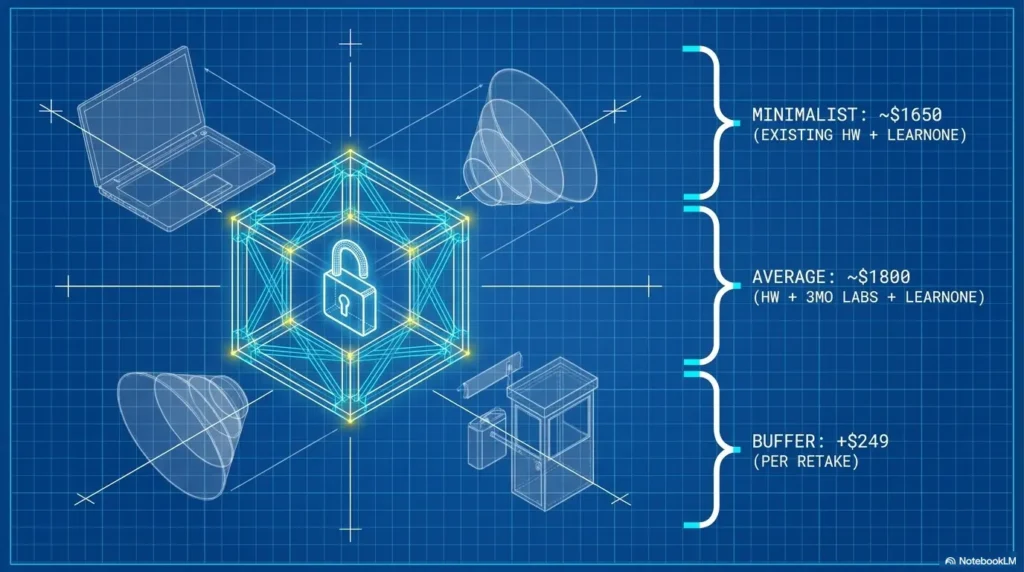
FAQ
How Much Should a Beginner Budget for OSCP Prep?
A beginner should budget for the official training path, practice labs, at least one retake reserve if possible, hardware or setup needs, note-taking and backup tools, and a 10% to 20% surprise buffer. The official price is only the starting number.
Is Learn One Worth It for a First-Time OSCP Student?
Learn One may be worth it for first-time students who need more time, have busy schedules, want two included attempts, or are not ready for a compressed study period. It may be less necessary for prepared learners with strong fundamentals and a protected study schedule.
Should I Buy the Course + Cert Bundle or Wait?
Buy the Course + Cert Bundle when you can use the access window well. Wait if you still need basic Linux, networking, web, virtualization, note-taking, or report-writing practice. Waiting can be the cheaper choice if it prevents wasted official lab time.
How Much Should I Set Aside for an OSCP Retake?
OffSec support resources list regular exam retakes at $249 as of this review, but always confirm the current price and validity rules before budgeting. Also consider cooling-off periods and whether your original purchase already includes one or two attempts.
Can I Prepare for OSCP Without Paid Practice Labs?
You can build a strong foundation with free authorized resources, vulnerable machines, documentation practice, and a home lab. Paid labs become more useful when you know the exact skill gap you are trying to close.
What Hardware Do I Need for OSCP Prep?
You need a machine that can run your host system, a local virtual machine setup, browser, notes, and exam proctoring requirements without constant crashes. Check OffSec’s current proctored exam requirements before scheduling, especially for webcam, internet, virtualization, and operating system rules.
How Long Should I Study Before Starting Official Lab Access?
There is no universal number. A better readiness test is whether you can complete beginner labs, write clean notes, explain your process, and troubleshoot basic setup issues. If those still feel chaotic, study fundamentals before activating a timed official window.
Is OSCP Worth the Cost for Entry-Level Cybersecurity Jobs?
OSCP can be valuable, especially for hands-on security roles, but it is not a guaranteed job ticket. Entry-level hiring also depends on experience, portfolio evidence, communication, networking, location, internships, help desk or sysadmin background, and interview performance.
Next Step: Build Your 15-Minute OSCP Budget Snapshot
Do this before you buy anything: open a blank note and write seven lines. Training package. Practice labs. Retake reserve. Hardware. Tools and backups. Time cost. Emergency buffer.
Then fill each line with your best current estimate. Do not chase perfection. The first draft should feel a little rough, like a pencil sketch before ink.
- Write your current skill level in one honest sentence.
- Pick one official purchase path to compare first.
- Add one retake reserve if your plan would feel fragile without it.
- Add hardware, notes, backup, and internet reliability costs.
- Add your time cost, especially if you freelance or need PTO.
- Add a 20% surprise buffer.
- Set a “do not exceed” ceiling before you schedule the exam.
If the final number makes you panic, do not buy today. Reduce risk first. Use free practice, fix your setup, clean your notes, and revisit the budget. If the number feels boring, stable, and survivable, that is a good sign. Boring budgets are beautiful little engines.
For your next practical step, read a focused planning guide like an OSCP roadmap, then compare it with your budget snapshot. The right buy date is not the earliest date. It is the date when your money, calendar, and readiness finally sit at the same table.
Final 15-minute action
Create your lean, safe, and serious OSCP prep budgets today. If the safe budget feels possible without drama, you are much closer to a smart purchase decision than most beginners staring only at the sticker price.
Last reviewed: 2026-07
Technical guidance updated: 2026-10-13. Clarified subscription renewal and cash-budget assumptions, avoided double-counting included attempts, and repaired table-of-contents links.
Worked budget: cash reserve and time cost are different
Illustrative USD worksheet: Bundle $1,749 + extra labs $100 + one additional retake reserve $249 + hardware $0 + tools/backups $20 = $2,118 before tax. A chosen 10% cash buffer adds $211.80, giving a cash budget of $2,329.80. The buffer percentage is your planning assumption, not an OffSec requirement.
For Learn One, using its two included primary attempts means no additional paid-attempt reserve for a two-attempt plan. With the same $100 labs and $20 tools: $2,749 + $100 + $0 + $0 + $20 = $2,869; with 10% buffer, $3,155.90. Do not charge an included attempt again.
If you value 200 study hours at $20/hour, record $4,000 as opportunity cost, separate from the cash budget. Only put actual lost earnings, childcare, or unpaid leave into cash lines when incurred, and avoid counting them again in time cost. Prices were checked against OffSec’s individual pricing on 16 October 2026; add applicable tax and exchange charges using the checkout and your payment terms.
Editorial review: 16 October 2026. Examples are illustrative; this review does not represent an audit or live control test.