PCI DSS script monitoring tools now have a fairly specific job: help organizations discover and manage scripts running on payment pages, document why those scripts are authorized, detect unauthorized changes, and produce records for review by the people responsible for PCI validation.
Table of Contents
Copy the proof-of-fit comparison record.
For most e-commerce teams, the real buying decision is not simply “Which product supports PCI DSS?” Most of the serious products say they do. The harder questions are how they observe the browser, whether they only alert or can also block suspicious behavior, how much engineering work deployment requires, and whether the resulting evidence is usable by the people responsible for PCI validation.
This comparison looks at five current options: Source Defense, Jscrambler, Reflectiz, Feroot PaymentGuard, and Akamai Client-Side Protection & Compliance. The focus is PCI DSS v4.0.1 Requirements 6.4.3 and 11.6.1 rather than broader web application security.
What PCI DSS actually requires from payment-page script controls
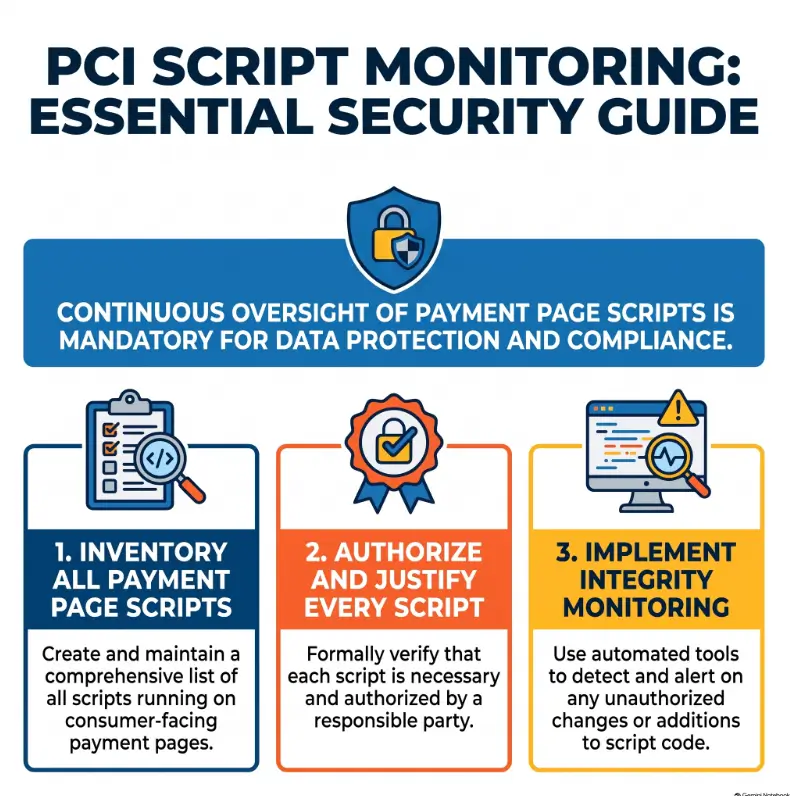
The PCI Security Standards Council’s payment-page and e-skimming guidance explains that Requirements 6.4.3 and 11.6.1 are intended to address browser-side risks that can expose card data during e-commerce transactions.
Requirement 6.4.3 focuses on scripts loaded and executed in the consumer’s browser. In practical terms, an organization needs a method to confirm that scripts are authorized, assure their integrity, and maintain an inventory with a written business or technical justification for why each script is necessary.
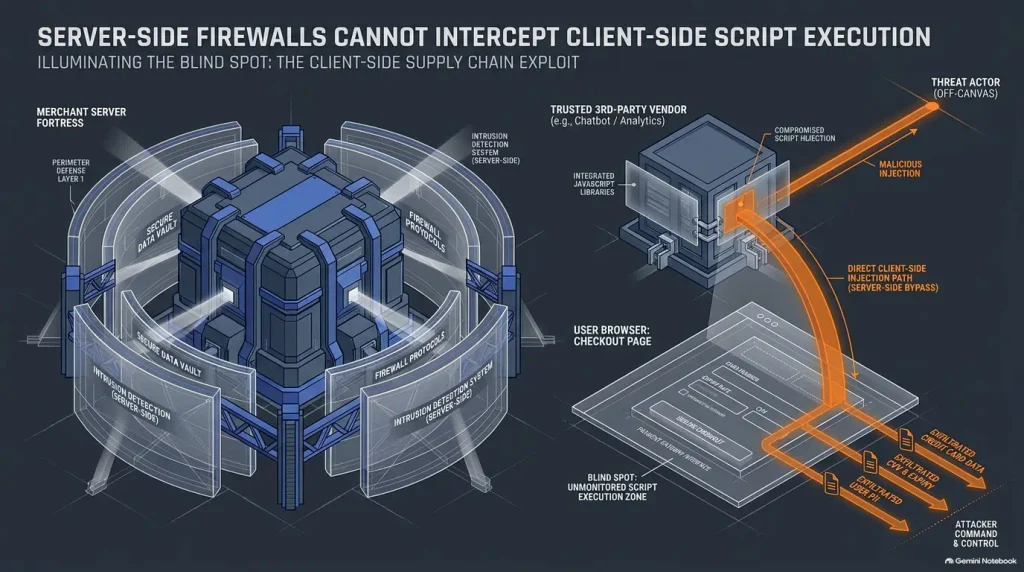
Requirement 11.6.1 tackles a different problem: detecting unauthorized changes or tampering affecting security-impacting HTTP headers and payment-page script content as received by the consumer browser. Monitoring therefore needs to catch more than a new filename appearing in a deployment repository. Browser-visible changes matter.
These future-dated requirements became effective on March 31, 2025. That date matters when reading older vendor material that still describes them as upcoming requirements.
A wrinkle for SAQ A merchants
Do not buy a monitoring platform before confirming your actual PCI validation path.
PCI SSC changed SAQ A for e-commerce merchants in 2025. Requirements 6.4.3 and 11.6.1 were removed as individually reported requirements from SAQ A, while a new eligibility criterion requires applicable merchants to confirm that their site is not susceptible to script attacks that could affect the e-commerce system.
The PCI SSC guidance on the SAQ A eligibility criterion says merchants can use techniques such as those described in 6.4.3 and 11.6.1, or in appropriate circumstances obtain confirmation from the PCI DSS-compliant payment provider supplying an embedded payment page or form.
The FAQ limits this particular criterion to merchant pages embedding provider payment forms; redirect-only checkout and fully outsourced payment links are excluded from it. Other applicable SAQ A requirements still apply. That distinction can change the economics considerably. A merchant using a fully outsourced payment flow may have a different problem from a retailer operating complex checkout pages containing tag managers, analytics, personalization scripts, fraud tooling, chat widgets, and several levels of third-party dependencies.
PCI DSS script monitoring tools compared at a glance
Comparison method — reviewed 23 October 2026: This is a review of public vendor documentation, not a hands-on benchmark or a compliance assessment. The five candidates are examples, not an exhaustive market list or a ranking. Features, deployment components and evidence exports must be confirmed for the specific licensed plan and payment flow.
On a small screen, scroll the table horizontally to read all columns. Keyboard users can focus the table region and use the arrow keys.
| Candidate | Advertised approach | Ask the vendor to demonstrate |
|---|---|---|
| Source Defense | PCI workflow and client-side security offerings, with plan-dependent limits and protection features. | Which selected product and tier includes the required retention, blocking, audit logs and integrations? Export a sample record. |
| Jscrambler | Script inventory, authorization, behavioral monitoring, reporting and protection capabilities; its PCI page describes agentless deployment. | Which components observe and enforce this checkout flow? Show an authorized change, an alert and any licensed blocking mode. |
| Reflectiz | Remote, agentless PCI monitoring with script justification, header-change alerts and evidence workflows. | How are authenticated, consent-dependent and geographically variable states reached and documented? Identify any coverage gaps. |
| Feroot PaymentGuard | Payment-page inventory, change history, alerts and evidence; optional runtime policy enforcement. | Separate detection from optional enforcement. Show alert delivery, history export and safe recovery from an incorrect policy. |
| Akamai Client-Side Protection & Compliance | Browser monitoring using a lightweight page script; advertised as CDN agnostic, including off-Akamai sites. | Show deployment on the actual CDN and application, monitored headers, script decisions and exported evidence. |
“Advertised” describes the vendor’s documentation. It does not mean these capabilities were independently tested here. A product subscription does not establish the merchant’s complete PCI DSS compliance.
The table should be treated as a shortlist generator, not a substitute for a proof of concept. Client-side security products can use substantially different architectures while presenting similar-looking PCI checkboxes.
1. Source Defense
Source Defense divides its offering between PCI-focused compliance capabilities and broader client-side security and protection. Its PCI functionality includes payment-page script inventory, authorization and justification workflows, behavior monitoring, security-header change alerts, and assessment-oriented evidence for Requirements 6.4.3 and 11.6.1.
The broader Source Defense platform goes further into prevention. Its Protect product uses browser-side controls intended to restrict malicious script behavior and data access rather than merely raising an alert after suspicious activity is observed.
One notable distinction is pricing transparency. On 23 October 2026, Source Defense’s public pricing page displayed an Essentials plan from $98 per month when billed annually and a Standard plan from $197 per month when billed annually in the configuration shown. The plans carry limits involving page views, domains, payment pages, retention, and features, and the page also describes bundle discounts, so those numbers should be treated as a starting point rather than a universal quote.
This makes Source Defense relatively easy to place into an early budget model. It is still important to compare the PCI product you actually need against any additional client-side security module rather than assuming every prevention feature is included in every tier.
Where Source Defense stands out
- Public entry-level pricing makes initial budgeting easier.
- PCI evidence workflows and broader client-side protection live in the same product family.
- The platform supports script behavior visibility as well as prevention-oriented controls.
- Its product structure can suit teams that want to begin with compliance and later expand browser-side protection.
What to clarify before buying
Ask exactly which capabilities belong to the PCI Compliance product versus the broader Client-Side Security or Protect offering. Also model page-view allowances, payment-page limits, retention requirements, and the cost of moving into higher tiers as traffic grows.
2. Jscrambler Webpage Integrity
Jscrambler’s PCI DSS solution combines script discovery, authorization, business justification, tamper detection, reporting, and browser-side protection.
Its Webpage Integrity platform is particularly interesting when monitoring alone is not enough. Jscrambler documents controls that can restrict unauthorized scripts from reading sensitive form fields or sending data to unauthorized destinations. It also monitors behavioral drift, so an approved script that begins behaving differently can become an investigation target even when its familiar vendor name has not changed.
Jscrambler’s current PCI solution page describes agentless deployment as well as monitoring and protection capabilities. Ask which components, permissions and licensed modes are needed for your checkout, and have the vendor demonstrate observation and enforcement separately. Do not assume one deployment description covers every product configuration.
Where Jscrambler stands out
- Runtime controls extend beyond simple file-change detection.
- Agentless and agent-based deployment modes provide architectural flexibility.
- Script inventory, authorization, behavioral monitoring, and PCI reporting are closely integrated.
- Controls can restrict sensitive field access and unauthorized outbound transfers.
What to clarify before buying
Test both monitoring and enforcement modes against your real checkout. Marketing tags, consent platforms, fraud services, A/B testing, and payment widgets can create a far more complicated runtime environment than a demonstration page. Ask how policies are promoted from observation to enforcement and how emergency exceptions are handled.
3. Reflectiz PCI Module
Reflectiz’s PCI Module takes a different architectural path. The vendor describes it as entirely remote and agentless: customers provide payment-page URLs rather than inserting a monitoring script or agent into the production page.
The module continuously builds payment-page script inventories, tracks approval and business-justification information, monitors HTTP response-header changes, and generates evidence intended for PCI assessments. Reflectiz also says its approach can discover fourth-party and iframe-related elements from its remote monitoring environment.
This architecture can be attractive when production changes are politically or technically expensive. A compliance team may be able to begin visibility work without waiting for an application release or asking developers to insert another browser-side component.
The trade-off is conceptual: remote observation and in-browser enforcement are not the same thing. If your primary objective is actively restricting a script’s access to card-entry fields during a live shopper session, make that requirement explicit during evaluation rather than assuming every PCI monitoring platform provides identical prevention semantics.
Where Reflectiz stands out
- No-code, agentless deployment is the core proposition.
- Strong emphasis on audit evidence, approval workflows, and business justifications.
- Useful for organizations where checkout code changes require lengthy release processes.
- Multi-site and bulk-approval capabilities are available for larger estates.
What to clarify before buying
Determine whether your requirement is primarily monitoring and evidence or active in-session protection. Ask the vendor to demonstrate how its remote architecture sees dynamically loaded scripts, authenticated checkout states, geographically variable content, consent-dependent tags, and unusual iframe implementations in your environment.
4. Feroot PaymentGuard
Feroot PaymentGuard is positioned squarely around continuous PCI evidence. Its documented capabilities include automatic runtime script inventory, per-script authorization records, integrity checks, HTTP-header and content-change monitoring, timestamped evaluation history, and assessor-oriented reporting.
Feroot also emphasizes operational integrations. The product connects PCI telemetry and alerting with tools used by security and compliance teams, including SIEM, ticketing, messaging, and GRC workflows. That can matter in larger organizations because detecting a suspicious change is only half the job. Someone must receive it, triage it, document the decision, and preserve the evidence.
The current PaymentGuard material also describes optional runtime policy enforcement, while Feroot’s broader DXSecure offering provides always-on blocking of malicious scripts and skimming behavior. Buyers should therefore map the exact enforcement requirement to the exact licensed product.
Where Feroot stands out
- Heavy emphasis on continuous evidence rather than pre-audit spreadsheet reconstruction.
- Useful integrations for SecOps and compliance workflows.
- Designed for organizations operating many payment pages, brands, or business units.
- Runtime policy enforcement and broader browser-security capabilities are available within the platform family.
What to clarify before buying
Separate the capabilities of PaymentGuard from additional Feroot modules when comparing quotes. Confirm the deployment method for each property type, the cost model for multiple brands or payment pages, evidence-retention periods, and which integrations are included in your proposed tier.
5. Akamai Client-Side Protection & Compliance
Akamai Client-Side Protection & Compliance combines PCI-focused script management with real-time behavioral analysis and mitigation.
Akamai documents automatic payment-page script inventory, written justifications, authorization and behavioral-integrity workflows, HTTP-header monitoring, PCI-specific alerts, dashboards, and audit evidence. Its protection capabilities can also restrict suspicious scripts from accessing or exfiltrating sensitive information.
Akamai describes deployment through a lightweight script on monitored pages and says the product is CDN agnostic, including sites not delivered by Akamai. Confirm the integration, browser coverage, operational owner and policy workflow in your own application rather than treating an existing Akamai relationship as a technical prerequisite.
Where Akamai stands out
- Combines PCI workflow features with real-time browser behavior analysis.
- Includes mitigation rather than limiting the product to passive reporting.
- Advertised CDN-agnostic monitoring through a lightweight page script; validate the required integration.
- Potentially simpler operational alignment for existing Akamai customers.
What to clarify before buying
Request an isolated price for the client-side capability rather than evaluating it only as part of a broad Akamai security agreement. Existing customers should also determine which integrations, policies, logging features, and support services are already covered by their current contract.
Monitoring versus blocking is the most important architectural choice
A PCI script-monitoring project can quietly turn into two different projects.
The first is compliance-oriented: discover scripts, approve them, document their purpose, detect changes, alert the right people, and preserve evidence.
The second is security-enforcement oriented: prevent unauthorized scripts from reading card-entry fields, restrict suspicious network transfers, isolate third-party code, or block malicious behavior while the browser session is occurring.
A company can need both, but it should not assume the first automatically provides the second.
Content Security Policy can also remain part of the architecture. It is a browser-enforced control rather than a replacement for every monitoring workflow. If you are deciding how CSP fits beside WAF and runtime controls, the related Kioptrix guide on WAF vs RASP vs CSP explains their different positions in the application-security stack.
How to choose the right PCI DSS script monitoring tool
Start with architecture and operating constraints rather than vendor feature counts.
- If avoiding production code changes is the priority: investigate an agentless approach such as Reflectiz and validate coverage against your actual checkout states.
- If active browser-side enforcement is central: examine Jscrambler, Source Defense’s protection capabilities, Akamai, and the relevant Feroot enforcement options in depth.
- If the PCI audit workflow is the main pain point: compare how each platform handles authorization history, written justification, alert evidence, approvals, exports, and assessor access.
- If you run many brands or payment properties: compare bulk approval, delegated administration, consolidated reporting, APIs, and property-level access controls.
- If you already operate a major security platform: calculate whether consolidation genuinely lowers administration or merely hides the new module inside a larger contract.
Calculate total operating cost, not just license price
For four of the five vendors in this comparison, public pages reviewed for this article did not provide a simple list price for the relevant enterprise PCI configuration. That means a useful RFP needs normalized inputs.
Record the number of domains, payment pages, monthly page views, brands, geographic variations, retention requirements, integrations, administrators, and expected growth. Then add internal labor for script approvals, false-positive review, policy changes, incident escalation, QSA preparation, and renewal management.
The related security tool stack cost calculator provides a framework for including implementation, staff time, integrations, support, renewals, and operational overhead rather than comparing subscription prices alone.
What to test during a proof of concept
A polished dashboard is easy to demonstrate. The awkward edge cases are where the useful differences emerge.
- Add a new authorized analytics script and measure how the approval workflow behaves.
- Modify an existing third-party script and confirm how quickly the platform notices.
- Change a security-impacting HTTP header and verify the alert path.
- Load a script dynamically through a tag manager rather than directly in page source.
- Test an embedded payment iframe and its surrounding parent page.
- Exercise consent-dependent and geographically variable scripts.
- Simulate a script attempting to read a sensitive field if the product claims runtime enforcement.
- Send an alert into the real ticketing or SIEM workflow rather than the demo dashboard.
- Generate the exact report your QSA or compliance team would need.
- Measure checkout performance before and after deployment.
Use a non-production or otherwise properly authorized environment for deliberate security testing. The goal is to validate your controls, not surprise a live payment system with an improvised attack simulation.
Copy a proof-of-fit record
Use the same approved scenarios for every candidate, with synthetic payment data in a permitted test environment. This is a comparison worksheet, not a PCI SSC form. Leave an item unverified when it was not demonstrated.
Candidate / product / licensed tier:
Documentation and quote date / reference:
Checkout route / parent page / iframe boundaries:
Browser, authentication, consent and region states tested:
Unobserved states or exclusions:
Deployment components / owner / rollback:
Script inventory and approval record demonstrated:
Integrity or behavior change tested / expected and actual result:
Header or page change tested / expected and actual result:
Detection time / alert destination / acknowledgement:
Monitoring-only or enforcement mode / optional license:
Checkout behavior before and after policy / false positives:
Evidence export / retention / integration demonstrated:
Subscription limits / implementation and recurring labor:
Open questions / vendor confirmation / next owner:
Result bounded to these scenarios / what remains unverified:
A successful scenario confirms only the recorded conditions. It does not establish coverage of every customer state or replace scope, eligibility and assessment decisions.
Do you always need a dedicated commercial tool?
No. PCI DSS describes outcomes and controls, not a mandatory vendor shopping list.
A sufficiently simple environment may be able to combine disciplined script inventory, authorization processes, carefully maintained CSP or integrity mechanisms where appropriate, change detection, alerting, and documented review procedures. Your assessor or compliance-accepting entity ultimately matters more than a software logo.
The economics shift as payment pages become more dynamic. If dozens of scripts change frequently, tag managers introduce new dependencies without releases, several teams own checkout functionality, or evidence collection repeatedly becomes an audit fire drill, automation becomes much easier to justify.
The practical shortlist
There is no universal winner because these products solve overlapping but not identical problems.
Compare the same scoped checkout scenarios, evidence exports, operational responsibilities and license assumptions for all five candidates. The table above is a starting point for those demonstrations, not a product recommendation. Record gaps and unverified claims alongside successful results before making a purchasing decision.
The strongest evaluation process is therefore architectural, not cosmetic: confirm your PCI scope, decide whether you need monitoring or enforcement or both, inventory the real payment-page ecosystem, and make vendors demonstrate the difficult cases using your own checkout design.
PCI compliance is the floor. A useful script-monitoring platform should also make the browser less mysterious on an ordinary Tuesday, not merely make the audit folder look impressive once a year.
Technical guidance updated: 2026-10-13. Clarified SAQ A script-attack eligibility and repaired the Feroot section’s table-of-contents anchor.