You passed OSCP. But your bank account didn’t.
One day you’re living on caffeine, no sleep, and reverse shells like they’re comfort food—and the next, you’re staring blankly at LinkedIn, muttering “So… now what?”
Yeah, welcome to post-OSCP limbo. You’ve got a hardcore certification under your belt, hands-on skills most people can’t even Google properly, but no clear roadmap to turn all that hustle into an actual paycheck.
Been there. It’s weird. You go from pwning lab machines and feeling like a cyber ninja… to refreshing job boards and doubting if “junior penetration tester” is just code for unpaid stress.
But here’s the truth: OSCP still carries serious weight in 2025. Hiring managers love it. Recruiters still name-drop it in job posts they barely understand. But what they really care about? Results. Value. Proof you can solve real problems—not just pop shells in a lab. (Source, 2025-10)
This guide is here to bridge that gap.
It’s not fluff. It’s a practical, no-BS roadmap to help you go from:
- $0 → Your first paid engagement
- Then from that → Stable, repeatable income
We’ll start with a quick goal reset (15 mins), then help you build a lean portfolio in 30 days, use a 60-second income estimator, and walk you through choosing the right next move—whether that’s job hunting, freelancing, or diving into bug bounty.
Each section ends with an action you can knock out in 5–15 minutes. Because you’re busy. And honestly, who has time for another vague “career advice” post that doesn’t tell you what to do next?
Start with the 60-second estimator below. Then pick a path. Let’s get you paid.
Table of Contents
- Stabilize your goals before spamming applications.
- Translate lab grind into visible, reusable assets.
- Choose a money path (job, bug bounty, freelance) deliberately.
Apply in 60 seconds: Write down one concrete income goal for the next 12 months (e.g., “$40,000 from pentesting in 2026”).
Why the post-OSCP gap feels scary (and normal)
There’s a moment every new OSCP holder knows: the “Was that it?” moment.
The exam result email lands. Friends congratulate you. For about 48 hours, you feel unstoppable. Then you open your inbox, see zero offers, and reality quietly taps you on the shoulder.
Meanwhile, salary reports tell you penetration testers in the US average around $100,000–$120,000 per year, with ranges often quoted from roughly $66,000 up to $150,000+ depending on location and experience (Source, 2025-09). That’s exciting—but it can also feel like reading fantasy if you’re still in your current role earning half of that.
The time between passing OSCP and landing paid work varies widely. Treat the next 90 days as a planning period for portfolio work, targeted applications, and networking, not a promised hiring timeline.
One OSCP grad I coached spent three months reorganizing notes, refreshing tools, and tinkering with home labs—but never actually applying or reaching out. The moment they switched to sending three targeted applications a day and posting one small technical note per week, they landed two interviews and a contract within six weeks.
Your job now is not “get better at hacking”; your job is “make your value legible.” Recruiters, hiring managers, and clients are looking for three things:
- Proof you can follow a clear methodology and report like a professional.
- Signals that you understand risk, not just exploits.
- Enough business maturity that you won’t blow up their compliance, deductible, or incident-response fee schedule.
Once you accept that, the anxiety doesn’t vanish—but it becomes a map instead of a fog.
“Eligibility first, quotes second—you’ll save 20–30 minutes and a lot of disappointment.”
Define your post-OSCP roadmap in 15 minutes
Before you chase every opportunity, decide what “a win” looks like for the next 12 months.
Grab a notebook (or a plain text file) and answer three prompts. Don’t overthink; 15 honest minutes beats a week of over-planning.
- Target role: Junior pentester, security consultant, red teamer, DevSecOps engineer, or bug bounty–focused independent?
- Target income: How much do you want to make from security work in the next 12 months? $10k as a side income? $80k as a full-time move?
- Constraint reality check: How many hours per week can you actually give this for the next 3 months?
In 2025, market data suggests that entry-level pentesters in the US start around the low-to-mid $70,000s, with experienced people commonly hitting six figures (Source, 2025-09). You don’t need those numbers to be exact; you just need them as a rough upper bound so your first-year expectations are sane.
Now turn that into a simple, practical sentence:
- “With OSCP, I want to move into a junior pentester role paying $80k+ within 9 months.”
- “I want $25k from bug bounty and occasional app tests while keeping my day job.”
- “I want to build a small LLC and hit $40k in client work by the end of next year.”
Put that sentence at the top of your calendar, second brain, or task manager. It’s your filter for what matters and what is a distraction.
Step 1 — 0–30 days
Stabilize, capture exam lessons, and define your income goal.
Step 2 — 30–60 days
Build portfolio artifacts and fix your CV/LinkedIn/GitHub.
Step 3 — 60–120 days
Choose a path: job, bug bounty, or freelance contracts.
Step 4 — 6–18 months
Add retainers, service tiers, and business structure for stability.
- Pick one target role instead of five.
- Set a realistic income band for year one.
- Block weekly time on your calendar now.
Apply in 60 seconds: Put a recurring 2-hour slot in your calendar labeled “Post-OSCP career work” for the next four Saturdays.
First 30 days: Turn permitted lab work into a credible portfolio
For the next month, your job is simple: turn what you already did for OSCP into artifacts someone else can understand.
During my favorite kind of conversation with new OSCP holders, there’s always a moment where they casually say, “Oh, I also built a small lab to practice Kerberoasting” as if that’s nothing. That “nothing” is what a hiring manager needs to see.
In the first 30 days post exam:
- Build fresh case studies from publishable labs: Use your own lab or public training targets whose publishing rules allow write-ups. Keep OffSec exam and course reports, machine details, and solutions private; anonymization does not make them publishable. OffSec confidentiality terms.
- Create 2–4 public-friendly write-ups: Use old boxes (e.g., Kioptrix-style VMs, Hack The Box retired machines) or home lab targets and write about process, not just final exploits.
- Package your tools: If you used custom scripts, wrap at least one as a small open-source helper with a README explaining when not to use it.
- Record one short walkthrough video: 5–10 minutes of you narrating your recon/thinking beats a bullet list on a CV.
Think of this as your personal “coverage tiers” for credibility. You’re mapping your skills from raw shell access into business-friendly outcomes like “helped reduce web app exposure by identifying SQLi that bypassed existing WAF rules.”
Show me the nerdy details
When you build portfolio pieces, focus on repeatable methodology: asset inventory, threat modeling, recon, exploitation, post-exploitation, and reporting. Show tool choice trade-offs (e.g., when you’d prefer Burp Suite’s built-in active scan vs. a custom script) and call out false positives you consciously discarded. This mirrors how senior pentesters discuss findings during internal QA and external audits.
- Turn permitted public or self-built lab work into 2–3 case studies.
- Publish at least one safe, detailed write-up.
- Show what you chose not to exploit, and why.
Apply in 60 seconds: Pick one lab machine whose publishing rules permit a write-up and write three bullet points: “what was in scope,” “what I tried first,” and “what surprised me.” That’s the seed of your first case study.
60-second post-OSCP income estimator (Money Block #1)
Let’s put rough numbers on the table so your next steps feel less like guessing.
In 2025, penetration testers commonly bill $60–$120 per hour on platforms like Upwork, with some projects going higher for specialized expertise (Source, 2025-10). At the same time, full-time roles frequently cluster in the $90k–$130k band in the US, with some going above that in high-cost-of-living cities (Source, 2025-10).
Use this tiny calculator to sanity-check your path. It won’t be perfect, but it will anchor your expectations.
60-second post-OSCP income estimator
Adjust the sliders to match your reality; this is not a quote tool, just a back-of-napkin rate calculator.
~$5,333/month, $64,000/year (before tax, downtime, or payroll tax).
This estimates gross revenue, not take-home pay. Enter genuinely billable hours and weeks; do not deduct admin or downtime twice. Budget expenses and taxes separately.
Eligibility first, quotes second—you’ll save 20–30 minutes. If your estimator says you need 25 billable hours a week but you only have 10, a full-time freelance route may not fit yet. Maybe the right first step is a salaried role plus one retainer client.
- Try realistic hourly rates, not fantasy numbers.
- Factor in non-billable time from day one.
- Use the estimate to choose job vs freelance vs hybrid.
Apply in 60 seconds: Run the estimator once with “dream” numbers and once with “minimum viable” numbers, then write which path feels safer for the next 12 months.
CV, LinkedIn, and GitHub: make your OSCP look like money
Most OSCP holders underestimate how confusing their CVs look to non-technical recruiters.
A hiring manager at a financial firm once showed me two CVs. One listed “OSCP, Hack The Box retired boxes, VulnHub” and 20 tools. The other showed three short case studies with impact: reduced attack surface on a web app, found critical auth bypass in a staging environment, and wrote clear remediation steps. Guess which one got the interview.
In your first serious pass at marketing yourself:
- Lead with outcomes, not acronyms: “Identified and documented 15+ exploitable paths in lab environments using OSCP methodology” beats “Kali, Burp, Metasploit.”
- Pin a portfolio link: Put a single, clean link near the top of your CV and LinkedIn “Featured” section.
- Make GitHub readable: A tidy “labs” repo with folders like
web-app,active-directory, andwirelessplus short READMEs works better than a forest of half-broken tools. - Signal OSCP relevance clearly: Use phrases hiring teams already search for, like “penetration testing,” “vulnerability assessment,” and “red team support.”
Eligibility to apply for junior pentesting roles after OSCP, remote-friendly, 2025 (global)
Money Block #2 — “Am I application-ready?” checklist
- OSCP listed in the top third of your CV with month/year and OffSec spelled correctly.
- At least two short, anonymized case studies showing methodology and business impact.
- A GitHub or GitLab profile with 3–5 tidy repos relevant to pentesting.
- LinkedIn headline that says “Penetration Tester” or “Offensive Security Engineer,” not just “IT guy.”
- One trusted friend or mentor who has proofread your CV for jargon overload.
If you can honestly tick at least 4 out of 5 boxes, you’re probably ready to start sending targeted applications instead of “preparing a bit more.”
Save this checklist and confirm each item before sending your next application.
Show me the nerdy details
For applicant tracking systems (ATS), mirror key entities from job ads—“OWASP Top 10,” “threat modeling,” “cloud security”—in your skills and experience sections. Use numbers where you can: “documented 12+ high/critical findings in lab environments” or “reduced false positives in internal scanner feed by ~30% by tuning rules.” This looks far more serious than a random list of tools.
- Use outcome verbs instead of tool dumps.
- Pin one clean portfolio link everywhere.
- Ask someone non-technical if your CV makes sense.
Apply in 60 seconds: Open your CV and change your top line from “OSCP, Kali, Burp Suite” to one outcome-focused sentence.
Land your first paid engagement: job, bug bounty, or freelance
Now the fun (and mildly terrifying) question: how do you turn OSCP into your first dollar?
Broadly, you have three main routes:
- Full-time role: Penetration tester, application security engineer, red team member, often at consultancies, banks, or SaaS companies.
- Bug bounty focus: Programs on platforms like HackerOne, Bugcrowd, and Synack.
- Freelance/contract: Short-term tests and audits via Upwork-style platforms or direct clients.
Hackers on HackerOne alone have earned over $300 million in total payouts, with some individuals crossing the $1 million mark (Source, 2023-10). On the freelance side, hourly rates of $60–$120 are common on Upwork, and specialist firms can charge up to $300/hour for high-stakes testing (Source, 2024-11).
But each path comes with different volatility, paperwork, and ramp time.
Expected salary range with OSCP for junior pentesting jobs, 2025 (US)
Recent guides and salary data put US penetration testers roughly in the $70,000–$120,000 band for early-career roles, with some metropolitan areas like San Francisco and Washington, D.C. skewing higher (Source, 2024-09). Remember: OSCP alone won’t guarantee the top of that band, but it’s a strong filter when combined with even 1–2 years of adjacent experience.
Bug bounty income realities after OSCP, part-time, 2025 (global)
Case studies show part-time hunters earning anywhere from a few thousand dollars a year to tens of thousands, depending on time invested, program choice, and niche (Source, 2023-05). It’s very spiky income: one researcher reported taking five months to get their first bounty, then 1–2 per month after that with ~30 hours/week of focused work.
Freelance day rates for OSCP-level pentesters, remote-friendly, 2025 (EU/UK)
EU/UK contractors often see day rates between roughly £475 and £740 for application security testing roles, with some Swiss and Irish contracts paying around CHF/EUR 700–1,800 per day depending on scope and sector (Source, 2024-11).
Money Block #3 — Decision card: job vs bug bounty vs freelance
| Full-time job | Bug bounty | Freelance/contract | |
|---|---|---|---|
| Income stability | High, monthly salary | Very spiky | Medium; depends on pipeline |
| Paperwork | Low (HR handles taxes, payroll tax, malpractice coverage) | Low–medium (platform rules, payout forms) | High (LLC filing fees, invoices, registered agent, EIN) |
| Skill growth | Broad, with mentoring if lucky | Deep in specific targets | Broad plus client management |
| Best if… | You need predictable coverage tiers for rent and insurance premiums. | You love puzzles and can handle income volatility. | You enjoy sales, scoping, and negotiations. |
Save this table and confirm your tolerance for risk and paperwork before choosing your main path for the next 6–12 months.
Scoping your first paid test with clear liability language, under $10k, 2025 (US/EU)
When you get close to your first contract, keep the scope small and the liability clear. A short, fixed-fee web app test with a simple report is a safer starting point than an all-you-can-eat “network, cloud, and mobile” engagement that quietly sticks you with product liability–style expectations.
- Job = stability and mentoring.
- Bug bounty = upside and volatility.
- Freelance = control and paperwork.
Apply in 60 seconds: Circle one path on the decision card and commit to making it your main focus until 90 days from today.
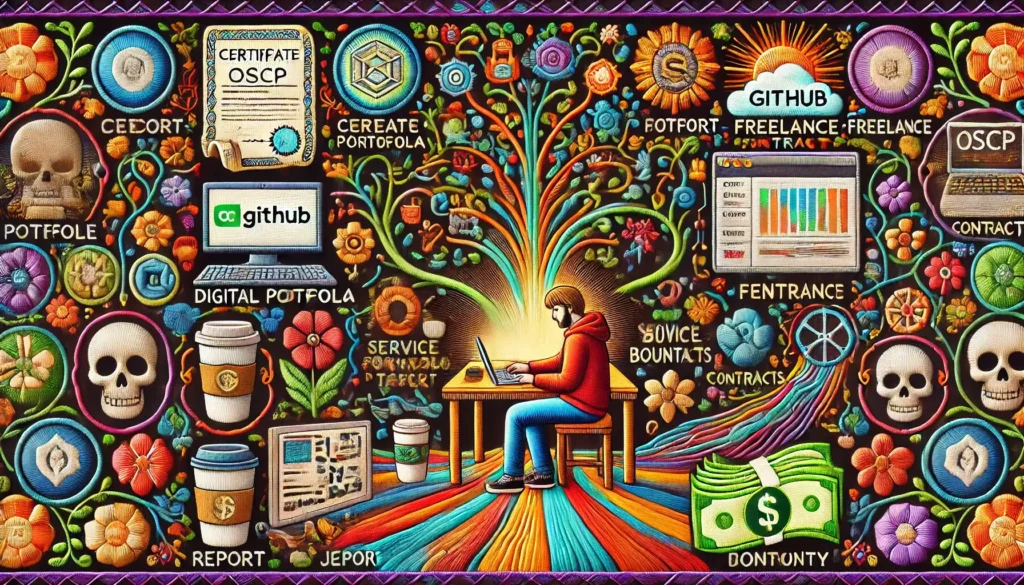
Build recurring income with security service tiers (Money Block #2)
Once you’ve done a few engagements, your next challenge is to avoid living from project to project.
A consultant I worked with started by doing one-off web app tests for small SaaS founders. Great fun, constant adrenaline, zero predictability. After a year, they introduced three simple service tiers—think “Bronze/Silver/Gold” but with better names—and within six months, 40% of their income came from retainers that felt more like an insurance policy for their clients than a one-time “pentest cost.”
Money Block #4 — Service coverage tier map (example, 2025)
| Tier | What’s included | Typical monthly fee (USD) |
|---|---|---|
| Tier 1 — “Checkpoint” | One focused app test per year, basic report, email Q&A. | $400–$700 |
| Tier 2 — “Partner” | Two tests/year, quarterly vuln review, ticket-ready findings. | $1,200–$2,500 |
| Tier 3 — “Embedded” | Rolling tests, threat modeling sessions, help with compliance and written testing authorization. | $4,000–$8,000 |
Numbers here are illustrative; real fees depend on sector, geography, and your experience. But the pattern—tiers that map to risk tolerance and deductible size—is universal.
Save this table and confirm the current fee expectations in your niche by asking at least three potential clients what they already pay for security work.
Show me the nerdy details
When you define tiers, think in terms of coverage and risk transfer, just like an insurer: what you will monitor, test, and report regularly, and what clearly sits outside your responsibility. Document response times, communication channels, and what triggers extra fees (e.g., emergency testing after a breach).
- Name three tiers that make sense for your niche.
- Align each tier with a client’s risk and budget.
- Keep higher tiers rare so they feel premium.
Apply in 60 seconds: Draft names for three tiers and one bullet describing what changes from the smallest to the biggest.
Legal & business foundations: LLCs, malpractice coverage, and taxes
Once your income grows beyond hobby money, you’ll need to think about legal structure and liability.
In many countries, consultants form a small limited company or LLC to help separate personal assets from business risk; protection depends on the jurisdiction, the claim, and proper operation. SBA’s structure guidance describes protection in most instances, not every instance. In the US, that might mean an LLC filing with your state plus an EIN registration with the IRS; in the UK, a limited company via Companies House; in the EU, local equivalents. You’ll also likely need to think about professional liability or cyber liability coverage—similar in spirit to malpractice coverage for doctors, but applied to your security advice.
LLC filing fees and annual report costs vary widely by state or country—anywhere from under $100 in some US states to several hundred dollars plus registered agent fees in others (data here moves slowly; latest available bands are 2023–2024). In addition, small-business insurance that includes coverage for errors and omissions can easily run from a few hundred to a couple thousand dollars per year depending on coverage tiers and revenue.
Money Block #5 — Typical “business overhead” ranges for a solo pentest consultant (illustrative, 2024–2025)
| Item | Approx. yearly range (USD) | Notes |
|---|---|---|
| LLC filing & annual fees | $100–$800 | Highly state/country dependent; check official fee schedule. |
| Registered agent | $100–$300 | Only if required; sometimes bundled. |
| Professional / cyber liability insurance | $500–$2,500 | Depends on coverage tiers, revenue, and sector. |
| Accountant / tax support | $300–$1,500 | Helpful once you’re juggling payroll tax or VAT. |
Save this table and confirm the current fee on your government and insurance providers’ official pages before making decisions.
For US readers, talk to a tax professional about how you’ll handle quarterly estimated tax payments and which expenses are deductible. For non-US readers, local rules will differ—but the principles are similar: capture all legitimate expenses, understand your obligations early, and avoid surprises that turn a good year into a tax hangover.
Show me the nerdy details
When you start hiring subcontractors or employees, you’ll deal with additional complexities: payroll tax, employment contracts, and possibly different liability coverage tiers. At that point, it’s worth budgeting for proper legal review of your engagement letter and settlement process if a client disputes your work. Don’t treat legal line items as “optional extras”—they’re defensive tools that keep you in business.
- Separate personal and business assets early.
- Budget for filing fees and insurance premiums.
- Get professional tax advice before your first big year.
Apply in 60 seconds: Write down which structure you’d use if you took on a $10k engagement tomorrow (sole trader, LLC, Ltd, etc.) and one question you’d ask a lawyer or accountant.
Content, brand, and network: compounding your OSCP over 12–24 months
The market doesn’t just pay for skills; it pays for trust at scale.
I’ve seen OSCP holders with average technical skills but strong writing and speaking consistently out-earn “pure geniuses” who refuse to show their work. Over 12–24 months, small signals like blog posts, conference talks, and thoughtful LinkedIn threads compound into serious opportunities.
- Write one practical post per month: “How I validated a SQLi finding responsibly,” “My process for scoping a one-week app test,” etc. Think of it as free pre-sales material.
- Present at meetups: Local OWASP chapters, cloud-provider groups, or university security clubs love honest, non-salesy talks.
- Contribute small fixes: Docs improvements, bug reports, or small patches to tools you actually use (e.g., Nmap scripts, Burp extensions).
- Use LinkedIn intentionally: Comment with substance on posts by OffSec, SANS, or leading practitioners instead of broadcasting into the void.
Use the client’s actual business goals and agreed scope in your proposal. Define deliverables, exclusions, testing dates, and written authorization before any active testing.
Short Story: A junior engineer I mentored posted a single, detailed write-up about hardening a small fintech’s CI/CD pipeline (with permission and anonymization). Six months later, a recruiter from a larger bank messaged them saying, “We saw your article internally; can we talk?” That one post, written on a rainy Sunday, turned into two interviews and a 35% salary increase. The article itself wasn’t brilliant; it was just concrete. Screenshots of dashboards, snippets of Terraform, and a short paragraph on trade-offs between speed and safety. The lesson: your work doesn’t have to be perfect to matter. It has to be visible enough that the right people can see themselves in it.
- Publish one helpful piece a month.
- Show your trade-offs, not just your wins.
- Connect content to problems real buyers have.
Apply in 60 seconds: Open your notes and create a rough title starting with “How I…” for your next post.
If you’re outside the US (short note for 2025 South Korea & beyond)
Not everyone reading this is in Silicon Valley. If you’re in South Korea in 2025, for example, the picture looks different but still promising.
Recent analyses suggest entry-level cybersecurity roles like junior security engineer or penetration tester commonly start around ₩35–42 million per year, with experienced penetration testers in Seoul sometimes averaging between roughly ₩60 million and ₩90 million+ depending on role and company (Source, 2024-12). National certifications like 정보보안기사 can carry weight with local employers alongside international certs such as OSCP and CISSP (Source, 2025-01).
The takeaway: your post-OSCP roadmap is still valid, but your tactics adjust:
- Look for roles titled in Korean—예: “정보보안 컨설턴트,” “보안 관제,” “모의해킹”—and match their language in your CV.
- Join local communities: BoB, university security circles, and domestic CTF teams often act as informal hiring pipelines.
- Be ready to navigate both domestic and international interview styles—some firms may emphasize formal exams, others live lab tests.
Use the same steps: portfolio, eligibility checklist, decision card—but tune your expectations to local salary bands and visa/residency rules if you’re aiming at cross-border remote work.
FAQ
Here are the questions most new OSCP holders quietly ask themselves once the exam dust settles.
1. How long does it usually take to turn OSCP into a full-time pentesting job?
For most people, it’s somewhere between 3 and 12 months. The spread comes from prior experience (sysadmin vs total career changer), networking, and how quickly you build visible artifacts like portfolios and talks. Treat OSCP as the “eligibility checklist” item that gets you through HR filters, then spend 90 days executing: portfolio, applications, and interviews. In the next 60 seconds: pick a target date 6–9 months from now and write “full-time offensive role” on that day in your calendar.
2. Is bug bounty a realistic primary income path right after OSCP?
It can be, but it’s high variance. Public data and case studies show some hunters hitting six figures, while many others earn only sporadic bounties (Source, 2023-10). A safer approach is to treat bug bounty as a lab that sometimes pays: a way to sharpen your skills, build a track record, and maybe supplement a salary or consulting income. In the next 60 seconds: choose one program whose bounty table and scope make sense for your skills and bookmark it for focused work later.
3. What if I don’t have any “real” client experience yet—how do I compete?
Everyone starts without client logos. What you can control is the quality of your portfolio and your understanding of business context. Use home labs, public VMs, and CTFs, but write about them like client work: talk about risk, coverage, and remediation. Many hiring managers prefer a candidate with strong OSCP, clear writing, and thoughtful lab reports over someone with a light client history but no methodology. In the next 60 seconds: pick one lab you’ve already done and outline a one-page “client style” report.
4. How much should I charge for my very first freelance pentest?
Start modestly but not self-destructively. If local market data suggests day rates of, say, $800–$1,200 for experienced testers, you might price an early, tightly scoped engagement at the lower end, perhaps $2,000–$3,000 for a small app test, while being explicit about constraints and expectations (Source, 2024-11). Don’t undercut to the point you can’t afford insurance, taxes, or proper testing time. In the next 60 seconds: jot down a minimum project price that covers at least your overhead and 20 hours of focused work.
5. What if a year passes and I still haven’t landed a pentesting role—did I fail?
No. It means the path you tried didn’t match your constraints or market, not that OSCP was a mistake. At that point, you have options: pivot toward adjacent roles (AppSec engineer, security analyst), double down on content/networking, or try a different geography, including remote roles. Think of it as re-running your post-OSCP roadmap with new data. In the next 60 seconds: write one concrete experiment you’ll run next month if your current approach stalls (e.g., “apply to 10 AppSec roles instead of only pure pentest jobs”).
Conclusion: Turn “I passed” into “I’m booked”
Getting your OSCP is kind of like surviving a 24-hour cybersecurity hunger game. You prove you can suffer productively in a lab, chained to your keyboard, fueled by caffeine and despair. Great. Now what?
Turning that glorified war story into income takes a bit more than root.txt screenshots.
Here’s what actually helped me (and others I know) move from “I have a cert” to “I have clients”:
1. Write down a 12-month target and a 90-day plan.
If you don’t know what “success” looks like, you’ll default to refreshing TryHackMe and wondering why nothing’s happening. Set a clear income or career target for the year—and then chunk it into something brutal-but-doable for the next 90 days. You can pivot later. Just move.
2. Make your skills legible.
If you rooted 50 boxes and no one saw the report, did it even happen? Put together clean, human-readable writeups. Build a small repo with tools or scripts you actually use. Give a 15-minute talk at a local meetup or post a blog explaining a technique like you’re teaching it to your past self. Make your work easy to see and trust.
3. Pick one money path—for now—and go all in.
Freelance pentesting? Subcontracting for MSSPs? Teaching offensive security to devs? Pick one lane and sprint. Spreading yourself thin looks productive but it’s just procrastination in a lab coat.
4. Add business bones when the cash starts flowing.
Once someone’s paying you, even part-time, it’s time to get your act together. Define your offerings (coverage tiers are great for this), write a fee schedule so you’re not winging quotes, and start thinking about contracts, taxes, and insurance. It doesn’t need to be fancy—just clean enough to not haunt you later.
Pass OSCP
Capture lessons, define one clear income goal.
Build assets
Portfolio, CV, LinkedIn, GitHub, 1–2 talks or posts.
Pick a path
Job, bug bounty, freelance, or hybrid—with real numbers.
Add structure
Service tiers, contracts, legal and tax basics.
- Trust the roadmap; adjust, don’t abandon.
- Let numbers guide your path, not fear.
- Revisit this plan every quarter as your data improves.
Apply in 60 seconds: Choose one action: update your CV, draft a case study, or send a message to someone already doing the work you want.
Editorial review: 2026-10-12; portfolio confidentiality checked against OffSec’s terms. Dated salary, rate, and overhead figures are illustrative historical examples, not verified current market averages or earnings promises. Confirm local business, tax, and insurance requirements with qualified advisers.
post OSCP roadmap, OSCP jobs 2025, penetration tester income, freelance pentesting rates, bug bounty income
🔗 24-Hour OSCP Exam Posted 2025-11-18 22:09 +00:00 🔗 Free OSCP Prep Resources Posted 2025-11-18 08:24 +00:00 🔗 OSCP vs CEH vs Security