There is no single defensible price for FedRAMP authorization. As of September 2026, the cost for a SaaS company depends first on the FedRAMP Certification Class you actually need, then on your assessment boundary, existing security maturity, remediation backlog, independent assessment work, evidence automation, and recurring operations. The most useful first move is therefore not requesting a generic “FedRAMP quote.” It is choosing the lowest appropriate class and defining the minimum assessment scope before anyone prices the project. This matters even more now because FedRAMP 20x Class A, Class B, and Class C pathways have opened, making many older articles built around a single Low or Moderate authorization price increasingly poor budgeting tools.
For a mature SaaS provider, the practical cost equation is: assessment + internal labor + engineering remediation + evidence infrastructure + recurring certification work. A proposal that covers only the assessor’s fee is not a FedRAMP budget. A proposal that assumes every existing SOC 2 control transfers cleanly is not one either.
Table of Contents
What Are You Actually Paying for in FedRAMP?
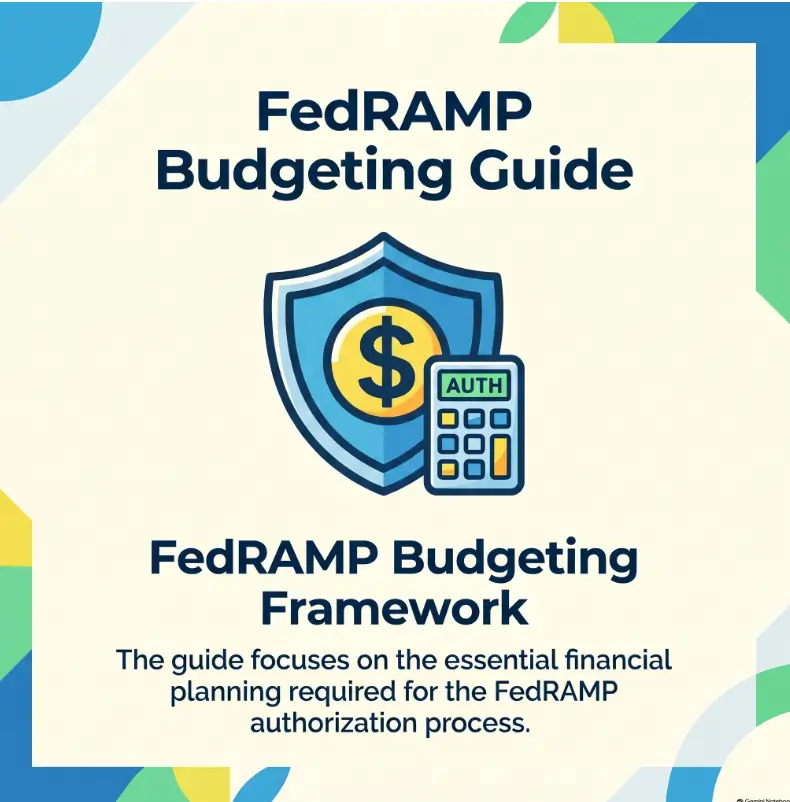
Most of the expense is not a single government filing charge. Money is spent getting a specific cloud service offering into an acceptable state, proving that state, independently assessing it where required, fixing what does not hold up under scrutiny, and maintaining evidence after certification.
| Cost bucket | What it pays for | What usually changes the cost |
|---|---|---|
| Readiness and scoping | Defining the service boundary, information resources, inherited services, responsibilities, and certification target | Architecture complexity and how clearly the boundary is already documented |
| Security engineering | Closing technical gaps in identity, logging, encryption, vulnerability management, configuration, recovery, and related controls | Existing security maturity and technical debt |
| Evidence and automation | Creating persistent verification, machine-readable evidence, reporting, and repeatable validation processes | How much evidence is currently manual |
| Independent assessment | Independent verification and validation by a FedRAMP Recognized assessment service when required | Certification class, scope, complexity, and assessor effort |
| Remediation | Fixing findings, clarifying evidence, retesting, and resolving incomplete implementations | Number and depth of findings |
| Ongoing certification | Maintaining evidence, monitoring, reporting, assessments, and security processes after initial certification | Class, automation, change frequency, and operating model |
This is why two SaaS companies with similar revenue or employee counts can face radically different workloads. Employee count is often a weak proxy. Architecture and evidence quality usually tell you more.
Why Old FedRAMP Cost Estimates Can Mislead You in 2026
FedRAMP is in a significant transition. The Consolidated Rules for 2026 introduced progressive Certification Classes and opened the 20x Class A pipeline on August 3, 2026, followed by Class B and Class C on August 31. The new rules become mandatory more broadly on January 1, 2027, while applications for new Rev5 Certifications are scheduled to end on June 11, 2027. SaaS teams budgeting today should therefore identify whether they are pursuing a current 20x path or one of the limited remaining Rev5 paths before using historical cost assumptions. You can verify the transition dates in FedRAMP’s official 2026 timeline.
The vocabulary has changed as well. Buyers still search for “FedRAMP authorization cost,” but the current program increasingly describes provider status through FedRAMP Certification and progressive classes. Class B roughly occupies the assurance territory formerly associated with many Low use cases, while Class C is intended to support most Low and Moderate security objectives. Class D is planned for broader high-assurance use and is not yet the ordinary starting point for a new SaaS entrant.
Which FedRAMP Class Should a SaaS Company Budget For?
The most expensive budgeting mistake is starting with the highest-looking class before confirming that a customer, procurement requirement, or real federal use case justifies it.
| Class | Typical decision context | Budget implication |
|---|---|---|
| Class A | Entry point for an established commercial SaaS provider with an eligible recent external assessment, such as SOC 2 Type II | Can reuse existing assurance work, but still requires FedRAMP-specific preparation and package work |
| Class B | Provider needs assurance suitable for most Low security objectives | More FedRAMP-specific validation, assessment, evidence, and ongoing work |
| Class C | Provider needs assurance suitable for most Low and Moderate security objectives | Higher technical, automation, independent assessment, and operational commitment |
| Class D | Higher-assurance federal use cases | Do not build a Class D budget merely because “High” sounds future-proof; availability and requirements are still progressing |
Class A deserves special attention for SaaS companies already paying for commercial assurance. Current FedRAMP guidance allows an eligible Class A applicant to use a qualifying assessment completed within the preceding 12 months, including SOC 2 Type II, GovRAMP, or certain FedRAMP Rev5 materials. A SOC 2 Type II report is therefore potentially reusable input, but it is not automatic FedRAMP reciprocity and does not erase FedRAMP-specific responsibilities. FedRAMP’s Class A framework guidance lists the currently accepted alternatives.
That distinction can save a company from paying for the wrong project. If the business is merely testing federal demand, the appropriate entry strategy may be very different from a SaaS vendor that already has a federal customer requiring a higher level of assurance.
The FedRAMP Cost Model That Is More Useful Than a Market Average
Instead of beginning with a vendor’s headline price, build the budget from seven variables:
- A = Assessment cost: independent assessment and related validation work required for the target class.
- I = Internal labor: security, platform, engineering, compliance, product, legal, and leadership time.
- R = Remediation: engineering required to close security or evidence gaps.
- E = Evidence infrastructure: automation, trust-center capabilities, machine-readable reporting, logging, and validation workflows.
- T = Tools and services: additional software or specialist services genuinely needed to operate the program.
- O = Ongoing operations: recurring validation, assessments, vulnerability processes, reporting, package maintenance, and change management.
- C = Contingency: the cost of findings, architecture changes, additional testing, or schedule slippage that cannot yet be scoped precisely.
Your realistic first-year model is therefore:
First-year FedRAMP budget = A + I + R + E + T + O + C
Count each cost once: exclude remediation and recurring-operation hours from I when those hours are already included in R or O, and keep evidence tooling out of T when already priced in E. Separate cash payments from internal labor before adding the categories. This avoids turning overlapping work into an inflated first-year budget.
The Six Variables That Usually Move the Budget Most
1. Your certification class
Class is the first cost hinge because it changes the depth of assurance, independent assessment expectations, validation maturity, and ongoing commitment. Under the 2026 rules, Class B and Class C providers must include all Key Security Indicators in a FedRAMP independent assessment at least annually. Normally, those assessments are performed by FedRAMP Recognized assessment services. The rules also allow assessment by FedRAMP itself for exceptionally prioritized cloud services. The current independent verification and validation rules should therefore be part of any assessment quote review.
2. The assessment boundary
A sprawling boundary makes nearly everything more expensive. More resources can mean more evidence, more relationships to document, more verification paths, more failure modes, and more remediation opportunities.
Do not solve this by hiding systems that affect the security of the service. Solve it architecturally. Identify which resources genuinely support the cloud service offering, what can be inherited from already authorized infrastructure, and which unnecessary dependencies can be removed.
3. Existing engineering maturity
A SaaS company with centralized identity, strong MFA, infrastructure as code, automated configuration checking, mature logging, disciplined secrets management, repeatable deployment, vulnerability workflows, and tested incident procedures starts from a different place than a company whose security program mainly consists of policies and screenshots.
This is an important 20x cost distinction. FedRAMP is moving toward persistent, machine-readable evidence and automated verification rather than rewarding a mountain of static prose. The FedRAMP 20x program explicitly emphasizes continuous security validation and automation.
4. How much remediation appears after real testing
The assessment invoice may be predictable. Remediation often is not.
A missing paragraph in a policy is cheap to repair. Reworking tenant isolation, identity architecture, cryptographic implementation, logging coverage, deployment controls, backup design, or a dependency that cannot produce required evidence can become an engineering project. Budget discussions should separate “documentation cleanup” from “product architecture change.” They are not remotely the same cost category.
5. How manual your evidence process is
Manual evidence collection can look cheaper before the first assessment because the company avoids building automation. It becomes expensive when engineers repeatedly gather screenshots, export logs, explain drift, reconstruct historical states, and answer the same assurance question month after month.
Automation is not automatically good value, however. Buying a compliance platform does not make an unsupported control effective. Pay for automation when it removes a recurring evidence or validation task that someone would otherwise perform manually and when the output actually satisfies the applicable FedRAMP requirement.
6. Your rate of architectural change
A slow-changing single-product SaaS may have a comparatively stable evidence model. A platform shipping new cloud services, regions, identity flows, subprocessors, data stores, and major integrations every month has more certification maintenance work.
FedRAMP cost is therefore partly a change-management cost. The question is not only “Can we pass?” It is “Can we keep the evidence accurate while engineering continues to ship?”
Build a First-Year FedRAMP Budget Without Fake Precision
Use your own numbers rather than borrowing a market average from a SaaS company with a different product, boundary, class, cloud architecture, and security program.
| Budget line | Input to collect | Question to answer |
|---|---|---|
| Internal readiness | Hours by role × loaded hourly cost | Who will own scoping, evidence, remediation, and assessor coordination? |
| Independent assessment | Written assessor quote | What exact scope, retesting, and deliverables are included? |
| Engineering remediation | Estimated engineering work by identified gap | Which gaps require architecture or product changes? |
| Automation | Build cost plus software cost | Which recurring evidence activities will this eliminate? |
| Specialist help | Defined statement of work | Is the provider performing work your team genuinely cannot do? |
| Ongoing operations | Annual internal and external workload | What continues after initial certification? |
| Contingency | Management reserve tied to known uncertainty | Which assumptions could materially change the project? |
For internal labor, calculate hours instead of headcount. If your security lead expects 180 hours, two platform engineers expect 120 hours each, and compliance expects 300 hours, convert those hours using your company’s loaded labor cost. The result is not a market benchmark. It is the cost your finance team will actually feel.
Do the same for remediation. Create one line per identified gap, assign an owner, estimate effort, and flag dependencies. A $0 spreadsheet cell labeled “engineering included” is where FedRAMP budgets go to grow teeth later.
What a FedRAMP Assessment Quote May Leave Out
An assessment quote should be read as a scope document, not as proof of your total program cost. Before comparing prices, identify whether each proposal includes or excludes the following:
- Readiness or gap assessment before the formal independent assessment
- Assessment of the complete intended service boundary
- Retesting after remediation
- Additional work if the boundary changes
- Review of inherited controls or external cloud services
- Evidence-format corrections
- Support during FedRAMP review questions
- Ongoing or annual independent assessment work
- Travel or unusual testing expenses, if applicable
- Remediation consulting
The cheapest quote can become expensive if the initial scope is narrow on paper but every clarification, retest, boundary adjustment, and remediation discussion triggers a change order.
A Better Way to Compare FedRAMP Providers
Send the same scope information to every assessor or advisory provider. Otherwise, you are comparing different projects disguised as competing prices.
| Question to ask | Why it matters | Potential red flag |
|---|---|---|
| Which exact certification class is this quote based on? | Prevents pricing the wrong assurance level | Provider speaks only in old Low/Moderate terminology without reconciling current rules |
| What is the assumed assessment boundary? | Scope drives labor and testing | Quote arrives before architecture or boundary review |
| What is included in the independent assessment? | Defines what the fee actually buys | “FedRAMP package” with no deliverable list |
| How are retests handled? | Findings are normal project risk | Every retest is open-ended hourly work |
| What evidence must we produce before assessment begins? | Reveals internal workload | Assessor cannot describe readiness assumptions |
| Which costs are explicitly excluded? | Exclusions often determine the real budget | Provider refuses to document assumptions |
| What recurring work should we budget after certification? | FedRAMP is not a one-time event | Proposal discusses authorization day but nothing after it |
DIY, Compliance Software, or Professional Help?
Not every FedRAMP task deserves a consultant, and not every recurring task deserves custom engineering.
Handle it internally when the problem is ownership, not expertise
Your own team should understand the service boundary, architecture, identity model, data flows, deployment process, incident procedures, and security decisions. Outsourcing the explanation does not transfer accountability.
Buy software when repeatability is the expensive part
A tool can make sense when engineers are repeatedly exporting the same evidence, validating the same configurations, maintaining the same assurance data, or reconciling many systems. Before buying, estimate the annual manual hours the software will actually remove.
Pay for specialists when independent judgment or scarce expertise matters
Professional help becomes easier to justify when you need a FedRAMP Recognized independent assessment, lack people who understand the current certification process, have difficult architecture decisions, or face material remediation risk. The official program notes that FedRAMP accepts independent assessments from recognized assessment services, which can be verified through the FedRAMP Marketplace.
Avoid paying someone to become a permanent translator between your engineers and your own security architecture. That dependency can survive the initial project and quietly turn into recurring consulting expense.
How to Reduce FedRAMP Cost Without Creating a Compliance Trap
Cost reduction should come from reducing unnecessary work, not from pretending required work disappeared.
- Choose the lowest class that satisfies a real use case. Do not purchase assurance that no agency customer needs.
- Reduce architecture before reducing evidence. A smaller legitimate boundary is more valuable than weak documentation of a sprawling one.
- Reuse recent assurance work where the rules permit it. Class A can make an existing SOC 2 Type II or other eligible framework materially more useful.
- Fix expensive architecture gaps before formal assessment. Discovering them during paid assessment time is a poor bargain.
- Automate recurring evidence, not every possible evidence artifact. Start where manual work repeats.
- Keep evidence close to the systems that generate it. Reconstruction months later consumes engineering time and weakens confidence.
- Ask for exclusions in writing. A transparent $X proposal can be cheaper than an apparently lower proposal surrounded by undefined change orders.
When FedRAMP May Not Be Worth the Spend Yet
A technically achievable certification can still be a poor commercial decision.
If nobody can identify a credible federal use case, target buyer, procurement path, or customer requirement, the next dollar may be better spent proving federal demand rather than beginning an expensive security transformation. FedRAMP’s current Marketplace rules require providers entering the Initial Implementation Phase to demonstrate an intended direct or indirect federal agency use case.
The opposite is also true. If a signed opportunity repeatedly stalls because the required FedRAMP class is missing, delaying investment has a measurable opportunity cost. At that point, compare the certification budget against realistic contract value, probability of winning, expected gross margin, and the reuse value of the same security improvements across future federal customers.
Commercial gate: Do not ask only, “Can we afford FedRAMP?” Ask, “Which federal opportunity requires it, which class does that opportunity require, and what portion of the security investment remains useful if the deal disappears?”
Frequently Asked Questions
Does SOC 2 make FedRAMP cheap?
Not automatically. A recent SOC 2 Type II can support a Class A route under current rules, which may let a mature SaaS company reuse meaningful assurance work. It does not mean that SOC 2 and FedRAMP are interchangeable, and it does not eliminate FedRAMP-specific scoping, package, security, data-sharing, and ongoing responsibilities.
Is the 3PAO or independent assessment fee the total FedRAMP cost?
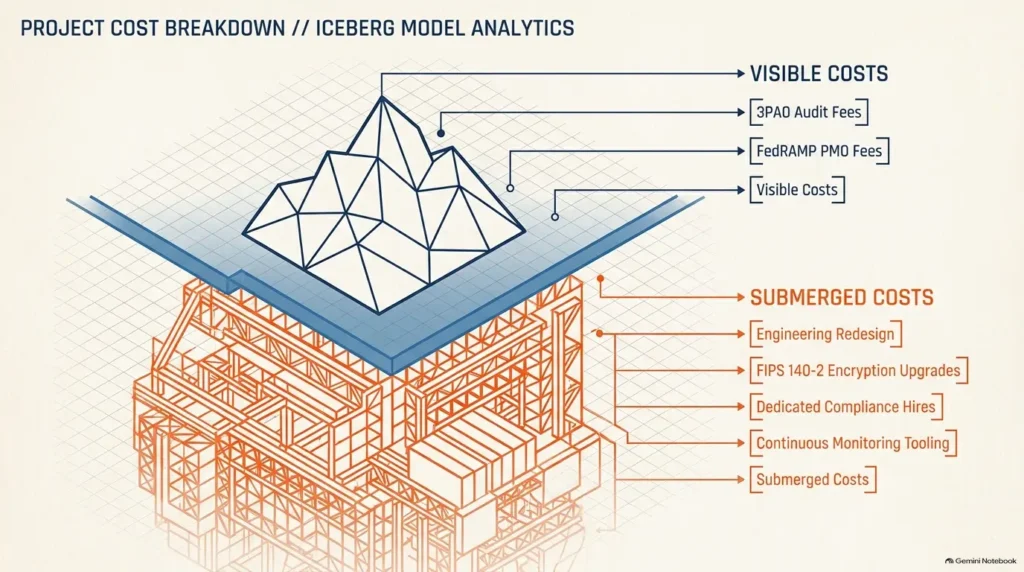
No. Treat independent assessment as one budget line. Internal engineering, compliance labor, remediation, automation, tooling, recurring assessments, reporting, and certification maintenance can materially change total cost.
Should a SaaS startup go directly to Class C?
Only when the intended federal use case justifies that level of assurance and the company can support the associated operating commitment. Current FedRAMP guidance encourages providers entering the federal market to scale investment progressively rather than automatically beginning at a higher class.
Can a compliance automation platform replace a FedRAMP assessor?
No. Automation can reduce evidence collection and support persistent verification, but software ownership is not independent assessment. Where the applicable class requires a FedRAMP independent assessment, that assessment must satisfy the current program rules.
What if the SaaS architecture changes during the FedRAMP project?
Reassess whether the change alters the certification boundary, security decisions, validation methods, evidence, or assessment work. Do not quietly continue using a quote based on an obsolete architecture diagram. Architecture drift is both a security problem and a budgeting problem.
Your 15-Minute FedRAMP Cost Check
Before contacting another assessor, consultant, or compliance software vendor, open a blank document and answer these five questions:
- Which FedRAMP class does a real federal opportunity require?
- What exact cloud service offering and resources belong inside the assessment boundary?
- Which qualifying assurance work do we already have, including a recent SOC 2 Type II if relevant?
- Which known gaps require engineering rather than documentation?
- Which recurring FedRAMP tasks will remain after initial certification?
If you cannot answer the first two, do not ask vendors for a final FedRAMP price yet. You would be pricing a silhouette. Define the destination and the boundary first, then request assessment quotes using the same assumptions, add your internal labor and remediation estimates, and build the recurring operating budget separately.
For the policy context behind the current program, OMB’s M-24-15 FedRAMP modernization memorandum explains the federal direction toward reusable authorization, automation, and reduced duplication.
Last reviewed: 2026-10
- SOC 2 Cost for SaaS Startups – Compare the cost of existing commercial assurance work before deciding how much additional FedRAMP preparation is required.
- Azure Security Baseline for SaaS – Review cloud security controls that may affect your FedRAMP readiness, remediation workload, and assessment scope.
- Security Questionnaire Automation – Understand when automated evidence collection can reduce recurring compliance and customer-assurance work.
- SaaS Security Addendum Checklist – Check contractual security requirements that can influence your SaaS compliance obligations and procurement discussions.
- Security Tool Stack Cost Calculator – Estimate the broader security tooling budget that may sit outside an assessor or FedRAMP consulting quote.
Technical guidance updated: 2026-10-13. Clarified overlapping budget categories and the exceptional FedRAMP-led assessment route.