
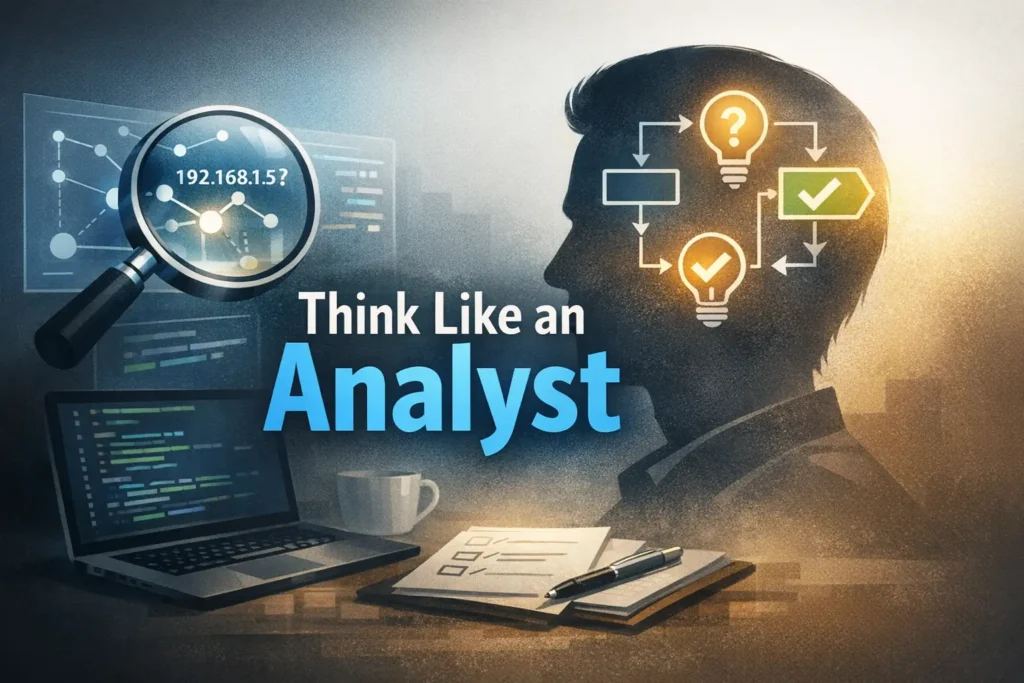
Decision-Making Over Commands: Turning Kioptrix Into a Career Catalyst
Most candidates treat Kioptrix like a trophy, listing tools until they sound smaller than the work they actually did. The gap between a terminal replay and evidence of judgment is where interviews are won or lost.
“Stop turning solid hands-on work into vague, forgettable noise. Shift from ‘I hacked the world’ theater to a hiring-ready answer that sounds calm, specific, and real.”
The Methodology
- ✔ Analysis & Prioritization
- ✔ Real-world Troubleshooting
- ✔ Professional Documentation
The Shift
- Decision-making first.
- Better proof, not bigger claims.
Fast Answer: To use Kioptrix Level to build better cybersecurity interview stories, stop narrating commands and start explaining how you observed evidence, chose next steps, handled setbacks, and reflected on what you learned. A strong story is not “I popped the box.” It is “I noticed a clue, formed a hypothesis, tested it carefully, corrected course, and documented the lesson.”
Table of Contents
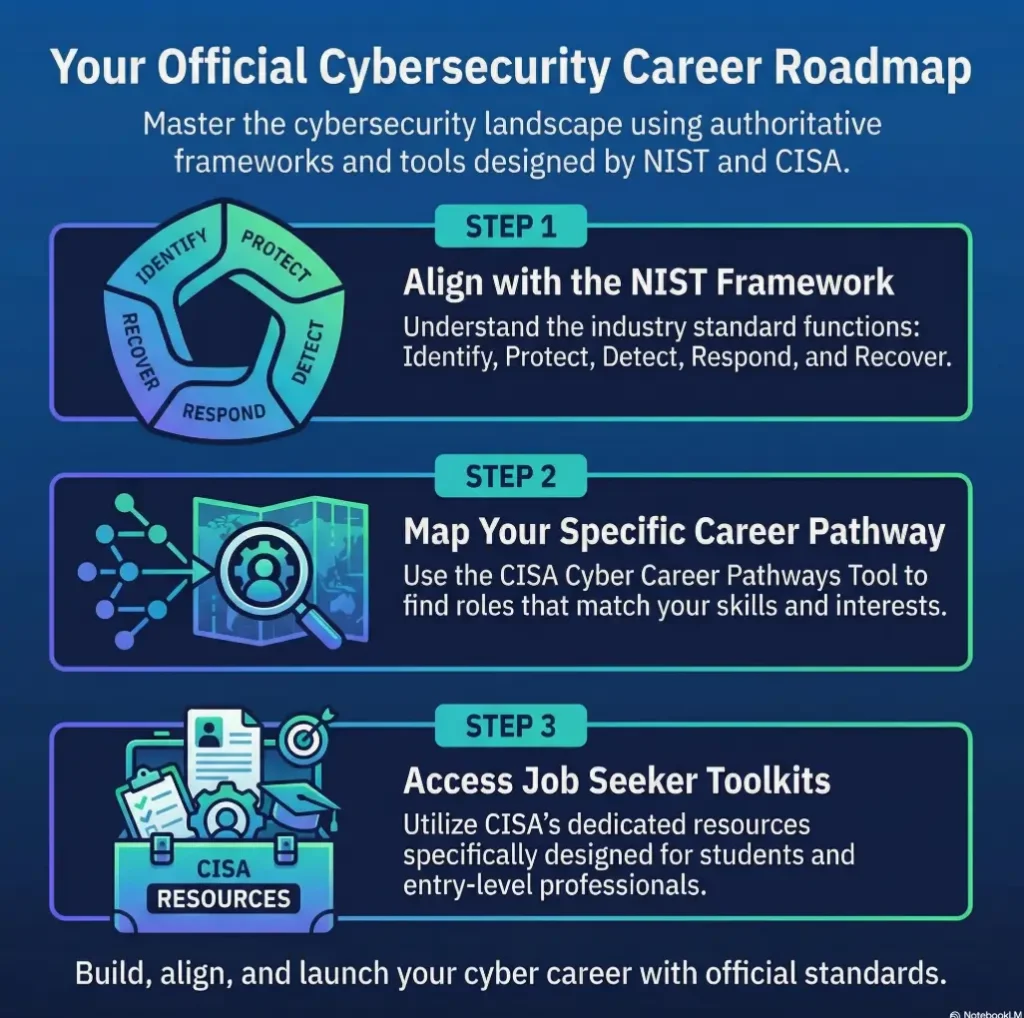
Why Kioptrix Level Works Best as a Story Engine, Not Just a Practice Box
Why interviewers remember decision-making more than tool names
Interviewers hear tool names all day. Nmap. Nikto. Metasploit. Burp. The list can start sounding like someone emptied a toolbox onto the floor and hoped the noise would count as competence. What they remember instead is how you decided what to do next.
Years ago, I heard an entry-level candidate describe a lab in the least glamorous way possible. No fireworks. No swagger. He simply said he noticed one service looked more promising than the others, chose to spend another 15 minutes validating that path, and backed off when the first idea was weak. That answer landed harder than the louder candidate who recited ten commands like a stage magician pulling scarves from a sleeve.
Why a small, older lab can still produce modern interview value
Kioptrix is older, yes. So is a stethoscope. The point is not novelty. The point is whether the exercise helps you demonstrate observation, prioritization, verification, restraint, and communication. Those habits age well.
A compact lab also helps because the narrative stays clean. You are less likely to drown in twenty branches of activity and more likely to remember the moment your first assumption failed, the clue that changed your direction, and the exact reason you moved from guessing to testing.
How Kioptrix creates a clean narrative arc: observe, test, fail, adapt, explain
That sequence is interview gold. It has tension. It has movement. It shows you are not just pushing buttons with hope fumes. Kioptrix gives you a manageable arena where you can see the whole arc without needing a war room or three monitors glowing like a spaceship.
- Lead with reasoning, not tool lists
- Use the lab as evidence of process
- Prefer clarity over theatrics
Apply in 60 seconds: Write one sentence that starts with “I chose that next step because…”
The Real Goal: Turn Technical Steps Into Employable Signals
How enumeration becomes evidence of curiosity and discipline
Enumeration sounds dry until you frame it properly. In an interview, enumeration can signal patience, curiosity, and refusal to jump ahead. You are showing that you did not fall in love with a tool before the environment earned that attention.
Think of it like arriving in an unfamiliar city at dusk. You do not start kicking random doors. You read the street signs, listen for patterns, and map what is open before you choose your route. Good cybersecurity stories carry that same feeling of measured awareness. If you need a cleaner structure for that phase, a simple Kioptrix enumeration routine can make your later interview explanation sound far more deliberate.
How privilege escalation becomes a story about method, not ego
Privilege escalation is easy to tell badly. Told badly, it becomes chest-thumping. Told well, it becomes a story about understanding context, validating assumptions, and treating access changes as a serious moment rather than a victory dance.
I once watched a student ruin an otherwise strong answer by making the end of the lab sound like a movie trailer. The interviewer did not look impressed. He looked tired. In security, especially for junior roles, the more mature signal is usually not “look how hard I hit.” It is “look how carefully I validated risk and respected boundaries.”
How documenting dead ends shows maturity, not weakness
Beginners often hide failed attempts as if confusion were a stain. It is not. Thoughtful failure is often where your credibility lives. When you explain a dead end and why you abandoned it, you show judgment. You show that you can stop spending time on low-value paths. That matters in real jobs, where time has a budget and attention is never infinite. This is also why common reconnaissance mistakes in Kioptrix are worth studying instead of hiding.
Here’s what no one tells you… the most believable candidate is often the one who can explain confusion clearly
Anyone can sound smooth after enough rehearsal. The rare candidate is the one who can describe uncertainty without sounding lost. That is the person who often feels real.
Eligibility checklist: Is your Kioptrix story interview-ready yet?
- Yes/No: Can you explain the first clue you noticed?
- Yes/No: Can you name one wrong turn and what it taught you?
- Yes/No: Can you describe one decision without naming a tool?
- Yes/No: Can you explain why the lab mattered to a job, not just to the lab?
Next step: If any answer is “No,” your next task is reflection, not another box.
Who This Is For, and Who It Will Probably Not Help Much
Best fit: career changers, entry-level candidates, and self-taught learners who need stronger interview examples
If you are building a resume from small signals, Kioptrix can help. It gives you something concrete to talk about when paid experience is thin and your confidence feels like it still has its coat on. For career changers, especially, one clear story often does more than a messy pile of half-finished labs.
Good fit: students who have done labs but struggle to explain them under pressure
Some people really did the work but freeze the minute an interviewer says, “Walk me through a project.” If that is you, the lab is not the problem. The translation layer is. This article lives in that translation layer.
Not a great fit: candidates looking for a shortcut instead of real reflection
If the plan is to copy a walkthrough and spray buzzwords at strangers, this will not help much. Interviewers can often feel canned answers the way you feel a paper umbrella in a storm. Decorative. Temporary. A little tragic. If that habit sounds familiar, why copy-paste commands fail in Kioptrix is a useful corrective.
Not enough on its own: people targeting advanced red team or senior detection roles
One Kioptrix story can support an entry-level interview or strengthen a junior candidate’s narrative. It is not a full substitute for deeper lab work, broader projects, detection content, log analysis, scripting, or business communication. It is one candle, not the whole cathedral.
Neutral action: Match the depth of your story to the level of the role you want.
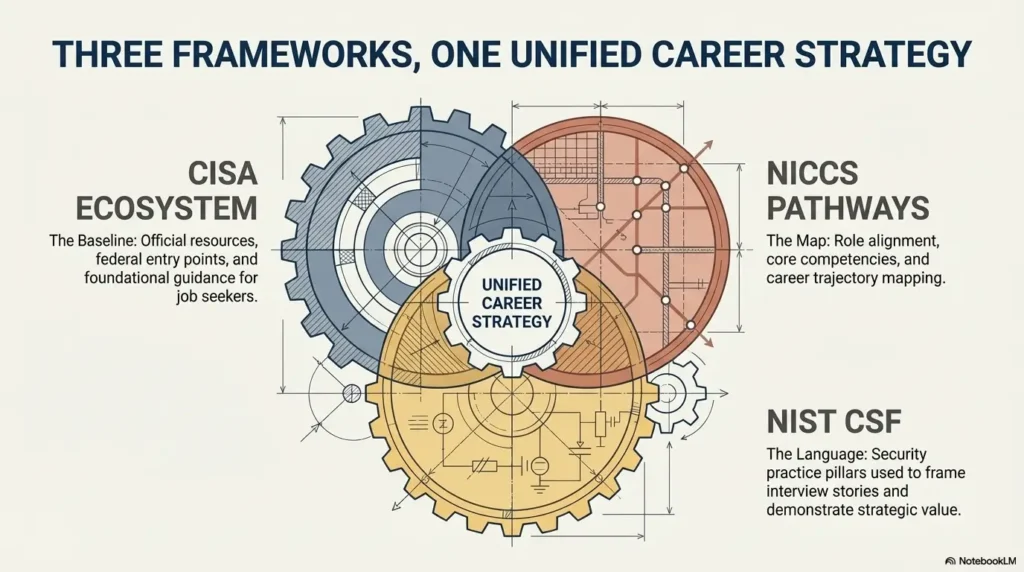
Start With the Interview Backward: What Hiring Managers Actually Need to Hear
The difference between “I solved a box” and “I demonstrated analyst thinking”
“I solved a box” is outcome-only language. It tells the listener where you ended, but not whether the route was disciplined, ethical, or repeatable. “I demonstrated analyst thinking” tells them you can collect clues, form hypotheses, validate assumptions, and communicate findings. That is much closer to what hiring managers buy when they hire a beginner.
What employers usually listen for in entry-level cybersecurity stories
At the junior level, teams are often listening for a handful of things: curiosity, sound judgment, respect for authorization, clean communication, and the ability to learn from mistakes. They are often not expecting you to be a wizard emerging from a cave with three zero-days in your pocket and a cape made of packet captures.
They want signs that you will be coachable, careful, and useful. That means your story should answer hidden questions such as: Did you stay organized? Did you know when to slow down? Did you understand why a step mattered? Did you communicate clearly enough that a teammate could follow?
How to translate technical action into business-friendly language without sounding watered down
You do not need to turn your story into corporate oatmeal. You just need to connect technical actions to practical meaning. Instead of saying, “I ran enumeration and then exploited a weakness,” you might say, “I gathered enough system information to narrow the likely attack surface, then tested a likely path instead of guessing broadly.” Same substance. Better signal.
Decision card: When A vs B
Use technical-heavy framing when the interviewer is clearly technical and wants to inspect your reasoning depth.
Use business-friendly framing when the interviewer is HR, a recruiter, or a hiring manager focused on communication and judgment.
Time/cost trade-off: Overly technical answers can lose non-technical listeners in 30 seconds. Overly vague answers can make technical listeners doubt whether you did the work.
Neutral action: Prepare a 60-second and a 120-second version of the same story.
Build the Story Spine First: Situation, Obstacle, Action, Result, Reflection
Situation: how to frame the lab without sounding overly theatrical
The situation should be plain and grounded. You were working through a deliberately vulnerable lab environment to practice structured analysis and improve the way you communicate technical findings. That is enough. You do not need cinematic fog.
Obstacle: how to identify the real challenge inside the exercise
The obstacle is rarely “the machine was hard.” That says very little. Better obstacles sound like this: initial enumeration produced several possibilities but no obvious priority, the first likely path failed, or the data was noisy enough that you had to narrow your focus. Obstacles should describe uncertainty, not melodrama.
Action: how to describe your steps without reading a terminal log aloud
Think in decisions, not keystrokes. Explain what you looked for, what clue mattered, what changed your confidence, and what you ruled out. A good action section feels like a guide laying stones across a stream. The listener can cross without seeing every pebble.
Result: how to show outcome without overselling impact
The result is that you successfully completed a path in the lab, validated your theory, or gained the level of access relevant to the exercise. Do not inflate that into “I proved I can defend enterprises.” The bridge between those two claims is made of air.
Reflection: how to prove learning, restraint, and next-step thinking
This is where many stories either bloom or wilt. Reflection is where you explain what you would do more efficiently next time, how you improved your note-taking, why the dead end mattered, or what skill gap the exercise revealed. Reflection is the proof that the lab changed you in a useful way. A practical Kioptrix note-taking tool or a reusable recon log template can make that reflection stage much easier.
Let’s be honest… most weak interview stories fail in the reflection stage, not the technical stage
People often assume the hard part is the exploit path. In interviews, the hard part is usually answering, “So what did you learn?” without sounding generic. “I learned a lot” is not reflection. It is wallpaper.
Show me the nerdy details
For technical interview prep, your reflection can include a tighter breakdown of what evidence changed your confidence, what you would automate in a future lab, what detection or hardening angle the exercise implied, and where your note structure slowed you down. Keep it concise. The goal is to show disciplined thinking, not to reopen the whole terminal session.
- Plain framing beats dramatic framing
- Reflection is part of the result
- Outcomes should stay proportionate
Apply in 60 seconds: Draft your story in five lines, one line for each stage.
Pick Better Moments: Not Every Step Deserves a Spotlight
Which Kioptrix moments make the strongest interview material
The strongest moments are usually pivots, not completions. A pivot might be the point where one clue stood out, where a failed approach forced you to rethink the environment, or where you chose restraint instead of blindly escalating chaos. Interview stories need shape. Pivots give them shape.
How to choose one strong pivot instead of retelling the whole box
If you try to retell the entire box, your story often turns into a travel diary nobody packed for. Pick one moment that reveals how you think. Good candidates often choose the moment their confidence changed, because that is where reasoning becomes visible.
Why the best story is often the moment your first theory broke
Failure gives the story texture. The instant your first theory failed is often where your professionalism began. Did you panic? Did you scatter? Or did you pause, review the evidence, and choose a better path?
I still remember a practice session where I spent nearly 20 minutes staring down the wrong route because I wanted it to be correct. Pride makes a terrible co-pilot. The useful part was not the failure itself. It was learning to step back sooner and write down why the path had stopped earning more time.
How to mine signal from enumeration, credential discovery, privilege escalation, and post-exploitation restraint
Enumeration can show patience. Credential discovery can show attention to context. Privilege escalation can show careful validation. Post-exploitation restraint can show ethics and maturity. The same lab can therefore serve different interview goals depending on which signal you choose to emphasize. If you want a fuller model for converting raw findings into something speakable, look at a Kioptrix enumeration report or a polished Kioptrix lab report.
Infographic: One lab, one signal, one story
Stage 1
Observe clues
Ports, services, odd responses, weak assumptions
Stage 2
Choose a signal
Curiosity, discipline, adaptability, communication
Stage 3
Build a pivot moment
What changed your mind and why
Stage 4
Add reflection
What you learned and how you would work smarter next time
Do Not Narrate the Terminal: The Mistake That Makes Good Practice Sound Small
Why step-by-step replay often drains tension from your story
Terminal replays are usually too long and oddly flat. They bury the reason beneath the motion. Interviews are not screen recordings. They are judgment tests disguised as conversations.
How too many commands can make you sound tool-dependent
When every sentence starts with a tool, the hidden message becomes, “My process lives outside me.” You want the opposite signal. Tools matter, but tools should feel like instruments in your hands, not puppeteers pulling your strings.
What to summarize, what to name, and what to leave in the background
Summarize routine actions. Name the meaningful pivot. Leave repetitive noise in the background. You can say you performed broad service discovery and then focused on the most promising lead. You do not need to recite every switch and flag unless a technical interviewer asks specifically. That is one reason Nmap vs. RustScan on Kioptrix is a better conversation than merely rattling off scan commands.
The better alternative: explain hypothesis, evidence, and reasoning
A better structure sounds like this: “I started broad, noticed one clue that seemed more actionable, formed a theory around it, tested it, hit a dead end, then adjusted based on the new evidence.” Clean. Credible. Human.
That rhythm also makes your story easier to expand or compress. In a phone screen, you can keep it to 60 seconds. In a technical round, you can unpack each decision. Same spine. Different zoom level.
Mini calculator: Is your answer too terminal-heavy?
Count the first 6 sentences of your story.
- If 4 or more sentences begin with a tool, command, or utility name, your story is probably over-indexed on mechanics.
- If at least 3 sentences explain reasoning, uncertainty, or evidence, your story is probably more interview-friendly.
Neutral action: Rewrite one command-heavy sentence as a reasoning-heavy sentence.
Common Mistakes That Quietly Weaken Cybersecurity Interview Stories
Mistake: making the lab sound bigger than it was
Inflation is the fastest way to puncture trust. A small lab can still prove useful things. Let it stay small. Precision is more persuasive than grandiosity.
Mistake: using jargon as a substitute for judgment
Jargon has its place, but it should sharpen meaning, not hide emptiness. If you remove the jargon and the sentence has no idea left in it, that sentence was wearing a fake beard.
Mistake: skipping failed attempts and accidental wrong turns
When a story has no friction, it sounds sanitized. Real work usually includes at least one wrong read, one inefficient path, or one assumption that needed correction.
Mistake: claiming teamwork lessons from a solo box without nuance
This happens more than people realize. If you did the lab alone, do not pretend it taught you cross-functional stakeholder alignment under pressure. It did not. What it may have taught you is how to document clearly enough that a teammate could follow later. That is honest and useful.
Mistake: forgetting to explain why a step mattered
Technical listeners want reasoning. Non-technical listeners want relevance. Both groups benefit when you explain why the step mattered in context.
Mistake: sounding reckless instead of controlled and ethical
If your tone suggests thrill-seeking more than discipline, that can quietly hurt you. Most hiring teams do not want chaos with excellent keyboard posture.
- Do not inflate lab scope
- Do not hide mistakes
- Do not confuse terminology with insight
Apply in 60 seconds: Remove one exaggerated phrase from your story and replace it with a specific observation.
Don’t Make These Credibility Errors When Telling the Story
Don’t pretend Kioptrix reflects every real-world environment
It does not, and you do not need it to. The mature framing is that the lab helped you practice analytical habits in a safe environment. That is already respectable.
Don’t describe exploitation without describing authorization and lab boundaries
Say clearly that the activity took place in an intentionally vulnerable, authorized practice environment. That line matters. It sounds small, but it carries ethical weight. A properly isolated Kioptrix network setup helps that claim sound concrete rather than ceremonial.
Don’t frame persistence as “hacking harder” when the real value was patient troubleshooting
Persistence should sound methodical, not manic. “I kept troubleshooting and narrowing possibilities” lands much better than “I just kept attacking it until it gave way.” One sounds employable. The other sounds like a future incident report.
Don’t confuse memorized attack flow with analytical thinking
If your story only works in the exact order of a walkthrough, that weakness often shows under follow-up questions. Analytical stories survive interruption because they are built on reasoning, not choreography.
One simple stress test is to ask yourself: if the interviewer interrupts me after sentence three, can I still explain why I made the next choice? If the answer is no, the story may still be too brittle.
Neutral action: Add one sentence clarifying authorization and one sentence clarifying what the lab did not prove.
Make the Story Sound More Hiring-Ready With the Right Framing Moves
How to swap “I used a tool” for “I used evidence to choose a next step”
This is the single most powerful wording upgrade. Replace tool-centric subject lines with judgment-centric ones. “I used X” becomes “I used the available evidence to narrow the likely path, then used X to validate it.” Same event, stronger professional signal.
How to present setbacks as proof of discipline
Setbacks become assets when you show how you managed them. One of my own best interview moments came from admitting I had wasted about 10 minutes on a path that looked elegant but was poorly supported by the evidence. The useful part was that I noticed the mismatch, documented it, and shifted. That answer felt plain. It also felt true.
How to talk about notes, screenshots, and documentation like a professional
Documentation is not clerical wallpaper. It is operational memory. Mentioning that you kept structured notes, captured key outputs, or summarized the lesson afterward signals that you think beyond the moment. Teams notice that. If you want that part of your story to sound stronger, Kioptrix report writing tips and a solid technical write-up format can sharpen the language.
How to connect one lab story to broader security habits: triage, prioritization, validation, communication
This is where the story grows legs. A lab story becomes more valuable when you link it to habits that matter across roles: collecting clues before acting, prioritizing likely paths, validating before escalating, and communicating what mattered. Those are not just red-team habits. They are analyst habits. They are operations habits. They are professional habits.
Short Story: A friend preparing for a junior SOC interview once told me he was embarrassed by how small his lab work looked on paper. We stripped one Kioptrix exercise down to its bones. First, he noticed an exposed service and listed plausible paths. Second, his favorite theory failed. Third, instead of flailing, he reviewed his notes and spotted a clue he had treated as background noise. That clue changed his direction.
He finished the lab, yes, but the interview value was elsewhere. In the mock answer, he focused on how he narrowed choices, why he stopped chasing a weak lead, and how he documented the revised path so he could explain it later. The story suddenly sounded less like “I practiced hacking” and more like “I can investigate, communicate, and learn.” That was the turn.
Quote-prep list: What to gather before comparing your story to a job description
- The exact job title and 3 repeated responsibilities
- One phrase from the posting about documentation, analysis, or communication
- Your best Kioptrix pivot moment
- One reflection sentence about what you would improve next time
Neutral action: Highlight the job description language your story can honestly support.
One Box, Three Angles: Different Interview Stories You Can Build From the Same Lab
The technical problem-solving version
This version focuses on signal gathering, prioritization, and theory testing. It works well in technical screens where the interviewer wants to know whether you can think under uncertainty. Keep the story crisp and grounded in evidence.
The persistence-and-adaptation version
This version emphasizes how you handled dead ends and changed direction. It is often strong for behavioral rounds because it shows resilience without resorting to vague motivational syrup.
The communication-and-documentation version
This version highlights how you organized your notes, captured meaningful artifacts, and explained your findings clearly. It works especially well if the role mentions reporting, documentation, case notes, or collaboration.
The beginner-growth version for career changers with thin experience
This version is useful when your paid cybersecurity history is short. The point is not to pretend the lab equals a real incident. The point is to show disciplined learning, good habits, and increasing self-awareness. You are not selling mastery. You are selling trajectory.
I like this version for career changers because it sounds honest. Honest stories breathe better in interviews. They do not need a costume change every two sentences.
From Lab Notes to Interview Answer: A Repeatable Conversion Process
What to capture during the lab so you have material later
Capture clues, not everything. Write down what initially stood out, what theories you considered, what failed, what changed your direction, and what you learned. A tiny five-column note template is usually enough.
How to reduce raw notes into a 60-second answer
For a 60-second answer, compress aggressively. Situation in one sentence. Obstacle in one sentence. Action in two sentences. Result and reflection in one sentence each. Six sentences is often enough.
How to expand the same story into a 2-minute behavioral response
For a longer answer, add texture only where it increases trust. Mention the clue that redirected you. Mention the false start. Mention what you would do faster now. Keep the center of gravity on judgment.
How to prepare a “deeper follow-up” version for technical interviewers
Prepare a deeper layer with more detail about your validation path, why you prioritized one service over another, and what would have changed your mind. That way, you can sound calm instead of startled when someone asks, “Why that route?” Some people also find that drafting from a lab report into a spoken version works better than starting from memory alone.
- Record what changed your mind
- Build a 60-second version first
- Prepare depth only where it adds clarity
Apply in 60 seconds: Turn one page of notes into a six-sentence answer.
FAQ
How do I talk about Kioptrix in an interview if it is an old box?
Frame it as a controlled practice environment that helped you build analytical habits. Emphasize what you learned about investigation, prioritization, validation, and communication. The age of the box matters less than the quality of your reflection.
Can I mention exploitation labs if I am applying for blue team roles?
Yes, if you frame them responsibly. Make it clear the work happened in an authorized lab and focus on what the exercise taught you about attacker logic, evidence gathering, weak assumptions, or how defenders can think more clearly about exposure.
What if I needed hints or walkthrough help during the lab?
That is not automatically disqualifying. Be honest. Explain where you got stuck, what concept the hint unlocked, and how you used that lesson afterward. Many interviewers care more about how you learn than whether you glided through everything alone.
How technical should my story sound in an HR screening round?
Less technical than in a technical round, but not empty. Use enough specificity to sound real, then translate the meaning into judgment, discipline, and communication. Keep tool names limited unless the interviewer pulls you deeper.
Is it okay to say I failed multiple times before succeeding?
Yes, if you frame the failures as structured learning rather than random flailing. A candidate who can explain why a path failed often sounds more credible than one who pretends every move was brilliant from the start.
How do I avoid sounding like I memorized commands from a tutorial?
Lead with what you noticed, why you prioritized one path, and what evidence changed your thinking. If your answer can survive without a string of command names, it will usually sound more like reasoning and less like recital.
Can one Kioptrix lab really be enough for an interview story?
For one story, yes. For an entire job search, probably not. One good lab can produce a credible answer, especially for entry-level roles, but you will usually want multiple stories showing different strengths over time.
What is the best way to connect a lab story to a real job description?
Pull one repeated demand from the job posting, such as documentation, analysis, triage, or communication, and connect your lab story directly to that demand. Do not force it. Use only the connection you can support honestly.
Next Step: Build One Interview-Ready Story Before You Touch Another Box
Pick one Kioptrix moment, write a four-part story spine, and practice saying it out loud in under 90 seconds
The irony is simple. Many candidates keep chasing new labs because it feels productive, while the real missing piece is translation. Another box may give you more activity. It may not give you more employability. What moves the needle fastest is often choosing one good moment from Kioptrix, tightening it into a believable story, and rehearsing it until it sounds like your own thinking instead of borrowed theater.
So close the terminal for 15 minutes. Open your notes. Pick the moment where your confidence changed. Write four lines: what you saw, what made it hard, what you chose, and what you learned. Then say it out loud once, trim the fluff, and say it again. That small rehearsal is where the hook at the start of this article pays off. The lab stops being a box you finished and becomes evidence of how you think. If your setup itself still feels shaky, it may be worth tightening your offline Kioptrix lab setup, checking your Kioptrix resource requirements, or reviewing the best hypervisor for Kioptrix before you chase more complexity.
- Choose one pivot moment
- Keep the scope honest
- Practice the 60-second version first
Apply in 60 seconds: Record a voice memo of your answer and listen for where you sound vague, inflated, or overly technical.
Last reviewed: 2026-04.