Sources, review date and section shortcuts
Editorial review: October 20, 2026. Describe completed lab tasks, supporting artifacts and assistance without implying a professional engagement.
Reference documentation · Related practical guide
Go straight to: Decision check · Main workflow · Further detail
Open the practical working record to connect this guide to your scope, evidence and next decision.
Use a claim a reviewer can inspect
State the release and task, what you actually performed, and the evidence available in a sanitized write-up. Label tutorial assistance and distinguish lab practice from client work. One completed VM does not establish broad penetration-testing competence or a predictable hiring response. Keep third-party and sensitive details out of public artifacts. Reference and scope.
Cybersecurity Resume Guide
How to Put Kioptrix on a Cybersecurity Resume Without Inflating Beginner Lab Experience
Describe completed lab tasks, supporting artifacts and assistance without implying a professional engagement.
Use the suggested workflow as an exercise and review its actual result. This article reports no controlled benefit for memory, attention, confidence or hiring. Record the task, assistance and supporting evidence, and adjust the plan to your circumstances.
This guide shows you where Kioptrix belongs, how to write credible resume bullets, which skills deserve space, what proof to place in a portfolio, and when free tools are entirely sufficient. The goal is not to make the project sound larger. It is to make the learning visible.
The useful question is not “Did you get root?” It is “What can your process prove?” 🧭
Snapshot
This article is for cybersecurity students, career changers, help desk professionals, and entry-level candidates who completed an authorized Kioptrix lab. You will learn how to position the project, select defensible keywords, write three strong bullets, build supporting evidence, and avoid claims that could unravel during an interview.
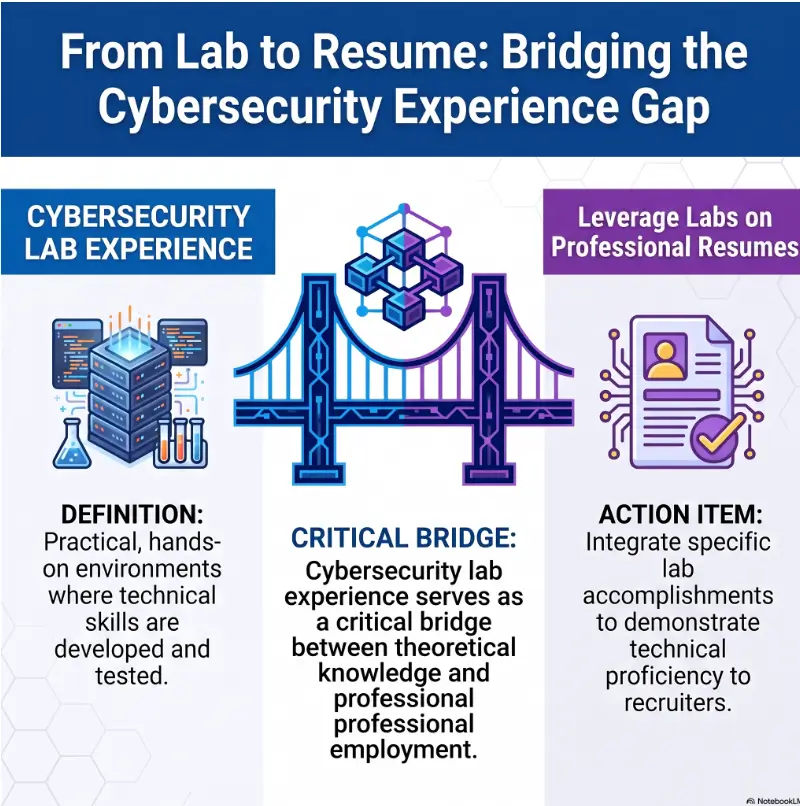
Before You List the Lab, Draw the Ethical Boundary
Kioptrix is a deliberately vulnerable virtual-machine series created for hands-on learning. The official Kioptrix Level 1 page on VulnHub describes the exercise as a place to learn foundational vulnerability-assessment and exploitation techniques.
That context belongs in your project description. It tells the reader that the work was authorized, isolated, and educational. It also prevents a recruiter from wondering whether “assessed a Linux server” means a personal lab, an employer system, or someone else’s forgotten server humming in a basement.
Before You Act
Use vulnerable machines only in environments you own or are explicitly authorized to test. This article explains resume positioning and documentation, not how to attack public systems. Confirm your lab networking mode before scanning, keep the target isolated, and never present self-directed practice as client or employer work.
Who should list Kioptrix?
Kioptrix is most useful when it fills a genuine evidence gap. A student with coursework but no internship can use it to show applied practice. A help desk technician moving toward security can use it to connect networking, Linux, troubleshooting, and risk communication.
It can also help a certification holder whose resume contains plenty of acronyms but few examples of independent investigation. In that situation, one carefully documented project gives interviewers something concrete to ask about.
When should you leave it off?
Remove Kioptrix when stronger evidence has arrived. A security internship, production vulnerability-management work, an employer-approved assessment, a substantial detection project, or a well-documented original tool usually deserves the space first.
If you studied a walkthrough without independently performing the steps, describe it as guided study and identify the notes you produced. Do not present the author’s result as your own. You can plan a later independent task when that serves your learning goal.
Key takeaway
List Kioptrix when it proves skills your resume cannot yet prove elsewhere. Remove it when stronger, more recent, or more original work can take its place.
Choose the Resume Section That Tells the Truth
The section heading establishes the reader’s expectations before a single bullet is read. “Professional Experience” implies employment or contracted work. “Cybersecurity Projects” signals self-directed practice. That small label can be the difference between credible ambition and an awkward interview correction.
Projects, Home Lab, or Education?
| Resume section | Best use case | What it communicates | Main caution |
|---|---|---|---|
| Cybersecurity Projects | Most students and career changers | A defined, outcome-oriented project | Keep the entry concise and evidence-based |
| Home Lab Experience | Kioptrix is one part of a broader lab | Ongoing practice with systems, networks, and tools | Do not make the section read like employment |
| Penetration Testing Labs | You have several distinct targets and reports | Focused offensive-security practice | Avoid listing ten nearly identical machines |
| Education | The lab was assigned in a formal course | Applied work connected to structured learning | Clarify your individual contribution |
| Professional Experience | Only when completed for an employer or authorized client | Workplace responsibility | Do not place a personal lab here |
Name the project clearly
A plain project title works better than an inflated job title. Include the target, platform, and lab context where space allows.
Recommended project heading
Kioptrix Level 1 Vulnerability Assessment | VulnHub Home Lab
Optional supporting line: [actual lab conditions], [performed activity and status], [actual date]. Replace every placeholder and do not copy an example completion date.
Specify the level you completed. “Kioptrix” refers to a series, so naming the exact machine makes the entry more reproducible and easier to discuss.
Use dates selectively
A completion month can help when the project is recent and supports a current career transition. It is less useful when the resume is crowded or the project is several years old.
Do not keep changing the date because you edited the write-up. The date should reflect when the assessment was substantially completed, not the afternoon when you corrected a comma.
Write a concise entry matched to your evidence
A good Kioptrix entry can usually fit into three bullets. Each bullet should perform a different job: establish scope, demonstrate method, and reveal a useful deliverable or defensive insight.
Line one: scope and objective
Begin by making the environment and purpose clear. This is where you quietly answer the authorization question and establish what you were trying to assess.
Example: Conducted an authorized black-box assessment of a Kioptrix Level 1 virtual machine within an isolated home-lab network.
Line two: methodology and decisions
Show the progression from discovery to validation. You do not need to publish commands or exploit syntax on the resume. Name the phases and the decisions that connected them.
Example: Performed host discovery, port and service enumeration, vulnerability research, manual verification, controlled exploitation validation, and Linux privilege escalation.
Line three: deliverable and defensive value
Finish with something another person could inspect. A report, evidence log, remediation plan, attack-path diagram, or detection note makes the exercise feel complete.
Example: Produced a structured assessment report with reproducible evidence, risk explanations, remediation priorities, and a mapped attack path from exposed service to elevated access.
The Resume Evidence Chain
For a deeper documentation workflow, pair the resume entry with a concise Kioptrix lab report or a focused enumeration report. The resume earns attention; the portfolio supplies the receipts.
Key takeaway
Make the actual scope, performed activities, assistance and result easy to identify. There is no measured reviewer-time target here.
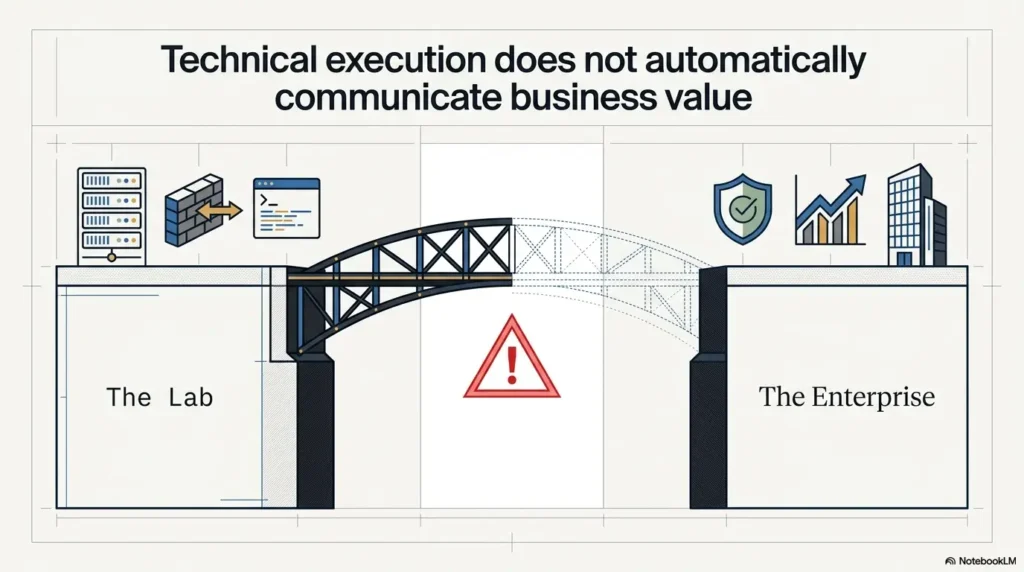
Turn Tools Into Evidence, Not a Shopping List
Tool names are useful keywords, but they are weak substitutes for judgment. A list containing Nmap, Nikto, Metasploit, Netcat, Burp Suite, and ten other utilities may look impressive from across the room. Up close, it raises a simple question: what did you actually do with them?
Embed tools inside actions
Place tools inside accomplishment bullets so the reader sees both the instrument and the decision.
| Weak wording | Evidence-based alternative |
|---|---|
| Tools: Nmap, Nikto, Metasploit | Enumerated exposed services with Nmap, manually reviewed web findings, and validated an applicable exploitation path in the authorized lab. |
| Used Linux commands | Investigated service behavior, permissions, processes, and local configuration to identify a supported privilege-escalation path. |
| Performed vulnerability scanning | Compared automated findings with service banners and manual evidence to remove false positives before reporting. |
| Gained root access | Documented the attack path from initial discovery through elevated access and proposed controls that would interrupt each stage. |
Skills that genuinely belong on the resume
- Network discovery: identifying the target and confirming connectivity within the isolated environment.
- Port and service enumeration: identifying exposed services, versions, and likely attack surfaces.
- Vulnerability validation: connecting observed evidence to a plausible weakness and checking whether it applies.
- Linux investigation: reviewing permissions, users, processes, configuration, and escalation conditions.
- Technical reporting: organizing evidence, impact, remediation, and limitations for another reader.
- Troubleshooting: recording failed hypotheses and adjusting the assessment plan.
- Risk translation: explaining how technical access could affect confidentiality, integrity, availability, or administrative control.
Manual versus automated validation
Automated scans can point toward a problem, but they do not relieve you of interpretation. A mature project notes where the scanner was useful, where it was noisy, and what evidence confirmed or rejected the result.
This distinction is worth practicing before an interview. A hiring manager may ask why a version match was not sufficient, how you handled a false positive, or why you chose one path over another. Your Metasploit versus manual testing notes can help you prepare a more thoughtful answer.
Show me the nerdy details
A technically stronger entry separates observation, hypothesis, validation, and conclusion. An open port is an observation. A suspected weakness is a hypothesis. Reproducing the vulnerable behavior is validation. Explaining the resulting access and its limitations is the conclusion.
That sequence also improves ATT&CK mapping. Do not attach a technique simply because a tool was capable of performing it. Map only behavior supported by your evidence, and distinguish the tactical objective from the specific action.
For web-focused work, the OWASP Web Security Testing Guide can help you organize testing categories and reporting language without turning your resume into a command transcript.
The NIST NICE Framework provides standardized language for cybersecurity work and skills. It can help you compare your project wording with the tasks and capabilities commonly discussed in education, hiring, and workforce development.
Kioptrix Resume Bullets by Experience Level
The best bullet is not the most dramatic one. It is the strongest statement you can explain calmly, accurately, and without checking a walkthrough under the table.
Beginner version: accurate and restrained
- Assessed an isolated Kioptrix VulnHub machine by enumerating network services, researching identified weaknesses, validating an access path, and documenting remediation recommendations.
- Recorded scan results, service evidence, unsuccessful hypotheses, and lessons learned in a structured technical journal.
- Created a concise project report explaining the assessment scope, findings, impact, and defensive controls.
Intermediate version: methodology-forward
- Conducted an authorized black-box assessment of Kioptrix in a segmented home lab, progressing through host discovery, service enumeration, vulnerability validation, initial access, and Linux privilege escalation.
- Correlated service-version evidence with vulnerability research and manually verified findings before including them in the final report.
- Mapped the validated attack path to defensive recommendations, including patching, service reduction, access restrictions, and network segmentation.
Reporting and analyst version
- Produced a structured Kioptrix assessment report containing evidence, severity rationale, attack-path analysis, limitations, and prioritized remediation actions.
- Identified detection opportunities across network discovery, web enumeration, exploitation attempts, account activity, and privilege escalation.
- Translated technical access into business-relevant consequences, including unauthorized administration, possible data exposure, service disruption, and follow-on movement.
ATS-friendly version
Use terminology from the role description when it accurately describes your work. Keep the sentence readable and supported; this guide reports no test of applicant-tracking-system rankings.
Example: Performed vulnerability assessment, network enumeration, service analysis, exploit validation, Linux privilege escalation, technical documentation, and remediation planning within an authorized Kioptrix cybersecurity lab.
Check each example against your actual work
Use relevant terms only when they describe work your records support. No ATS ranking or selection outcome is established here. Keyword soup may pass a machine, then arrive at a human desk wearing one wet sock.
Hypothetical wording revision: describe the actual record
Hypothetical before: “Hacked Kioptrix using Nmap and Metasploit and got root.” This is a wording example, not a reported applicant or interview outcome.
Possible revision, only if supported: “Performed [actual task] on [exact release] in [recorded environment], retained [actual result] and documented [limit].” If the work was guided, add the source and describe that assistance.
Then check the record: does it support the activity, result and environment stated? If it does not, narrow the sentence. A wording change cannot create evidence for work that was not performed.
This example demonstrates a claim-review process. It does not establish that revised wording changed an interview, employer preference or hiring result.
Add the Proof Most Beginner Projects Forget
Many lab write-ups end at elevated access. That is understandable because the challenge has been solved, the coffee has cooled, and the terminal cursor is blinking with the smugness of a cat on clean laundry.
A defensive appendix can state the observed impact, proposed controls and what a retest would need to establish. Label proposed work separately from actions you implemented and tested.
Add a remediation layer
- Identify software or operating-system components that require supported updates.
- Recommend removing unnecessary services or reducing their exposure.
- Consider access-control changes, stronger authentication, and least-privilege administration.
- Explain where host or network segmentation could limit the attack path.
- Note logging or alerting opportunities that could reveal comparable behavior.
- State any assumptions or limitations that affect the recommendation.
Retest when practical
A deliberately vulnerable VM is not always designed for permanent remediation, so a full patch-and-retest cycle may be impractical. You can still describe how you would verify the proposed fix.
For example, you might verify that the installed package includes the relevant fix, an unnecessary port is no longer reachable, or the previous privilege condition fails after permissions are corrected. A changed service banner alone does not prove remediation, and vendors may backport fixes without changing the upstream version shown in a banner. Label proposed retests honestly when you did not perform them.
Document failed hypotheses
Failed paths show troubleshooting, provided you document them briefly and explain what evidence changed your mind. This is more persuasive than pretending the assessment unfolded as a straight silver road from scan to root.
Evidence checklist for a portfolio-ready lab
- Exact Kioptrix level and source
- Authorization and network-isolation statement
- Objective and assessment assumptions
- Host, port, service, and version evidence
- Reasoning that connects evidence to each finding
- Sanitized screenshots or command excerpts
- Failed hypotheses and troubleshooting notes
- Impact and realistic limitations
- Prioritized remediation recommendations
- Proposed or completed retest steps
A consistent Kioptrix evidence-tracking system makes this much easier. Capture evidence while the reasoning is fresh instead of reconstructing the entire assessment from shell history three weeks later.
Key takeaway
Root access proves that a path worked. Remediation, retesting, and limitations prove that you understand the path well enough to communicate and reduce risk.
Build a Portfolio Without Overspending
You do not need an expensive platform, premium resume package, cloud range, custom application, and glowing neon domain to make Kioptrix credible. The project’s value comes from clear thinking and inspectable evidence.
Paid tools may improve presentation or save time, but they cannot replace your reasoning. Before buying anything, identify the exact problem the purchase would solve.
Presentation options: choose what serves the artifact
| Setup | What it includes | Likely cost | Who it suits | What to verify before paying |
|---|---|---|---|---|
| Good | Resume entry, one-page PDF report, organized screenshots, local lab notes | Free or nearly free | Students and budget-conscious career changers | Nothing beyond secure file storage and readable formatting |
| Better | Everything above plus a public code repository, polished project page, and tailored resume versions | Low recurring cost if using a custom domain | Candidates applying broadly | Export options, privacy controls, accessibility, and long-term ownership |
| Best | Multiple distinct projects, original automation, detection notes, reviewed reports, and interview coaching | Variable | Candidates targeting competitive security roles | Reviewer qualifications, feedback depth, cancellation terms, and whether the service improves your own understanding |
When free tools are enough
Free tools are enough when you can produce a clean PDF, a readable online write-up, and organized evidence without exposing sensitive data. A static portfolio page or well-structured repository can be more effective than a complicated website that loads slowly and hides the report behind decorative fog.
Use the existing Kioptrix cybersecurity portfolio guide to structure the broader collection, then use a focused Kioptrix portfolio project page for the individual assessment.
When paid help may be worth considering
A professional resume review may be useful when you are changing industries, repeatedly reaching interviews but not progressing, or struggling to translate years of IT work into security language. A technical mentor may help when your report contains unsupported conclusions or you cannot distinguish scanning from validation.
Review the evidence gaps
| Question | Yes | Not yet |
|---|---|---|
| Can a reader identify the actual lab context and scope? | Ready | Add a scope statement |
| Does each finding include supporting evidence? | Ready | Separate evidence from assumptions |
| Can you explain every tool and decision? | Ready | Repeat the lab without copying |
| Does the report include remediation? | Ready | Add control recommendations |
| Are credentials, flags, and unnecessary exploit details removed? | Ready | Sanitize before publishing |
| Can a non-solver follow the attack path? | Ready | Improve structure and transitions |
Match Kioptrix to the Job You Actually Want
The same project should not sound identical on every application. Tailoring does not mean inventing new work. It means selecting the part of the work that best supports the employer’s stated needs.
Pentesting, vulnerability, and security engineering
- Penetration-testing role: emphasize scope, methodology, manual verification, exploitation validation, and report quality.
- Vulnerability analyst: emphasize false-positive review, reproducibility, severity reasoning, remediation priority, and retesting.
- Security engineer: emphasize hardening, service reduction, privilege boundaries, segmentation, and attack-path interruption.
SOC and detection roles
A Kioptrix project can support a defensive application when you describe observable activity. Consider what network scans, web requests, authentication events, process changes, or privilege actions might appear in logs.
Do not claim that you built detections unless you actually did. You can say that you identified detection opportunities or proposed telemetry sources. Better still, collect logs in a controlled repeat of the lab and create a small detection appendix.
IT, help desk, and GRC roles
- Help desk or systems administration: emphasize networking, Linux, troubleshooting, service configuration, permissions, and documentation.
- GRC: emphasize authorized scope, evidence quality, risk statements, limitations, control recommendations, and report organization.
- Cybersecurity internship: balance technical method with learning discipline, teamwork readiness, and communication.
For internship applications, review the Kioptrix cybersecurity internship portfolio guide. For interview preparation, convert the project into a concise situation, task, action, and result narrative using these Kioptrix behavioral interview examples.
Map ATT&CK techniques carefully
MITRE ATT&CK can provide recognizable language for Discovery, Initial Access, Credential Access, Privilege Escalation, and other tactical objectives. However, a framework label should clarify the evidence, not decorate it.
Map only actions your notes support. Distinguish between the objective you pursued and the technique used to pursue it. When the mapping feels uncertain, omit it from the resume and keep the analysis in your portfolio.
Key takeaway
Tailor the emphasis, not the facts. A single project can support different roles when each application highlights the most relevant evidence.
Avoid the Claims That Quietly Damage Credibility
Most resume inflation does not begin as deliberate deception. It begins with a candidate trying to make modest experience sound competitive. A noun gets upgraded, a percentage appears from nowhere, and a home lab wakes up one morning wearing an enterprise badge.
Mistakes that weaken the entry
- Calling yourself a “Kioptrix Penetration Tester” or presenting the lab as a job title.
- Placing self-directed practice under Professional Experience.
- Claiming you discovered a new vulnerability when you reproduced a known training weakness.
- Listing every tool shown in a walkthrough, including tools you did not personally use.
- Publishing passwords, reusable credentials, flags, or unedited exploit output.
- Describing the entire project as “obtained root access.”
- Claiming measurable security improvement without a baseline or retest.
- Mapping numerous ATT&CK techniques without supporting evidence.
- Using “expert,” “advanced,” or “professional pentester” based on one beginner machine.
- Linking to a write-up you cannot explain in your own words.
Safer alternatives to inflated wording
| Inflated wording | Credible alternative |
|---|---|
| Professional penetration tester | Entry-level candidate with hands-on penetration-testing lab experience |
| Discovered critical vulnerabilities | Identified and validated known weaknesses in a deliberately vulnerable training machine |
| Secured the server | Developed prioritized remediation recommendations and proposed retest steps |
| Improved security by 90% | Recommended controls to reduce exposed services and interrupt the validated attack path |
| Mastered Metasploit | Used an applicable module in a controlled lab and validated the resulting session |
| Conducted enterprise pentest | Completed an authorized black-box assessment in an isolated home lab |
The interview proof test
Before keeping any phrase, ask whether you could explain it for five minutes without notes. Could you describe the evidence, the decision, the limitation, and what you would do differently?
When the answer is no, weaken the wording or strengthen the project. Honest specificity is not timid. It is sturdy.
Five-minute credibility check
- Explain why the lab was authorized and isolated.
- Describe how you identified the target and attack surface.
- Defend one vulnerability hypothesis with evidence.
- Explain one failed path and what changed your mind.
- Name the remediation you would prioritize first and why.
FAQ
Is Kioptrix worth putting on an entry-level cybersecurity resume?
Yes, when you lack stronger practical experience and can explain the methodology, evidence, findings, remediation, and lessons learned. It is less useful when the entry merely says that you ran tools and obtained root access.
Should Kioptrix go under experience, education, or projects?
Projects or Home Lab Experience is usually the clearest choice. Education can work when the lab was completed as part of a formal course. Use Professional Experience only when the work was performed for an employer or authorized client.
Can I mention that I gained root access?
Yes. Present it as one validated result inside a broader assessment process. Explain how you reached it, what it demonstrated, and which defensive controls could have interrupted the path.
Should I put Kioptrix commands on my resume?
No. Commands, screenshots, evidence, and technical detail belong in the portfolio. Resume bullets should summarize scope, decisions, skills, deliverables, and outcomes.
Can I list Metasploit after completing Kioptrix?
List it when you personally used it and can explain why the selected module applied, what configuration mattered, how you validated the result, and what limitations remained. Recognizing a tool in a walkthrough is not the same as using it competently.
Does Kioptrix count as penetration-testing experience?
It counts as hands-on lab experience. It does not, by itself, count as professional penetration-testing employment or client experience.
Should I link my Kioptrix walkthrough?
Link it when the work is original, sanitized, readable, and organized around reasoning rather than copied commands. Include remediation, limitations, and lessons learned. A recruiter should be able to understand the document without solving the machine first.
How many vulnerable-machine projects should I list?
Choose the projects that provide distinct, relevant evidence for the application and fit its format. There is no measured optimum project count here. Avoid repeating nearly identical claims when another supported activity would add useful context.
Can I use Kioptrix for a SOC analyst resume?
Yes, but shift the emphasis toward observable behavior, logs, indicators, detection opportunities, false-positive review, and communication. Do not pretend an offensive lab was a complete SOC project unless you also collected and analyzed telemetry.
Build Your Resume Entry in 15 Minutes
You do not need to rewrite your entire resume tonight. Open your Kioptrix notes and complete one small evidence audit.
Minutes 1 through 5: audit the facts
- Write the exact Kioptrix level.
- State where the VM came from and how the lab was isolated.
- List only the tools you personally used.
- Identify the strongest validated finding.
- Write one sentence explaining the resulting risk.
Minutes 6 through 10: write three bullets
- Bullet one: scope and assessment objective.
- Bullet two: methodology, evidence, and strongest technical decision.
- Bullet three: report, remediation, detection opportunity, or retest plan.
Minutes 11 through 15: save the proof
Create a one-page sanitized summary containing the scope, workflow, primary finding, impact, remediation, and one lesson learned. Link it only after checking that credentials, flags, personal information, and unnecessary exploit detail have been removed.
Use the Kioptrix checklist for a final review, then read the entry aloud. If it sounds larger than the work, trim it. If it hides the work beneath tool names, sharpen it.
Your next move
Build one honest, evidence-backed entry today. The goal is not to convince a recruiter that a beginner lab was a consulting engagement. It is to show that you can approach technical uncertainty with method, curiosity, restraint, and a report another person can trust.
Last reviewed: 2026-10-13
Technical guidance updated: 2026-10-13. Clarified patch verification beyond service banners, labeled the interview scenario as illustrative, and repaired section navigation.
Kioptrix resume claim review
Use this when: you are a learner describing a lab project without implying employment or client work. Use the editable record below and replace each prompt with a dated response. Keep assumptions and unresolved questions visible.
Field guidance for this record
| Field | What to record | Your evidence / owner / next check |
|---|---|---|
| Truthful context | Name the lab release, authorized environment and your role. | To complete |
| Actual task | Describe the investigation or reporting work you performed. | To complete |
| Inspectable artifact | Link a sanitized note, result or report supporting the statement. | To complete |
| Claim limit | State guidance used, untested steps and skills the artifact does not establish. | To complete |
Edit the template below with your own dated observations. Bracketed prompts are guidance, not evidence. This page does not automatically save or upload your entry; download it before leaving or reloading.
Template ready. Replace the prompts with your record, then download a copy.
Worksheet usability update — October 23, 2026: added an editable record and a download of its current contents. This does not verify the article’s sources or perform the lab exercise.
Next action: Rewrite one resume bullet so a reviewer can connect its claim to actual work. Mark the relevant row confirmed, provisional or unresolved. Keep the supporting record, responsible person and next check beside it so another reader can continue the work without treating an assumption as a result.
This is an editorial working aid. Complete it with your own scope, source records and accountable reviewers. Filling the table does not by itself establish coverage, compliance or acceptance.
Worksheet change record — October 20, 2026
Added this kioptrix resume claim review with four article-specific fields and an evidence-based next action. Existing source notes retain their own review dates. This addition is not a fresh verification of every statement or a newly executed test.
Wording revision: October 23, 2026. Added guided and unfinished-work examples, made completed-result templates conditional, replaced a fictional interview outcome with an explicit wording exercise and removed unsupported reviewer-time and project-count claims.