
Field Notes Over Victory Speeches
Defeating the “Note Fog” in Kioptrix Level Sessions.
A good session summary isn’t about the commands you ran; it’s about preserving the reasoning trail. Don’t start your next session with archaeology—start with momentum.
Table of Contents
Fast Answer: A useful Kioptrix Level session summary is not a diary of everything you clicked. It is a clean, reusable record of what you observed, what you tried, what changed your thinking, what failed, and what you would test next. The best summary helps you restart quickly, spot patterns across sessions, and sound more thoughtful when explaining your work to others.
Start With Retrieval: Why a Good Session Summary Should Help You Resume in Minutes
A revisit-friendly summary should answer “Where was I?” before it answers “What did I do?”
Most beginners treat notes like storage. They dump commands, screenshots, and stray observations into a digital attic and hope meaning will sort itself out later. Later, of course, never arrives wearing a cape. It arrives tired, slightly annoyed, and asking, “Why did I stop here?”
A good Kioptrix Level session summary begins with retrieval. When you reopen it, you should be able to answer three questions in under two minutes: what stage of the lab you were in, what evidence you had, and what you planned to test next. That is the difference between continuity and re-beginning.
The best notes reduce restart friction, not just preserve memory
I have seen learners lose 20 minutes at the start of a 30-minute practice block simply reconstructing yesterday’s logic. That is not a note problem in the abstract. That is a momentum problem with teeth. When the restart is clumsy, people often default to random clicking just to feel movement. The session becomes noisy before it becomes useful.
A strong session summary makes future sessions feel continuous instead of scattered
Think of your summary as a bridge, not a scrapbook. A scrapbook says, “Look what happened.” A bridge says, “Here is how to continue.” That tiny shift changes everything. It keeps each session from feeling like an isolated island and turns your work into a chain of reasoning you can actually revisit with confidence.
- Start each summary with current stage and status
- End each summary with the next test to run
- Keep the first screen scan-friendly
Apply in 60 seconds: Add a one-line “Resume from here” sentence to the top of your current lab notes.
Skip the Play-by-Play: What a Kioptrix Summary Must Capture Instead
Focus on observations, pivots, dead ends, and next hypotheses
The temptation is understandable. Command logs feel concrete. They look technical. They even smell faintly of progress. But a command dump without reasoning attached is like a grocery receipt from someone else’s dinner. You can study it all day and still not know what they were trying to cook.
What matters more is the pattern around the action. What did you observe? What hypothesis did that observation produce? What did you try? What changed? If a summary captures those four beats, it becomes useful. If it captures only the keystrokes, it becomes decorative.
Record the clues that changed your direction, not every terminal command
Suppose you noticed an old Apache version, a strange directory listing, and a login field that behaved differently when fed unusual input. Those clues matter because they affected your reasoning. They explain the road you chose. The future value of your note lives there.
The goal is not completeness for its own sake, but clarity you can reuse
Beginners often confuse “more” with “safer.” More screenshots. More raw output. More copied responses. Yet a summary should behave more like a field notebook than a warehouse. It should preserve the signal, not every pebble on the path. Clean summaries are not shallow. They are selective in the way good maps are selective.
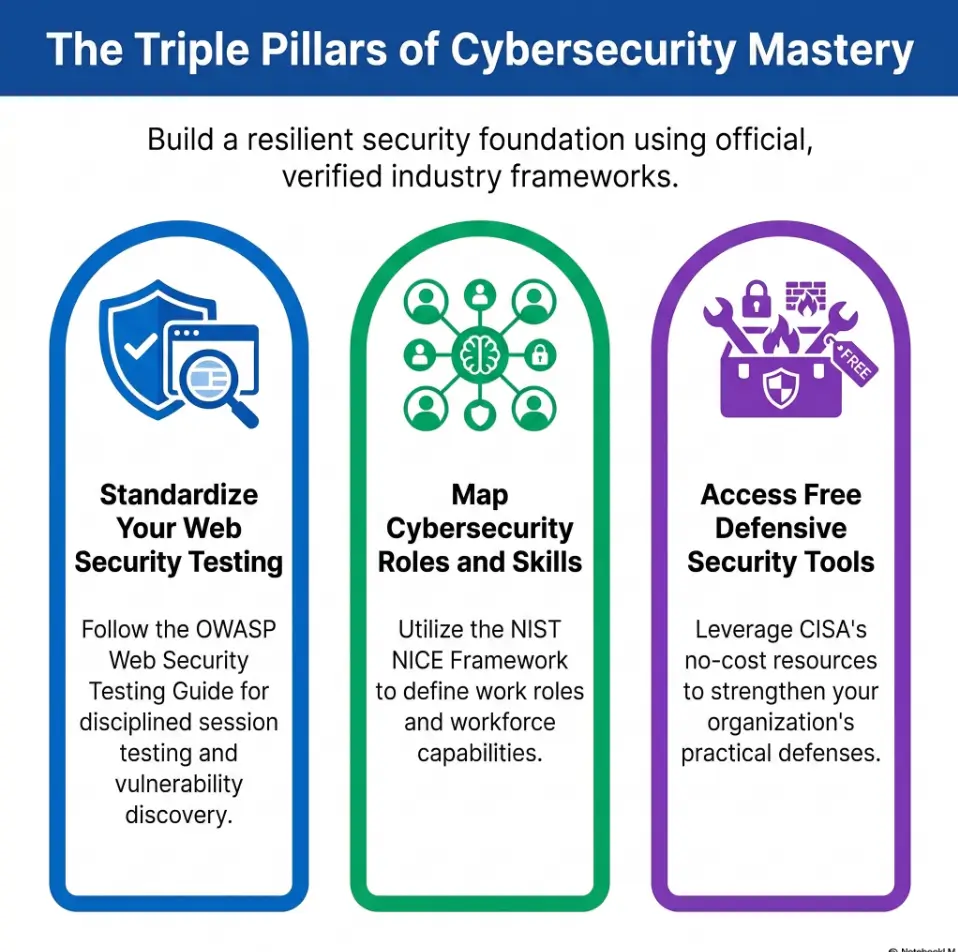
OWASP’s Web Security Testing Guide emphasizes methodology, test objectives, and reporting discipline rather than random tool worship, which is a useful north star for lab notes too. Your summary should help you understand the path, not merely admire the footprints.
First Page First: Build a Session Header That Grounds the Entire Lab
Include machine name, session date, time spent, and current stage of progress
Your first page should ground the session before you write anything clever. Use a header that tells your future self what machine you were working on, when you worked on it, how long you spent, and where you left off. In practice, this can be absurdly simple:
Lab: Kioptrix Level 1
Date: 2026-04-20
Time spent: 35 minutes
Stage: Initial enumeration complete, web route under review
Resume from here: Re-test the login behavior and compare it against service/version clues from enumeration.
Add a one-line mission so the session has a visible center of gravity
I like a one-line mission because it prevents drift. “Goal: verify whether the web app route is more promising than the Samba angle.” That is enough. Without it, the session can bloat into five tabs, three half-finished scans, and the familiar sensation that your brain has become a browser cache.
Track environment details only if they affect your reasoning later
Do not log your wallpaper color, your coffee status, or the phase of the moon. Log environment details only if they matter later: network setup, VM snapshot state, special tooling constraints, odd connectivity behavior, or a change that could explain weird results. If a detail will not help interpret evidence later, leave it out with dignity.
Eligibility checklist:
- Did you include the machine name? Yes/No
- Did you include the session date and time spent? Yes/No
- Did you include the current stage? Yes/No
- Did you include a one-line next step? Yes/No
Neutral action: if you answered “No” to two or more, fix the header before you start the next session.
Evidence Before Opinion: Log What You Saw Before What You Assumed
Separate raw findings from interpretation so your future self can think clearly
This is where many notes quietly go crooked. Learners blend fact and interpretation into one sentence, and then later cannot tell which part was actually observed. “The app is probably vulnerable because it looked old” is not a note. It is a shrug wearing a trench coat.
Instead, split evidence from meaning. Write what you saw first. Then write what you think it might imply. That small separation preserves your judgment instead of flattening it.
Capture ports, services, odd behavior, page responses, and anomalies in plain language
Plain language wins here. “Observed: port 80 returned a login page with unusual error behavior after malformed input.” Better than a giant paste of output followed by silence. “Observed: SMB appears exposed; version clues may matter later.” Better than forcing your future self to reread the entire scan like a detective in a fluorescent hallway.
A better note often begins with “Observed” instead of “I think”
Try this two-column rhythm:
| Observed | Possible meaning |
|---|---|
| Port 80 serves a login page with inconsistent responses | May indicate weak input handling or a clue worth manual testing |
| Service/version information looks old | May justify checking known historical routes, but only after validation |
| Directory listing reveals naming patterns | Could suggest hidden endpoints or weak file exposure practices |
NIST’s NICE Framework exists to describe cybersecurity work in terms of tasks, knowledge, and skills in real workplace contexts. That makes it a useful reminder that good security practice is not just “running tools,” but documenting what you observed, how you interpreted it, and why you acted next.
Show me the nerdy details
A lightweight template reduces cognitive switching costs. You are not deciding how to document every time. You are filling known fields. That preserves attention for the lab itself, which is where the interesting work belongs.
- Use “Observed” for facts
- Use “Hypothesis” for meaning
- Keep both in plain English
Apply in 60 seconds: Rewrite one vague note into two lines: one observed fact, one possible implication.
Decision Trail Matters: Show Why You Chose One Path Over Another
Good summaries preserve reasoning, not just results
The decision trail is where your note grows a backbone. It records why one route seemed stronger than another at a particular moment. This matters because later success can make earlier uncertainty disappear. A good summary refuses that illusion. It shows that you chose a path because certain clues were stronger, not because you possessed mystical lab vision.
Write down what made one route feel more plausible than the others
Maybe you saw multiple possible avenues, but the web route looked promising because the application revealed more interactive behavior than the network service angle. Write that down. Not in grand prose. Just enough to preserve the hinge of the choice.
Decision card: When route A beats route B
Route A: Follow the web application first
When it wins: Rich responses, user-controlled inputs, visible anomalies, more room for hypothesis testing
Trade-off: Can consume time if the behavior is noisy but meaningless
Route B: Follow exposed network services first
When it wins: Strong version clues, historically weak defaults, clearer attack surface
Trade-off: May tempt premature exploitation before enough context exists
Neutral action: record why you picked one route so the next session starts with context, not re-litigation.
Note the exact moment a weak hunch became a testable hypothesis
This is one of the most valuable things you can preserve. Not “I had a feeling.” The useful note is: “Hunch became testable after I saw X and Y align.” That is how real lab judgment develops. It is less lightning strike, more weather system.
I once watched a learner keep circling the same weak avenue because they had recorded a conclusion without the trigger that created it. The note said what they believed, not why they believed it. One missing line created two extra sessions of drift. A tiny omission can become a tax.
Do Not Write Backward: Avoid Summaries That Pretend You Knew the Answer All Along
Backfilled certainty makes learning look cleaner and less useful than it really was
When people write notes after a breakthrough, they often smooth the whole path into a neat line. It is understandable. We all enjoy meeting our past selves as if they were quietly brilliant. But backward writing destroys the real educational value of the session.
If your summary makes it seem like the correct route was obvious from minute three, you erase the uncertainty that taught you how to choose. The note becomes flattering and less useful at the exact same time.
Leave room for uncertainty, confusion, and wrong turns because those teach method
You do not need to dramatize the chaos. Just preserve it honestly. “At this stage, I was not confident whether the old service clue mattered more than the web behavior.” That sentence is not weakness. It is method under construction.
Let’s be honest: the messy middle is usually where the real training happened
The lab is not only about arriving at root. It is about learning how you think under uncertainty. That means the messy middle deserves a seat at the table. Not a huge seat. Not a velvet throne. Just enough space to show what you misunderstood, what you ruled out, and how your confidence changed over time.
Short Story: A friend once sent me a beautifully formatted lab note that looked almost cinematic. Every clue appeared to point gracefully to the next. The problem was that none of it felt real. When I asked what actually made them switch from one route to another, they had to think for a long time.
The summary had polished away the moment of doubt that mattered most. Later, they rewrote the note with three extra lines: what first seemed promising, what contradicted it, and what finally tipped the balance. Suddenly the note became useful. It no longer read like a victory speech. It read like a mind at work. And that version was the one they could actually learn from a month later.
Dead Ends Are Data: How to Record Failed Attempts Without Cluttering the Page
Failed paths deserve short, structured notes, not emotional commentary
Dead ends are not embarrassing unless you dress them in melodrama. A clean failure note can be just three lines: what you tried, what happened, and why you moved on. That is enough. No need for “wasted an hour like a fool.” Your summary is not a courtroom, and you are not cross-examining yourself under fluorescent sadness.
A dead end should explain what was tried, what happened, and why you moved on
For example:
- Tried: Manual probing of a suspected web parameter
- Result: Responses stayed static across several controlled variations
- Why moved on: No evidence the input affected server-side behavior, so the lead weakened
That little structure pays rent. It stops you from repeating the same low-value loop next week, especially when the same clue still looks tempting on tired eyes.
Good failure notes stop you from repeating the same loop next week
CISA’s cyber guidance repeatedly frames security work around reducing exposure through disciplined practices and repeatable hygiene, which maps surprisingly well to learning. In a training context, one form of hygiene is keeping enough record of failed attempts that you do not keep re-infecting your own workflow with old mistakes.
| Field | Keep it this short |
|---|---|
| Attempt | One sentence |
| Outcome | One sentence |
| Reason for moving on | One sentence |
Who This Is For, and Who It Is Not
This is for learners who want to resume faster, study smarter, and explain their work better
If you are juggling work, family, errands, and the small tragic comedy of adult life, this approach is for you. Especially if your lab time arrives in narrow slices and you cannot afford to spend the first half of each session reconstructing the last one.
This is for people building method, not just chasing a root shell screenshot
There is nothing wrong with wanting a win. But if the only artifact you keep is the end-state screenshot, you are preserving the trophy and throwing away the training. Good summaries are for learners who care about the method that produced the result.
This is not for those who want ornamental notes with no practical reuse value
If you want your notes to look impressive but never be opened again, a decorative dashboard may be enough. If you want something you can scan at 6:40 a.m. before work and instantly remember what mattered, use the system in this guide instead.
Quote-prep list for your next lab note:
- The session goal in one line
- The strongest two observations
- The leading hypothesis
- The dead end worth not repeating
- The very next test to run
Neutral action: gather these five items before you close a session, even if you skip everything else.
Use a Simple Template: The Sections That Make a Session Summary Actually Reusable
Session objective
One sentence. Not a memoir. Not a manifesto. Just the mission of the session.
Key observations
List the strongest findings in plain language. These should be the clues that shaped the session.
Working hypotheses
Keep these separate from observations. Mark them clearly as tentative.
Actions taken
Do not paste every command. Summarize the meaningful moves and why they were relevant.
What failed and why
Three-line failure notes work beautifully here.
What changed the plan
This captures pivots, contradictions, or stronger-than-expected evidence.
Current status
Write a one-line snapshot of where the investigation stands.
Next test to run
This is the fuse for the next session. Do not leave without it.
Questions to research later
Use this for concepts, protocols, odd behaviors, or tooling questions that deserve off-lab reading.
Reusable Template
Session objective:
Key observations:
Working hypotheses:
Actions taken:
What failed and why:
What changed the plan:
Current status:
Next test to run:
Questions to research later:
Show me the nerdy details
A lightweight template reduces cognitive switching costs. You are not deciding how to document every time. You are filling known fields. That preserves attention for the lab itself, which is where the interesting work belongs.
- Use the same field names every time
- Keep fields short and functional
- Always finish with a next step
Apply in 60 seconds: Copy the nine-field template into your notes app before your next lab session starts.
Don’t Turn It Into Homework: Keep the Format Light Enough to Survive Real Life
A summary that takes too long to write will quietly die after three sessions
This is the hidden graveyard of note-taking systems. They are wonderful on Monday, admirable on Tuesday, and abandoned by Thursday when life starts behaving like life. A system that demands 20 minutes of post-session writing is not a study aid. It is a second job with worse snacks.
Aim for fast structure, short sentences, and repeatable labels
The most durable note systems are a little plain. That is part of their beauty. They let you capture the useful part of the session in four or five minutes and move on. Your summary should be sturdy enough for tired days, not designed only for your most disciplined imaginary self.
Here’s what no one tells you: the best note system is the one you will still use when you are tired
I would rather see eight modest, consistent session summaries than one gorgeous note palace followed by silence. Reusable beats impressive. Boring beats abandoned. A slightly messy system that survives is worth more than a perfect one that evaporates.
Mini calculator: Is your summary too heavy?
If your average lab block is 30 minutes and your summary takes 12 minutes, then 40% of your session is being spent on documentation.
If you can reduce the summary to 5 minutes, you reclaim 7 minutes, which is enough for one more careful test or a cleaner review of findings.
Neutral action: time your next summary once, then trim any field that keeps expanding without adding value.
Common Mistakes That Make Kioptrix Session Summaries Useless Later
Writing command dumps with no reasoning attached
This is the classic. The note looks technical, but it does not explain the investigation. You preserved motion, not meaning.
Recording conclusions without showing the evidence behind them
When you later question the conclusion, you have nothing to inspect. That forces you back to zero or, worse, into blind trust of your earlier self.
Forgetting to mark what is confirmed versus what is only suspected
Nothing muddies a session summary faster than unlabeled certainty. Confirmed findings and working theories should not wear the same coat.
Leaving out dead ends, which makes future troubleshooting slower
If you do not mark failed paths, they return like uninvited relatives. Familiar, persistent, and somehow always sitting in the best chair.
Ending the session with no next step, so the next session begins in fog
This is the most expensive mistake for busy learners. The future session begins with ambiguity instead of action.
| Tier | What your notes contain | What changes |
|---|---|---|
| Tier 1 | Command dump only | Looks technical, hard to reuse |
| Tier 2 | Commands plus raw findings | Better memory, weak reasoning trail |
| Tier 3 | Findings plus hypotheses | Useful for restarting |
| Tier 4 | Adds failed attempts and pivots | Useful for learning |
| Tier 5 | Adds current status and next step | Useful for learning, resuming, and explaining |
Neutral action: aim for Tier 4 or Tier 5, not because it looks impressive, but because it works under real conditions.
Make It Searchable: Write Notes Your Future Self Can Scan, Filter, and Trust
Use consistent labels for findings, hypotheses, failures, and follow-ups
If you use the same labels every session, your notes become searchable in seconds. “Observed,” “Hypothesis,” “Failed,” “Pivot,” “Next.” These labels are humble little lanterns. They help your future self move through old notes without scraping every paragraph for context.
Favor plain English over cryptic shorthand that will age badly
Shorthand feels efficient in the moment and cryptic later. If your note says “weird auth resp maybe inj?” you may save four seconds now and lose four minutes next week. Plain English ages better.
A searchable summary becomes a small lab archive, not just one day’s record
Once you have 10 or 15 summaries, patterns emerge. You start noticing your common failure modes. You see how often weak evidence seduces you into long detours. You begin recognizing which clues reliably deserve more attention. That archive is more than memory. It becomes feedback.
Infographic: The 5-Step Flow of a Reusable Kioptrix Session Summary
When every session passes through these five boxes, your notes stop being fragments and start becoming an archive you can trust.
- Use stable labels in every summary
- Write findings in plain English
- Make “Next” easy to find at a glance
Apply in 60 seconds: Pick five labels now and promise yourself not to rename them every week.
Portfolio Angle, Quietly: How Better Session Notes Improve Interviews and Confidence
Strong summaries help you explain process, judgment, and pivots with credibility
Interviewers and mentors are often less impressed by polished outcomes than by clear reasoning. A learner who can say, “Here is what I observed, here is why I prioritized this route, here is what contradicted my first theory, and here is what I tested next,” sounds grounded. Awake. Employable, even when still learning.
Interview-ready stories often come from well-kept notes, not perfect technical wins
NIST’s NICE material frames cybersecurity work as real tasks carried out in real contexts. That means explanation, analysis, and judgment are not decorative extras. They are part of the work. Notes that preserve your pivots and reasoning help you talk about the work in a workplace way, not just a hobbyist way.
The value is not sounding brilliant, but sounding awake, careful, and real
This is the quieter gift of good summaries. They improve confidence without requiring performance. You are not inventing a better story later. You are simply returning to a faithful record of what happened and telling it cleanly.
I have seen people with flashy screenshots struggle to explain their path. I have also seen people with modest wins tell a calm, precise story from notes they trusted. Guess which one felt more credible. The answer is not cinematic.
Next Step: Create One Reusable Summary Template Before Your Next Kioptrix Session
Open your notes app and make a fixed template with nine fields you will use every time
You do not need a fancy dashboard. You need a repeatable starting shape. Open your notes app, paste the template, and save it somewhere easy to duplicate. That alone removes one of the quietest forms of friction: blank-page resistance.
Keep the first version plain enough that you can fill it out in under five minutes
If you are building the system today, build the version that survives tired Tuesdays, not the version that dazzles your internal productivity committee. Under five minutes is a good standard. Fast enough to keep using. Slow enough to preserve what matters.
Your next session will go better the moment you stop starting from a blank page
That is the loop we opened at the start, and it is the one worth closing here. The real burden in lab practice is not only difficulty. It is repeated re-entry. A reusable Kioptrix Level session summary lowers that re-entry cost. It helps you resume in minutes, learn from your dead ends, and explain your work with more honesty and less strain. In the next 15 minutes, create the template, run one short session, and end it with a single concrete next step. That tiny ritual is where continuity begins.
- Create one fixed template
- Fill it in before closing the lab
- Always leave yourself one next move
Apply in 60 seconds: Save a duplicate-ready “Kioptrix Session Summary” note right now so the next lab starts with structure, not emptiness.
FAQ
What should a Kioptrix Level session summary include?
At minimum, include the session objective, strongest observations, working hypotheses, meaningful actions taken, failed attempts, current status, and the next test to run. If those pieces are present, your summary will usually be strong enough to revisit later without confusion.
How long should a lab session summary be?
Usually one short page is enough for a focused session. The goal is not to be exhaustive. The goal is to capture the clues, pivots, and next step with enough clarity that you can resume quickly.
Should I save every command I ran?
No. Save commands selectively when they are unusual, important, or likely to be reused. For routine actions, summarize the purpose and the result instead. A summary is not meant to be a raw terminal transcript.
How do I document failed attempts without making the note messy?
Use a three-line structure: what you tried, what happened, and why you moved on. That keeps failure notes useful without letting them sprawl across the page.
Is it better to use a notebook app, spreadsheet, or plain text file?
Use the format you will reliably reopen. Plain text and simple notes apps are often the most durable because they are fast and searchable. Spreadsheets can help if you are tracking many sessions, but they can feel stiff for narrative reasoning. The best format is the one you will still use when tired.
How do I make session notes useful for interviews later?
Preserve the reasoning trail. Interview value often comes from being able to explain how your thinking changed, what evidence mattered, and why you chose one path over another. Notes that capture pivots and uncertainty help you tell that story credibly.
What is the difference between observations and hypotheses in lab notes?
Observations are what you directly saw, measured, or confirmed. Hypotheses are what you think those observations might mean. Keeping them separate helps you avoid confusing evidence with interpretation.
Should I write the summary during the session or after it ends?
A hybrid approach usually works best. Capture key observations during the session so you do not lose them, then spend a few minutes at the end shaping the summary, recording the current status, and writing the next test to run.
Last reviewed: 2026-04.