Kioptrix Level 1 for Beginners: Setup to First Scan

Complete five setup checks, compare a filled manifest, save your first Nmap scan and turn its output into one useful next question.
Practical cybersecurity guides, labs & compliance
Complete five setup checks, compare a filled manifest, save your first Nmap scan and turn its output into one useful next question.
Map one Kioptrix artifact to the eJPT objectives it partly addresses. Use the objective-gap record to identify missing evidence, changed conditions and the next practice task without treating VM completion as an exam-readiness score.
Plan a comparable practice question in DVWA and a named Kioptrix release. Use the paired-task record to check behavior, starting conditions, guidance and order before comparing observations or drawing conclusions.
Practise reading a Kioptrix artifact before deciding what it means. Use labeled examples and the observation card to separate literal output, supported interpretation, alternatives and missing evidence.
Connect Kioptrix observations with a labeled evidence map. Use the worked relationship example and blank record to distinguish support, contradiction, dependencies and shared sources while keeping missing links visible.
Plan a repeated Kioptrix attempt for an explicit purpose: reproduction, changed conditions or missing evidence. Use the comparison record to retain starting state, assistance, outcomes and the reason a repeat is warranted.
Turn a Kioptrix study goal into one bounded task with prerequisites, an observable deliverable and a stop condition. Includes a filled example.
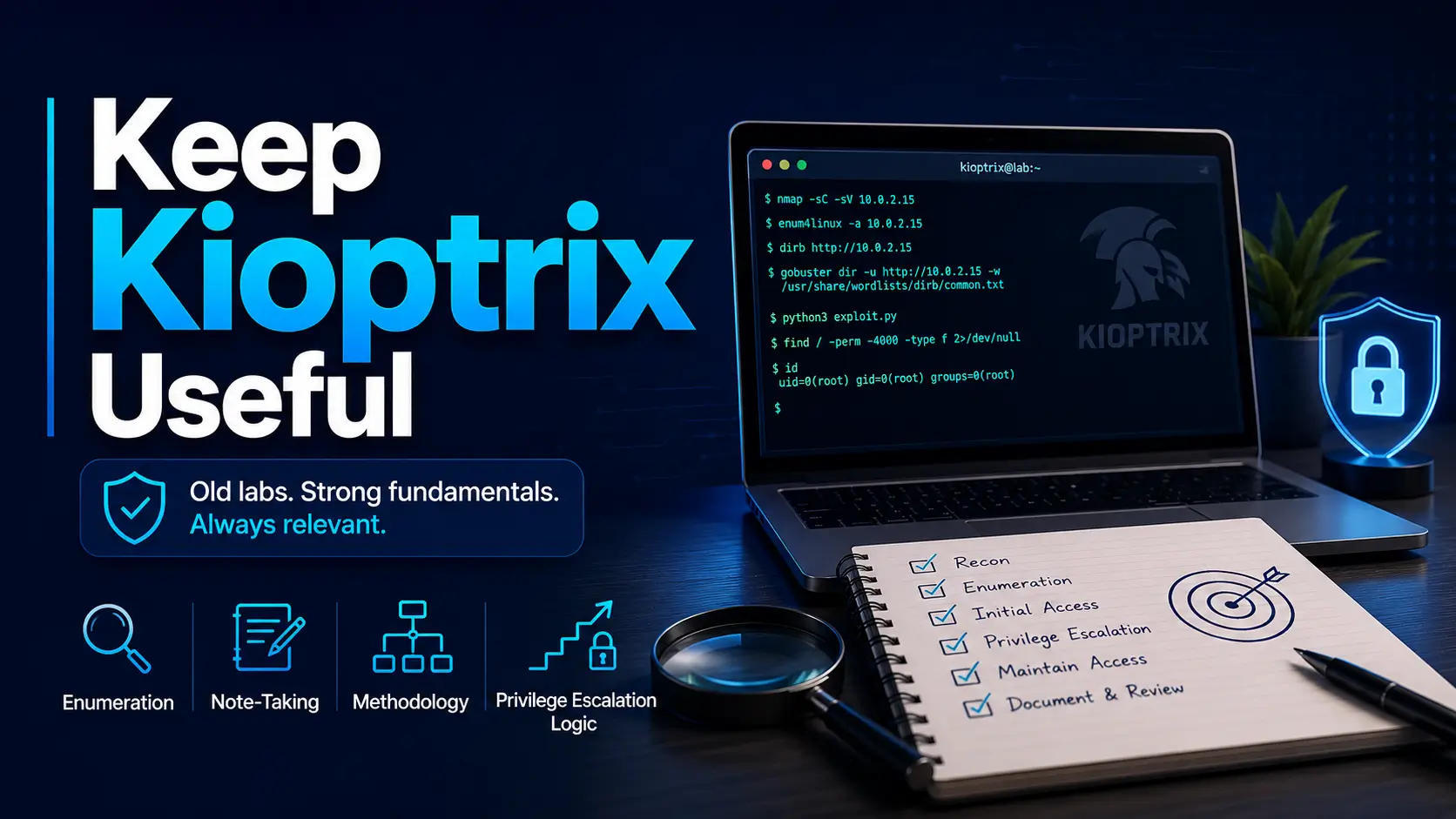
Revisit a Kioptrix lab for a new, explicit objective such as checking evidence or rewriting an explanation. Use the plan to preserve earlier results, disclose remembered solution knowledge and define what the new attempt can demonstrate.
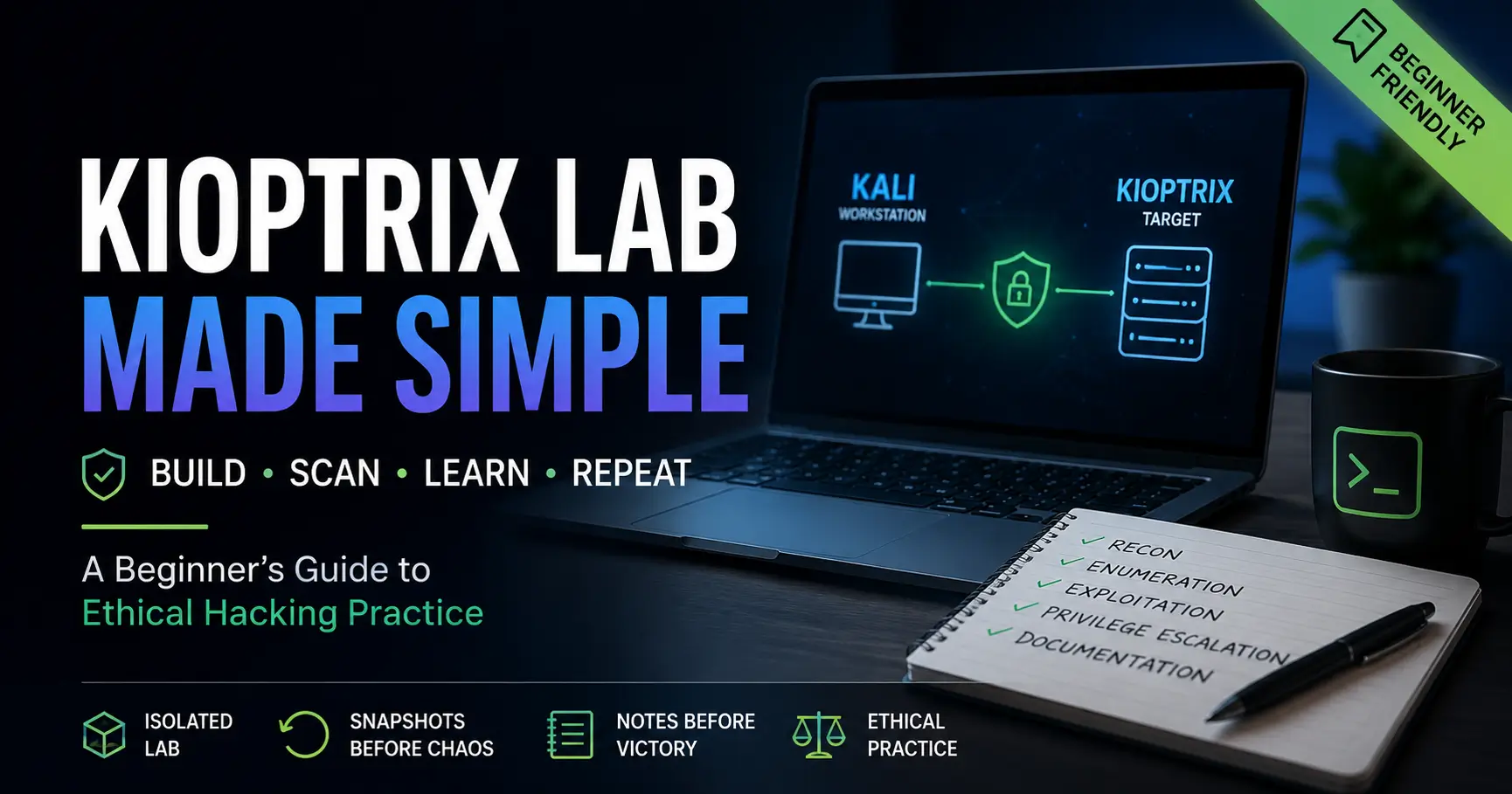
Make a Kioptrix lab state repeatable by documenting VM identities, communication paths and recovery conditions. Use the state register to preserve evidence outside rollback and compare setup changes before resuming.
Review a Kioptrix session with six questions about scope, observations, conclusions, alternatives, assistance and limits. Use the review card and evidence-versus-inference example to inspect one explanation, including an unfinished attempt.