Compare Nmap Scans with Ndiff: 7 Kioptrix Lab Checks

Compare Nmap scans with Ndiff using completed XML files, seven comparison checks, exit-code handling, a three-run baseline and worked interpretation exercises.
Practical cybersecurity guides, labs & compliance
Compare Nmap scans with Ndiff using completed XML files, seven comparison checks, exit-code handling, a three-run baseline and worked interpretation exercises.

Retest a specific vulnerability after an authorized change. Five checks cover deployment, comparable conditions, secure behavior and closure evidence. Includes a worked inconclusive result and an editable record for remediation, mitigation or unresolved status.
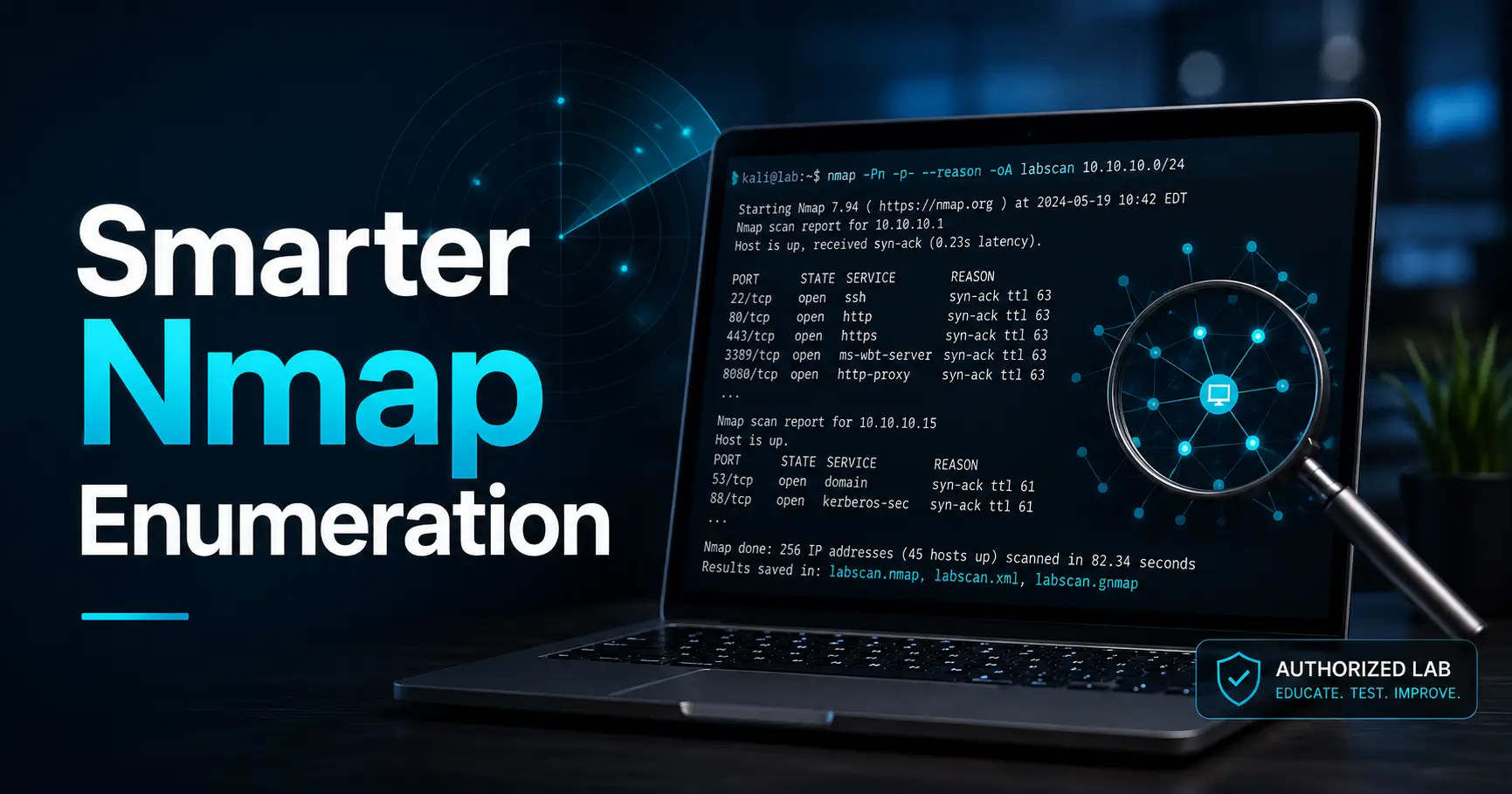
Build an Nmap command you can explain: targets, discovery, ports, service probes and saved output. Includes a flag reference, isolated-lab command ladder and five review questions before rerunning a scan.
Choose a named Kioptrix VM or DVWA exercise for one learning question. Compare setup and task scope, plan a session, and use the editable selection record to document evidence, assistance and remaining limits.
Compare a specific Kioptrix release with another VulnHub VM using the same learning task. Check host compatibility, prerequisites and recovery, then complete the release comparison card and plan one evidence-based session.

Evaluate suspected SQL login bypass in a contained, authorized lab. Compare requests and resulting session identity, document the repair, and use the evidence record to separate unusual responses from demonstrated access.
Prepare your first Kioptrix session by checking the VM image, network paths, target identity and recovery point. Use the readiness record to distinguish setup failures from target-analysis questions.

Organize one Kioptrix Level 1 investigation into five resumable sessions. Each session names its inputs, evidence artifact, stopping condition and resume note, with a copyable schedule for short study blocks.
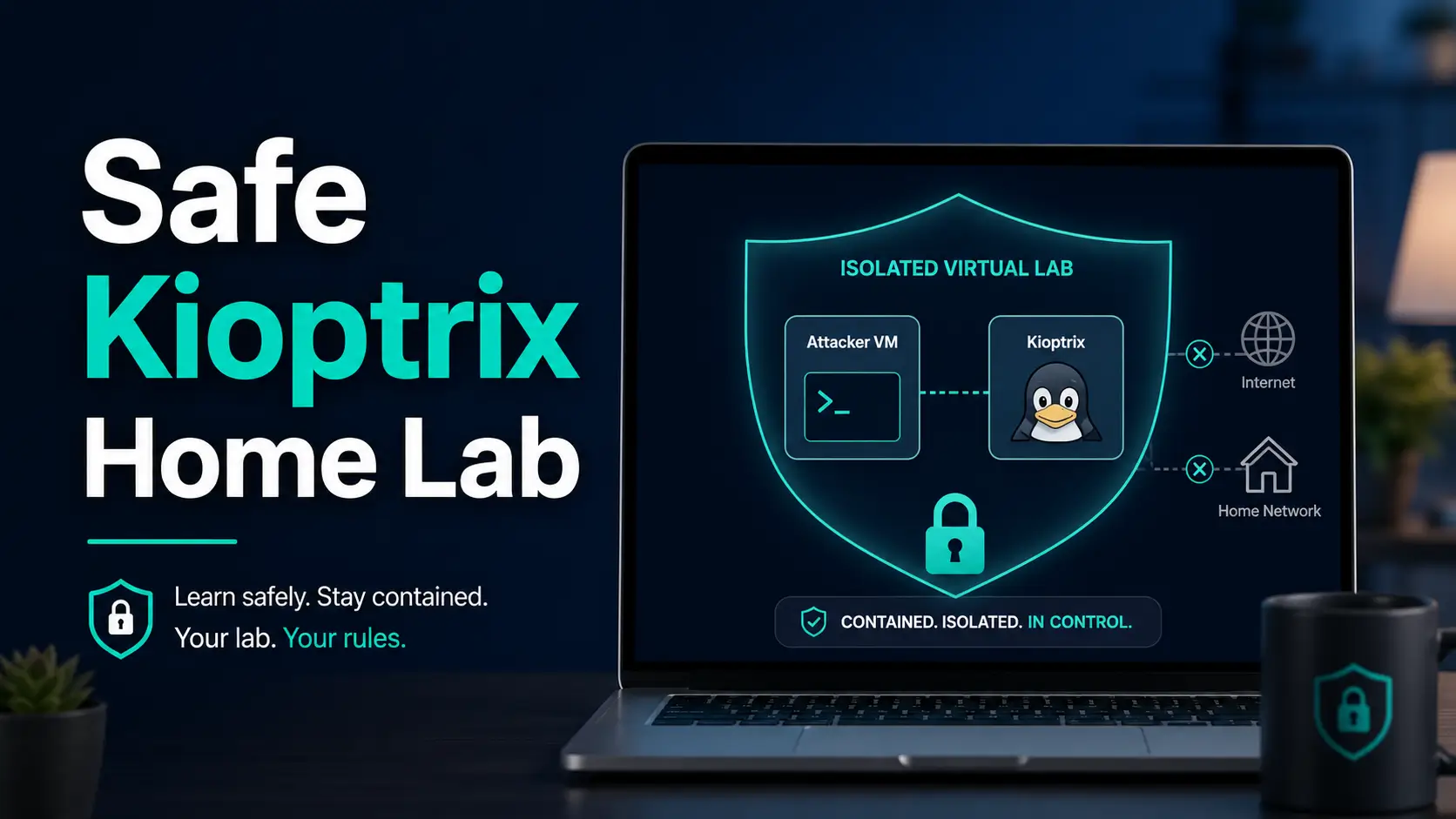
Build a documented Kioptrix home-lab baseline: image compatibility, host architecture, network paths and recovery. Use the editable record to preserve evidence and separate successful booting from verified setup.
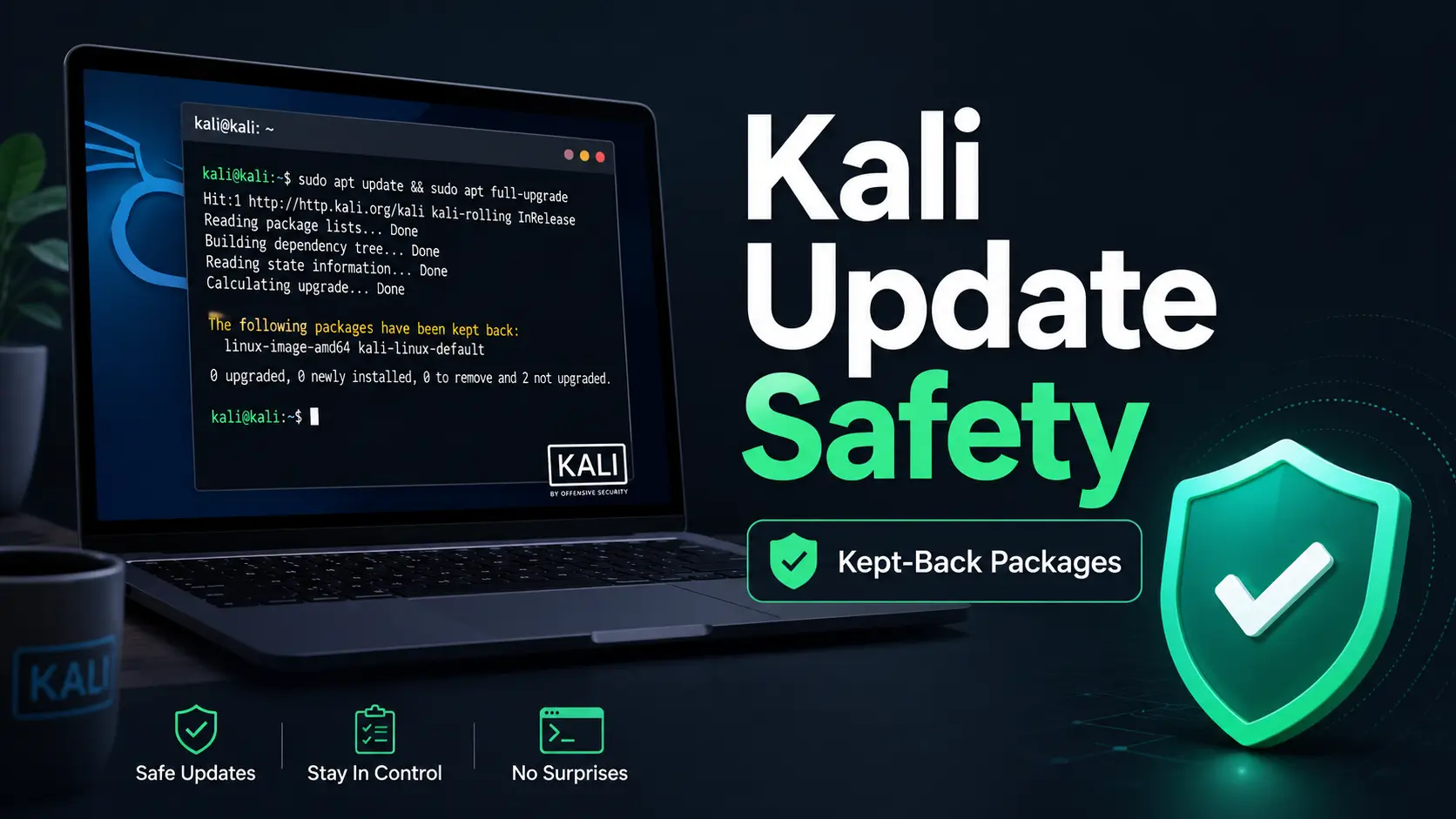
Review Kali packages kept back before accepting an APT transaction. Check repositories, dependencies and proposed removals, then use the transaction record to capture the plan, recovery point and actual outcome.