Kali Linux AI Pentesting: 7 Essential Checks for Better Control
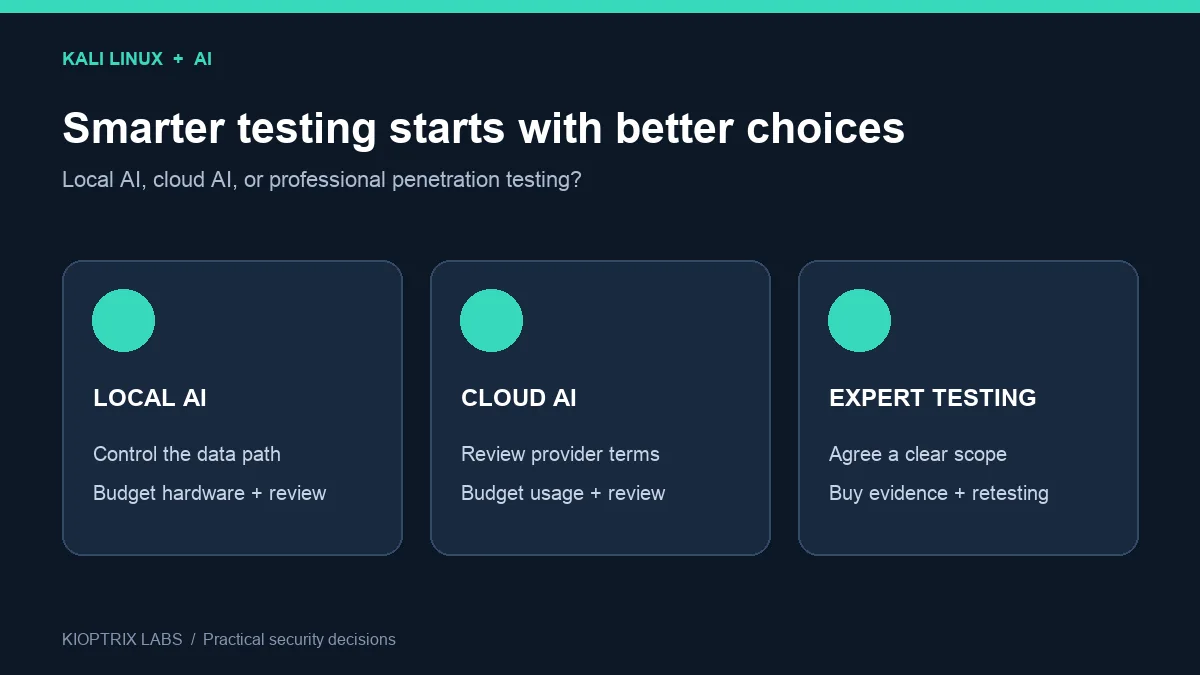
Compare local and cloud AI workflows in Kali Linux with professional penetration testing. Seven checks cover data privacy, approvals, total cost, tools, evidence, and retesting.
Practical cybersecurity guides, labs & compliance
Compare local and cloud AI workflows in Kali Linux with professional penetration testing. Seven checks cover data privacy, approvals, total cost, tools, evidence, and retesting.
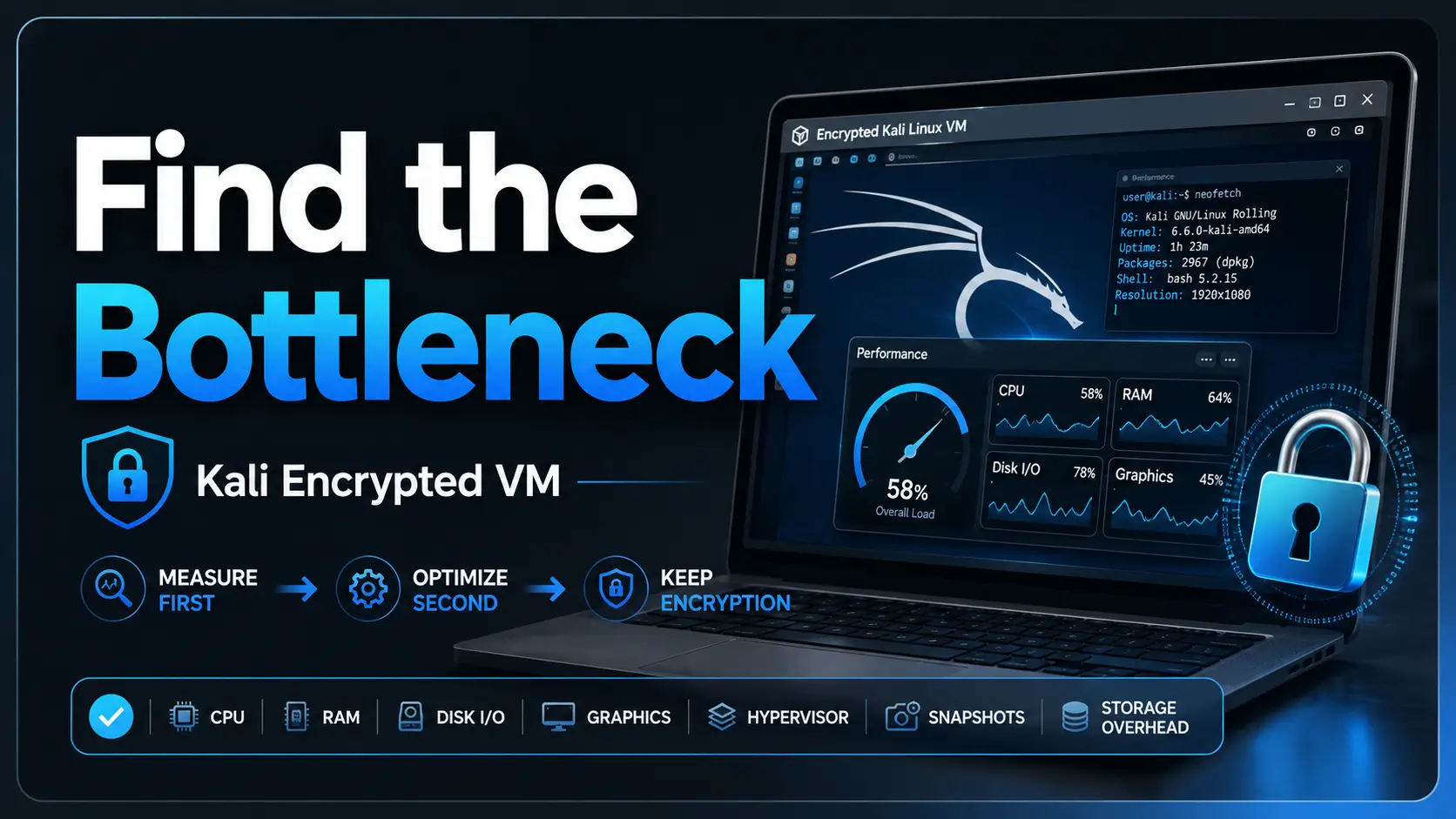
Diagnose a slow encrypted Kali VM by measuring the same workload on the host and guest. Compare CPU, memory pressure, storage, snapshots and guest integration, using a repeatable record before changing settings or buying hardware.
Check image compatibility, virtual-network paths, target identity and recovery before a first Kioptrix session. Use the baseline record to separate setup issues from target analysis.
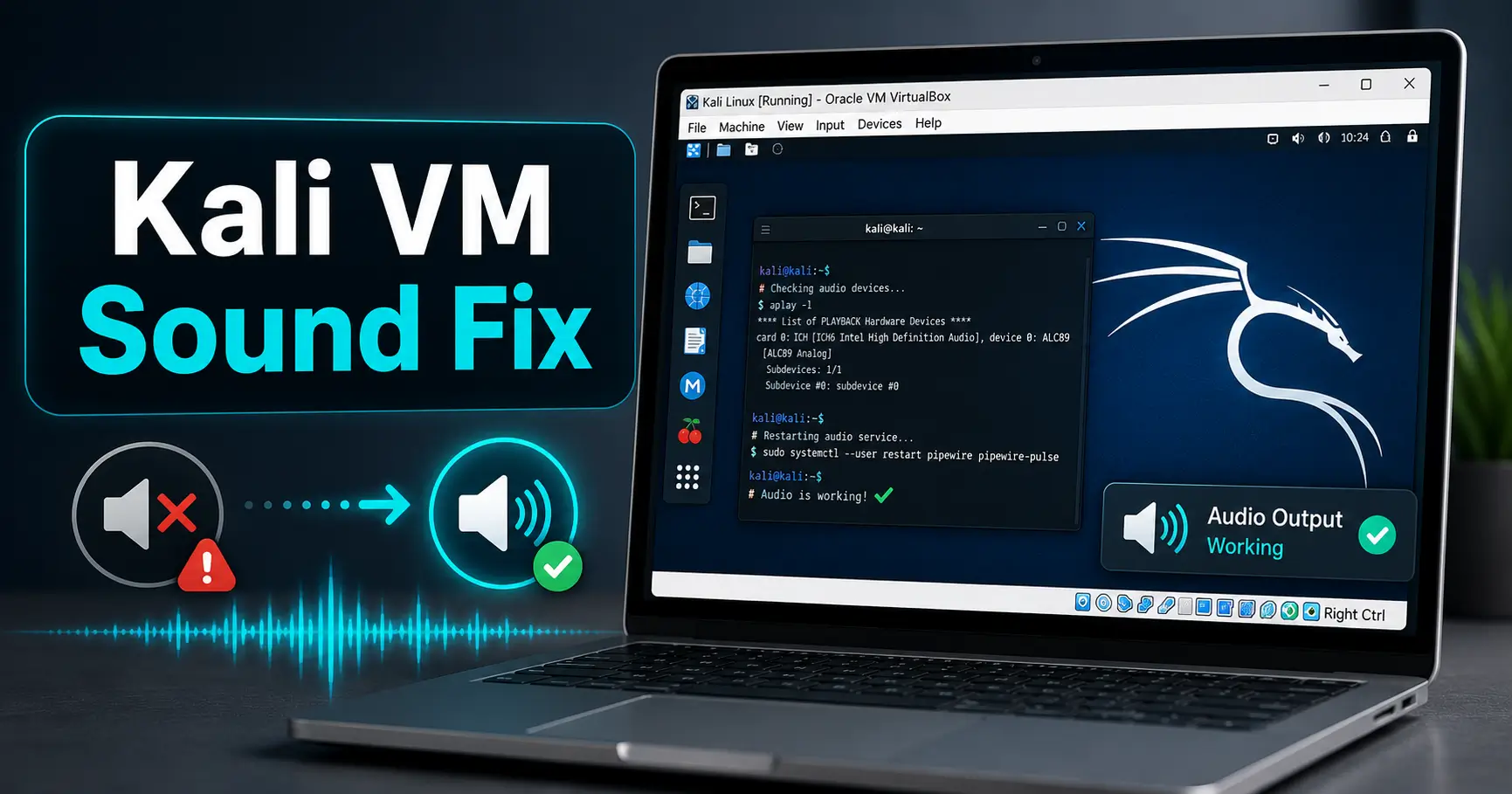
Trace missing Kali VM audio through host output, virtual hardware, guest devices and active sound services. Keep before-and-after settings and test the same source and destination.
This five-session plan keeps one Kioptrix Level 1 investigation manageable when study time is limited. Each session has an input, an artifact to save, a stopping condition and a resume note. Split or repeat sessions as needed; five sessions is an organizing example, not a completion deadline. Use the seven-session roadmap for a broader foundation … Read more
Plan an authorized web-testing exercise around one security question. Trace requests, responses and application state, then record the evidence, assistance and limits of the result.
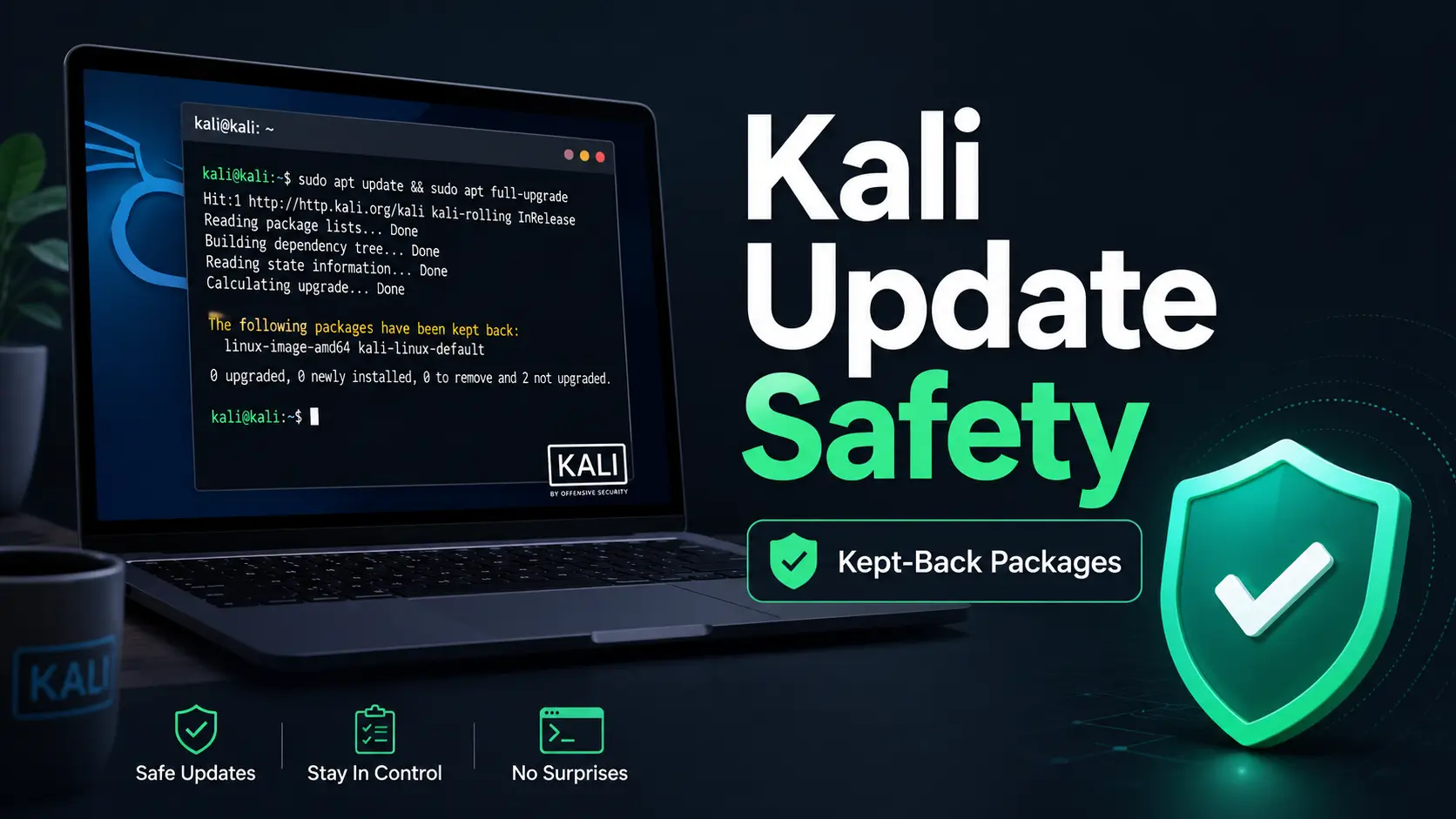
Investigate Kali packages kept back by reviewing repositories, dependencies and the proposed APT transaction. Preserve recovery options and inspect removals before accepting changes.
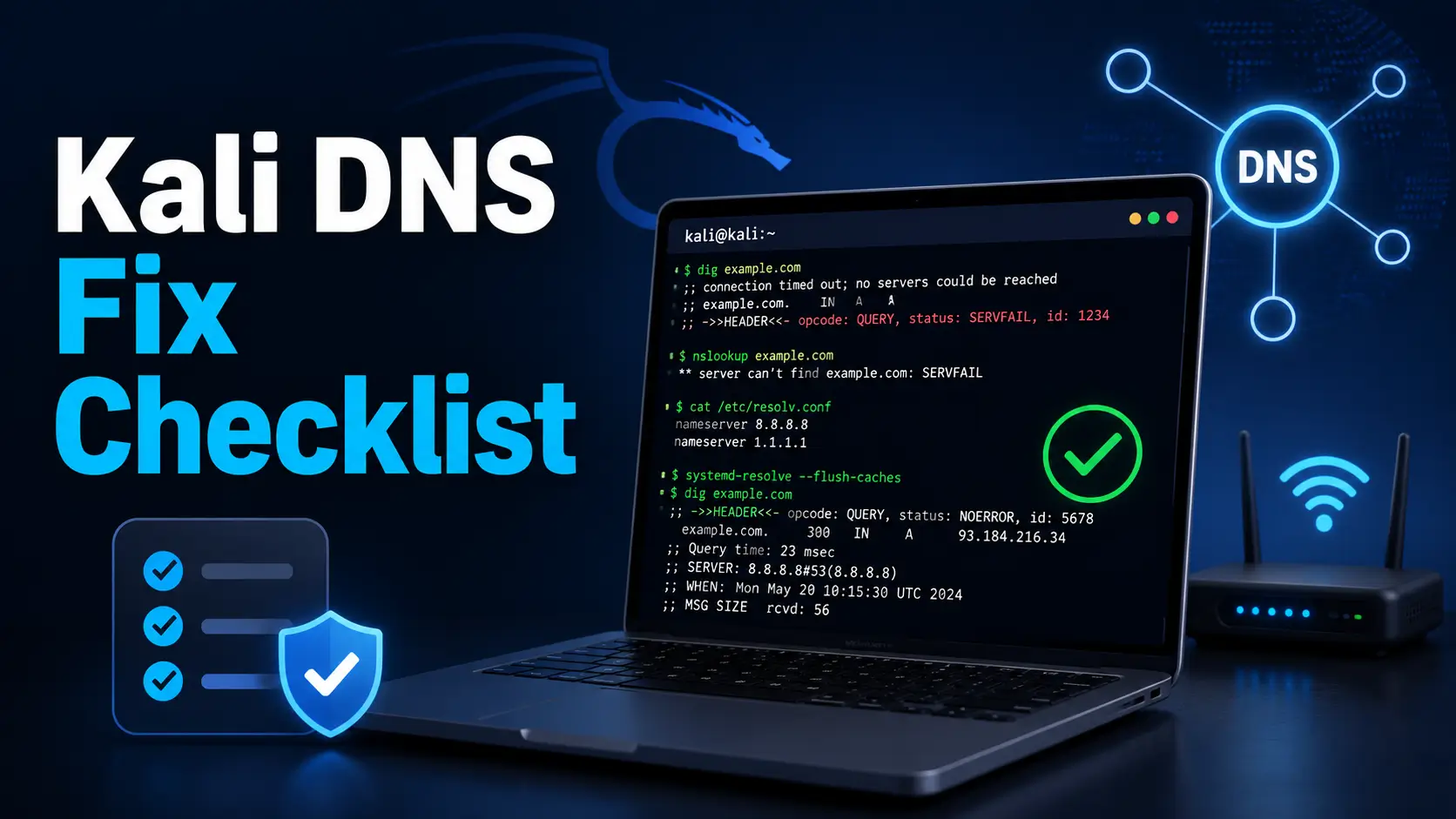
Separate Kali name-resolution failures from routing, browser and repository problems. Identify the resolver owner and preserve a rollback record before changing configuration.
Plan a persistent Kali USB by checking the intended disk, firmware, boot path and saved-data layer separately. Keep recovery options and verify persistence without confusing it with trusted boot.
Compare VirtualBox, VMware and Proxmox against the host architecture, image format, networking and recovery task you need. Use a bounded fit trial rather than a universal platform ranking.