ISO 27001 Certification Cost for SaaS Startups:What Should You Actually Budget?
The certification-body invoice is rarely the whole ISO 27001 bill. A SaaS startup may also pay for readiness work, compliance software, technical remediation, testing, training, and hundreds of hours of founder, engineering, IT, or security time.
For a SaaS startup, a useful first-year budget starts with your scoped certification quote, chosen implementation support, known remediation and an estimate of internal work. There is no verified startup-wide price range in this guide. The worked example below shows how to build your own total without treating employee count as a price schedule.
The useful question is therefore not simply “How much is ISO 27001?” It is which parts of the cost are unavoidable, which are optional, and which can be reduced without shrinking the certification into something your enterprise customers do not actually value.
Budget
Separate the audit fee from the total economic cost.
Scope
Know which people, products, systems, and locations are actually in the ISMS.
Quotes
Compare accreditation, audit days, exclusions, and recurring fees.
💡 The expensive mistake is budgeting for a certificate when the real project is building and operating an auditable ISMS.
Snapshot
This guide is for SaaS founders, technical leaders, and compliance owners budgeting for a first ISO/IEC 27001 certification. You will be able to estimate a realistic first-year budget, understand what changes an auditor quote, choose between DIY, software, and consulting support, and prepare better questions before requesting proposals.
How much does ISO 27001 certification cost for a SaaS startup?
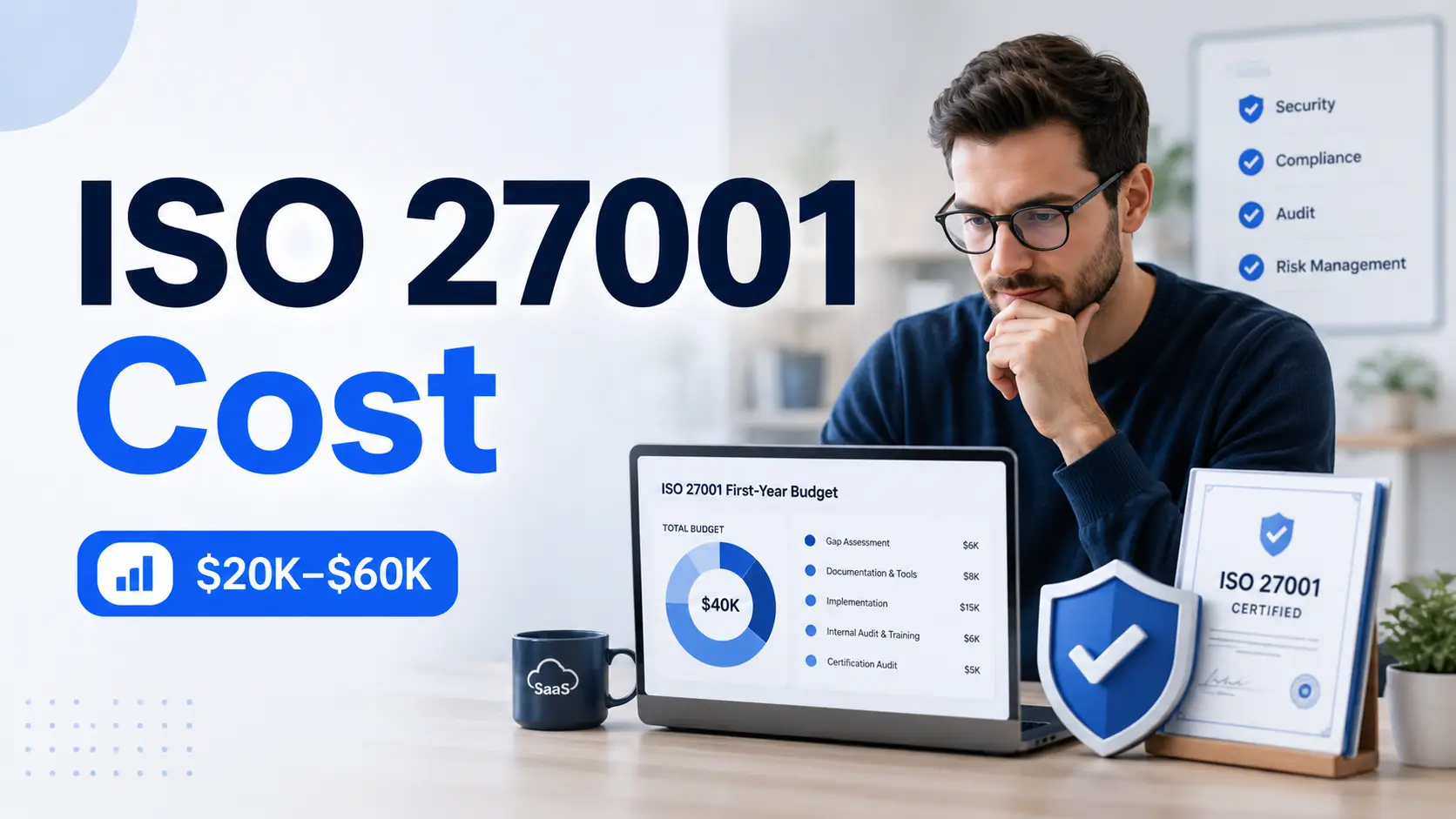
Start with one itemized scenario, then replace every assumption with your own scope, quotes and task estimates. The following figures are hypothetical US-dollar inputs, not vendor prices or an ISO benchmark.
| Budget item | Amount |
|---|---|
| Stage 1 and Stage 2 certification quote | $12,000 |
| Targeted advisory and independent internal-audit support | $4,000 |
| Compliance software | $3,000 |
| Purchased remediation and training | $5,000 |
| External cash subtotal | $24,000 |
| Internal work: 140 hours at $100/hour | $14,000 |
| Economic subtotal before contingency | $38,000 |
The $24,000 external-cash subtotal excludes payroll already budgeted. The $38,000 economic subtotal adds the value of internal effort; it is not a second invoice. This example excludes tax, surveillance, recertification and unplanned remediation. Add a separately justified reserve rather than calling the subtotal a market price.
Obtain Stage 1 and Stage 2 fees directly from appropriately accredited certification bodies using the same proposed scope. Ask them to identify assumed audit days, expenses and any follow-up charges.
The deceptively cheap quote is therefore the one that answers only, “What will the auditor invoice us?” A founder budgeting runway needs a different number: the total cash spend plus the value of internal time consumed by the project.
Key takeaway
Hypothetical example: a 20-person startup receives a $10,000 initial-certification quote. That invented fee is one external component, not the full program budget or a surveyed market price.
Before You Act
This article provides planning guidance, not a certification guarantee or individualized legal, contractual, or regulatory advice. Your scope, customer contracts, architecture, locations, security maturity, accreditation requirements, and certification body’s audit-time determination can materially change both cost and timing. Confirm material decisions with the certification body and appropriate qualified advisers.
Build the budget from six cost buckets
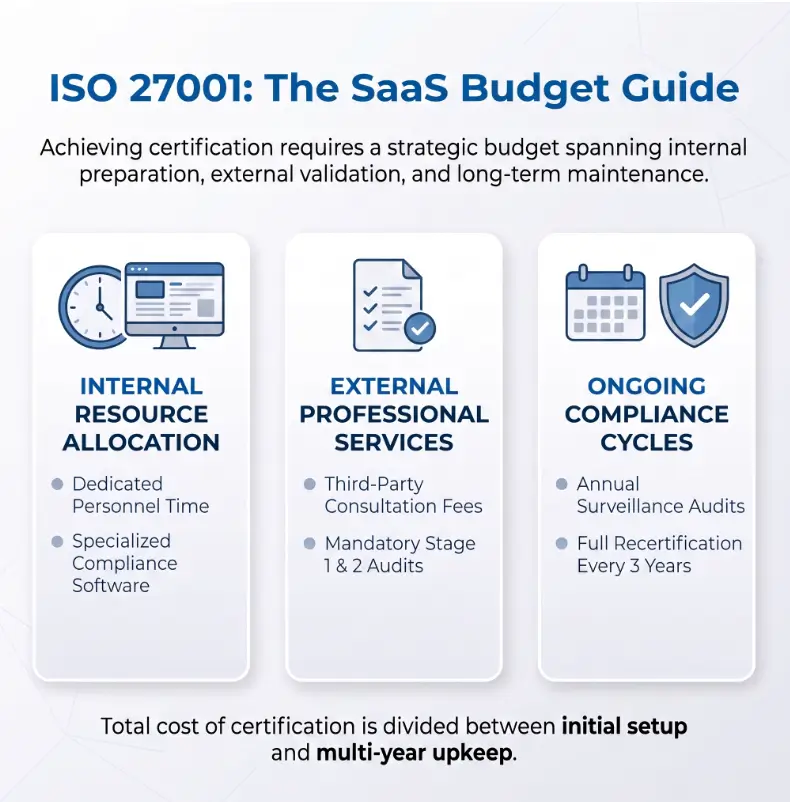
A clean budget separates ISO 27001 into components rather than asking one giant “compliance cost” question. This prevents optional tooling from being confused with mandatory certification work and makes competing proposals much easier to compare.
1. Certification-body audit
This is the difficult line item to avoid if you genuinely need third-party certification. An accredited certification body conducts the initial certification process, normally through Stage 1 and Stage 2, and makes the independent certification decision.
Use the certification body’s written audit-time calculation and fee proposal. Your software subscription or headcount alone does not determine the audit invoice.
2. Readiness and implementation support
This is the work required before the external auditor assesses you. It can include scoping, a gap assessment, risk methodology, risk assessment, Statement of Applicability, policies, control ownership, evidence processes, internal audit preparation, and management review.
A security-mature team may do most of this internally. A startup with no compliance owner may buy substantial consulting help. That difference can move this cost bucket from nearly zero external spend to tens of thousands of dollars.
3. Compliance or GRC software
A compliance platform is not required by ISO/IEC 27001. Spreadsheets, ticketing systems, cloud logs, document repositories, and existing engineering tools can be perfectly adequate at small scale.
Software becomes easier to justify when it reduces repetitive evidence collection, maps evidence across several frameworks, assigns recurring control tasks, monitors integrations, and keeps audit evidence organized. For a startup pursuing both ISO 27001 and SOC 2, that operational benefit may be more valuable than the software’s policy templates.
4. Security remediation and testing
Certification does not magically replace missing security controls. If your risk assessment exposes weak access management, inconsistent logging, unmanaged devices, incomplete backups, vendor-risk gaps, poor vulnerability management, or missing incident processes, those problems still need an appropriate treatment.
Some companies arrive with these capabilities already funded. Others discover that “the ISO budget” contains security projects they arguably needed anyway.
5. Internal labor
This is the line founders most frequently leave at zero.
Estimate hours by task and owner: scope and risk work, control implementation, evidence, internal audit, management review and corrective action. Use each participant’s own loaded rate. A single blended rate is an optional estimating shortcut, not a fact about your team.
If your loaded internal cost is $100 per hour, 200 hours represents another $20,000 of economic cost even though no supplier sends an invoice for it.
6. Ongoing maintenance
Certification is not a one-and-done purchase. Budget for surveillance audits, internal audits, risk reviews, management reviews, training, control operation, corrective actions, evidence maintenance, and eventual recertification.
Budgeting rule
Track two totals: external cash spend and economic cost including staff time. The cheaper implementation path on paper can become the expensive one if senior engineers spend weeks operating it manually.
What changes the quote most
Headcount matters, but “we have 30 employees” is not enough information for a serious certification quote.
As of October 13, 2026, ISO/IEC 27001:2022 remains the certification requirements standard, with its 2024 climate-action amendment applying to that edition. The previous ISO/IEC 27001:2013 transition period ended on October 31, 2025.
Certification bodies also operate under ISO/IEC 27006-1:2024 requirements for ISMS auditing and certification. The IAF transition to that edition ended in March 2026. In practical terms, audit duration is calculated through a structured process rather than whatever number of days a salesperson feels like putting into a proposal.
The answer changes when your scope changes
- More people are in scope. Audit effort can increase with the effective number of personnel involved in the ISMS.
- You certify multiple products or business units. More processes, technologies, and control owners mean more evidence to assess.
- You operate multiple sites or jurisdictions. Site sampling, local processes, travel, and regulatory differences can add complexity.
- Your architecture is unusually complex. Multiple clouds, acquisitions, legacy environments, or extensive third-party operations complicate the assessment.
- Your controls are immature. Audit duration does not necessarily rise merely because you have findings, but remediation and preparation cost can rise sharply.
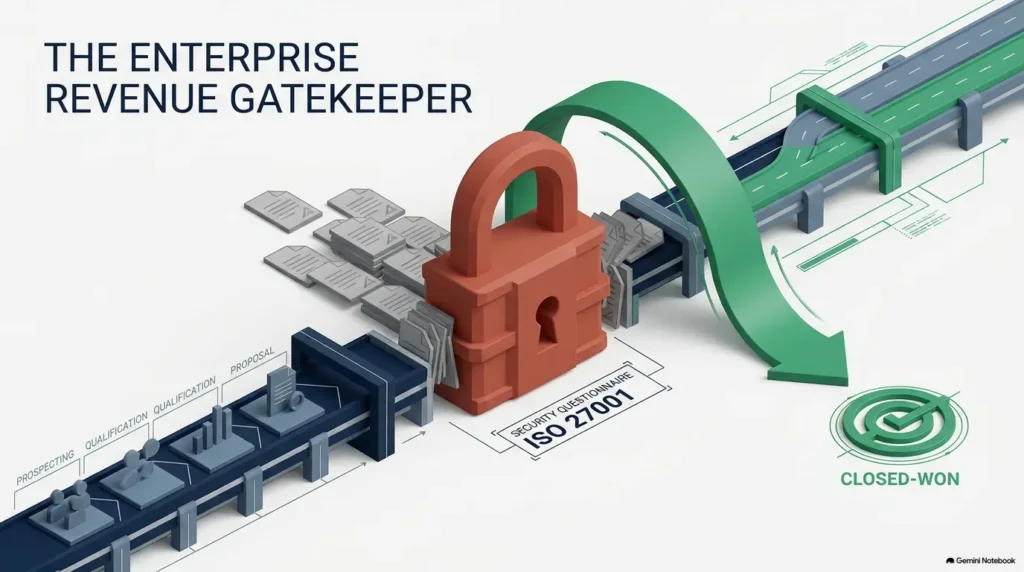
- Your customer needs a broad certificate scope. A cheap, narrowly scoped certificate may fail the commercial reason you pursued certification in the first place.
Scope is the first cost lever, but it is not a magic trick
A SaaS startup can often define an ISMS around the people, technology, suppliers, processes, and locations supporting its core service rather than indiscriminately dragging every peripheral activity into scope.
That can reduce implementation and audit complexity. But scope should still make sense to the customer asking for the certificate. Certifying a tiny internal function while your production SaaS environment sits outside the boundary is economical in roughly the same way as buying an umbrella with no fabric.
What you are actually buying over a three-year cycle
The first-year budget makes more sense when you understand the certification cycle.
Stage 1: readiness and management-system review
Stage 1 examines whether your ISMS is sufficiently established for the full certification assessment. Expect attention to scope, risk management, documented information, the Statement of Applicability, internal audit activity, management review, and overall readiness.
If major readiness problems emerge here, Stage 2 may need to move. That creates a hidden cost: staff rework, scheduling delays, and possibly additional auditor time.
Stage 2: does the ISMS actually operate?
Stage 2 is the deeper effectiveness assessment. Auditors sample records, interview personnel, inspect how processes operate, and compare real activity against your documented ISMS and risk treatment decisions.
A pristine policy folder with little operational evidence is not the goal. ISO 27001 certification assesses a management system that is being used.
Surveillance and recertification
After successful initial certification, the normal cycle includes surveillance activity during the first and second years and recertification before the three-year cycle expires.
Request the actual surveillance schedule and fees in writing. Show recertification at the end of the cycle as a separate funding requirement so it is neither omitted nor counted twice.
Quote rule
Ask for the estimated three-year certification-cycle cost, not just the initial Stage 1 and Stage 2 fee.
For the historical transition, see the archived IAF MD 29 announcement: the deadline was March 31, 2026. IAF’s site now identifies itself as an archive after the 2026 institutional transition. Confirm current accreditation status with the relevant body; the archived announcement does not establish a provider’s current eligibility.
- SOC 2 compliance checklist for startups
- SOC 2 budget calculator for startup compliance planning
- penetration testing cost and pricing factors
- vendor security questionnaire guide for SaaS startups
- practical threat modeling for SaaS startups
DIY, compliance software, or consultant?
There is no universally superior implementation model. The right answer depends mostly on internal expertise, available staff time, urgency, existing security maturity, and whether you expect to maintain several compliance frameworks.
| Approach | Best fit | Primary cost | Main weakness |
|---|---|---|---|
| Good: DIY | Small technical team with an experienced owner and simple scope | Internal labor | Easy to underestimate interpretation, documentation, and project-management work |
| Better: Software-assisted | Cloud-native SaaS with repeatable evidence sources or multiple frameworks | Software subscription plus internal ownership | Automation does not make risk decisions or operate controls for you |
| Best for low bandwidth: Consultant-assisted | Urgent customer deadline, little internal ISO experience, or complex scope | Professional fees | Can become expensive and create dependency if internal ownership never develops |
Do it mostly yourself when the problem is organization, not expertise
A 12-person startup with solid identity management, device controls, cloud logging, backups, change management, vendor records, security training, and documented engineering processes may not need a large consulting engagement.
The founder or security owner still needs enough understanding to build a coherent ISMS, perform risk management, coordinate internal audit and management review, and explain the system to an external auditor.
Pay for software when repetition is the expensive part
Compliance software makes more economic sense when evidence comes from many systems, tasks recur frequently, owners need reminders, or the same evidence supports ISO 27001, SOC 2, customer questionnaires, and other obligations.
Do not buy a platform because it contains 200 pre-written policies. Buy it when the workflow and integrations meaningfully reduce operating effort.
Pay for a consultant when expertise or time is the bottleneck
A consultant can be valuable when no one internally understands ISMS design, your deadline is tied to a large enterprise contract, your scope crosses several business units, or an experienced project lead will prevent expensive false starts.
The goal should still be knowledge transfer. After certification, your company owns the management system, not the consultant.
Decision rule
If manual evidence work costs more each year than the software subscription, automation may be economical. If your real problem is interpreting the standard or redesigning controls, another dashboard will not solve it.
Hidden costs that surprise SaaS teams
The nastiest ISO 27001 overruns are usually not mysterious. They are ordinary security work that never made it into the original spreadsheet.
Penetration testing is not universally mandated by ISO 27001
ISO/IEC 27001 does not contain a universal rule saying every SaaS company must purchase a penetration test before certification.
Your risk treatment, vulnerability-management processes, customer contracts, certification evidence, or other obligations may nevertheless make independent security testing appropriate. A B2B SaaS startup should therefore clarify testing expectations early rather than discovering them just before Stage 2.
Internal audit is a real activity
You need an internal audit process before certification. That work must be sufficiently objective and competent. Small startups sometimes buy an independent internal audit because the person running the ISMS cannot meaningfully audit all of their own work.
Control gaps can dwarf the auditor fee
- Enterprise identity or SSO upgrades
- Endpoint management
- Centralized logging or monitoring
- Backup and recovery improvements
- Vulnerability scanning
- Secrets-management improvements
- Security-awareness training
- Supplier-risk processes
- Legal or privacy review
- Additional cloud configuration work
None of these should be purchased merely because a generic ISO checklist says so. Controls should follow your information-security risks, applicable requirements, and documented treatment decisions.
Travel, rescheduling, and corrective-action work
Ask whether travel, accommodation, remote-audit arrangements, extra sites, follow-up audit time, and remediation verification are included. Small contractual exclusions can become surprisingly muscular invoices.
How to compare certification-body quotes without buying the wrong thing
Do not choose a certification body using the final dollar figure alone. Normalize the proposals first.
Ask every certification body the same questions
- What exact ISO/IEC 27001 certification scope did you price?
- How many audit days are included for Stage 1 and Stage 2?
- What assumptions did you make about personnel, sites, remote workers, products, and cloud environments?
- Which accreditation body covers your ISO/IEC 27001 certification activity?
- Are travel, administrative, certificate, and follow-up fees included?
- What triggers additional auditor days or a revised quote?
- What are the expected surveillance costs?
- What should we budget for recertification before the three-year cycle expires?
- How are major or minor nonconformities and corrective-action verification billed?
- Can you show the accreditation scope that confirms ISO/IEC 27001 is covered?
Red flags worth treating seriously
- A “guaranteed certification” promise.
- A proposal that never defines the certificate scope.
- No clear statement of the certification body’s accreditation.
- A quote that combines consulting and certification without explaining how impartiality is protected.
- No breakdown of Stage 1, Stage 2, and recurring assessment costs.
- A suspiciously low price that turns out to cover a non-accredited certificate when your customers expect accredited certification.
- Pressure to buy security tools before anyone understands your risks or existing controls.
In the United States, the ANSI National Accreditation Board maintains information on accredited management-systems certification bodies. In the United Kingdom, UKAS provides tools for checking accredited certification.
UK buyers can also use UKAS CertCheck to verify accredited management-system certification claims.
Do not optimize the wrong number
Saving $3,000 on the audit is not a victory if the resulting certification scope does not satisfy the enterprise prospect that triggered the project.
Three SaaS startup budget scenarios
The same ISO standard can create very different budgets. These examples are hypothetical planning scenarios rather than case studies or guaranteed quotes.
Scenario 1: 12-person cloud-native startup with solid controls
The company runs one SaaS product, has one primary cloud environment, managed devices, MFA, centralized source control, documented deployment processes, backups, logging, security training, and a founder capable of owning the ISMS.
Build this team’s budget from the actual certification quote plus targeted outside assistance. Estimate founder and engineering hours separately; a small headcount does not establish a low external price.
Best approach: primarily self-led, with targeted independent help for gap review, internal audit, or difficult ISMS questions.
Scenario 2: 40-person B2B SaaS company chasing enterprise contracts
The company has several engineering teams, more vendors, production and corporate systems, growing customer-security requirements, and a SOC 2 program that already produces useful evidence.
This team should price the remaining ISO-specific work after reusing suitable SOC 2 evidence. Add software or advisory costs only when needed; do not budget for collecting the same evidence twice.
Best approach: reuse existing evidence and control operations, map the differences carefully, and resist rebuilding a second parallel compliance universe.
Scenario 3: 120-person multi-product SaaS company
The company has several products, multiple cloud accounts, international staff, numerous vendors, acquisitions, inconsistent inherited controls, and several enterprise customers asking for a broad certification scope.
For this broader organization, request proposals that identify products, sites, systems and certification-body audit effort separately. Estimate unresolved remediation before approving the total. More headcount alone does not establish a particular first-year price.
Best approach: invest heavily in scope design and gap analysis before signing an audit date. The largest savings may come from removing unnecessary complexity rather than negotiating a cheaper auditor day rate.
| Scenario | Primary cost driver | Where to save carefully | Where not to cut corners |
|---|---|---|---|
| 12-person startup | Internal time | Manual tooling may be adequate | Risk assessment and evidence quality |
| 40-person B2B SaaS | Coordination and recurring evidence | Reuse SOC 2/security evidence | Commercially meaningful scope |
| 120-person multi-product SaaS | Complexity and remediation | Remove unnecessary scope complexity | Ownership, architecture, and control consistency |
FAQ
Is ISO 27001 legally required for a SaaS startup?
Usually not simply because you operate a SaaS business. The commercial trigger is often an enterprise customer, procurement requirement, tender, partner requirement, or contractual commitment. Separate those customer requirements from actual legal or regulatory obligations applicable to your business.
Do we have to implement all 93 Annex A controls?
No. ISO/IEC 27001 uses a risk-based approach. The organization determines necessary controls through its risk-treatment process, checks that necessary controls have not been omitted, and documents control applicability in the Statement of Applicability. Exclusions need a defensible justification.
Does ISO 27001 require a penetration test?
There is no universal clause requiring every organization to purchase the same penetration test. Your vulnerability-management approach, information-security risks, customer contracts, technology, and other requirements determine what testing is appropriate. Ask what evidence the certification body expects without letting an assessor design your security program for you.
Can a consultant issue our ISO 27001 certificate?
A consultant can help design, implement, document, or review your ISMS, but accredited certification requires an independent certification body operating under applicable accreditation and impartiality requirements. Be wary when “consulting plus guaranteed certificate” is sold as a single indistinguishable package.
Can we reduce cost by certifying only the SaaS product?
You can define a focused ISMS scope, but a SaaS product depends on people, processes, suppliers, infrastructure, and supporting systems. The certification scope must accurately describe the boundaries of the management system and should still satisfy the business reason for seeking certification.
Is ISO 27001 cheaper if we already have SOC 2?
It can be. Existing access controls, logging, vendor management, incident response, security training, vulnerability management, evidence processes, and governance can reduce implementation work. ISO 27001 still has its own management-system requirements, risk process, Statement of Applicability, internal audit, management review, and certification process, so SOC 2 does not simply convert into an ISO certificate.
How long should a SaaS startup allow for certification?
Build the schedule from scope approval, completed implementation, internal audit, management review, corrective action and certification-body availability. Obtain proposed Stage 1 and Stage 2 dates rather than treating a generic month range as a delivery promise.
Your 15-minute ISO 27001 budget check
Before requesting certification quotes, spend 15 minutes writing down three things.
- Your proposed scope: product, legal entity, people, locations, cloud environments, and major supporting systems.
- Your current maturity: which security and governance processes already operate consistently, and which obvious gaps still require work.
- Your implementation model: who will own the ISMS internally, whether you expect to use software, and where you genuinely need outside expertise.
Then send the same scope summary to at least two or three appropriately accredited certification bodies and ask each one for Stage 1, Stage 2, surveillance, recertification, travel, and potential follow-up costs separately.
That small exercise turns “How much is ISO 27001?” from a foggy internet price hunt into a procurement question you can actually control.
One number to remember
Remember the calculation method rather than a generic price band: scoped external invoices plus distinct internal tasks, followed by recurring audit and maintenance costs. The $24,000 cash and $38,000 economic subtotals above are invented inputs for arithmetic practice, not a recommendation for every startup.
Last reviewed: 2026-09
Technical guidance updated: 2026-10-13. Clarified hypothetical cost and effort assumptions, confirmed current certification-standard transitions, and repaired table-of-contents links. Count bundled services and staff hours once, separate cash from opportunity cost, and distinguish initial-cycle costs from end-of-cycle recertification.
Editorial review: October 16, 2026. This update clarifies the cost assumptions and purchasing checks above. Illustrative calculations use stated assumptions and are not provider quotes or evidence of product testing.