Kioptrix Recovery Routine: Reconstruct an Unknown Lab State
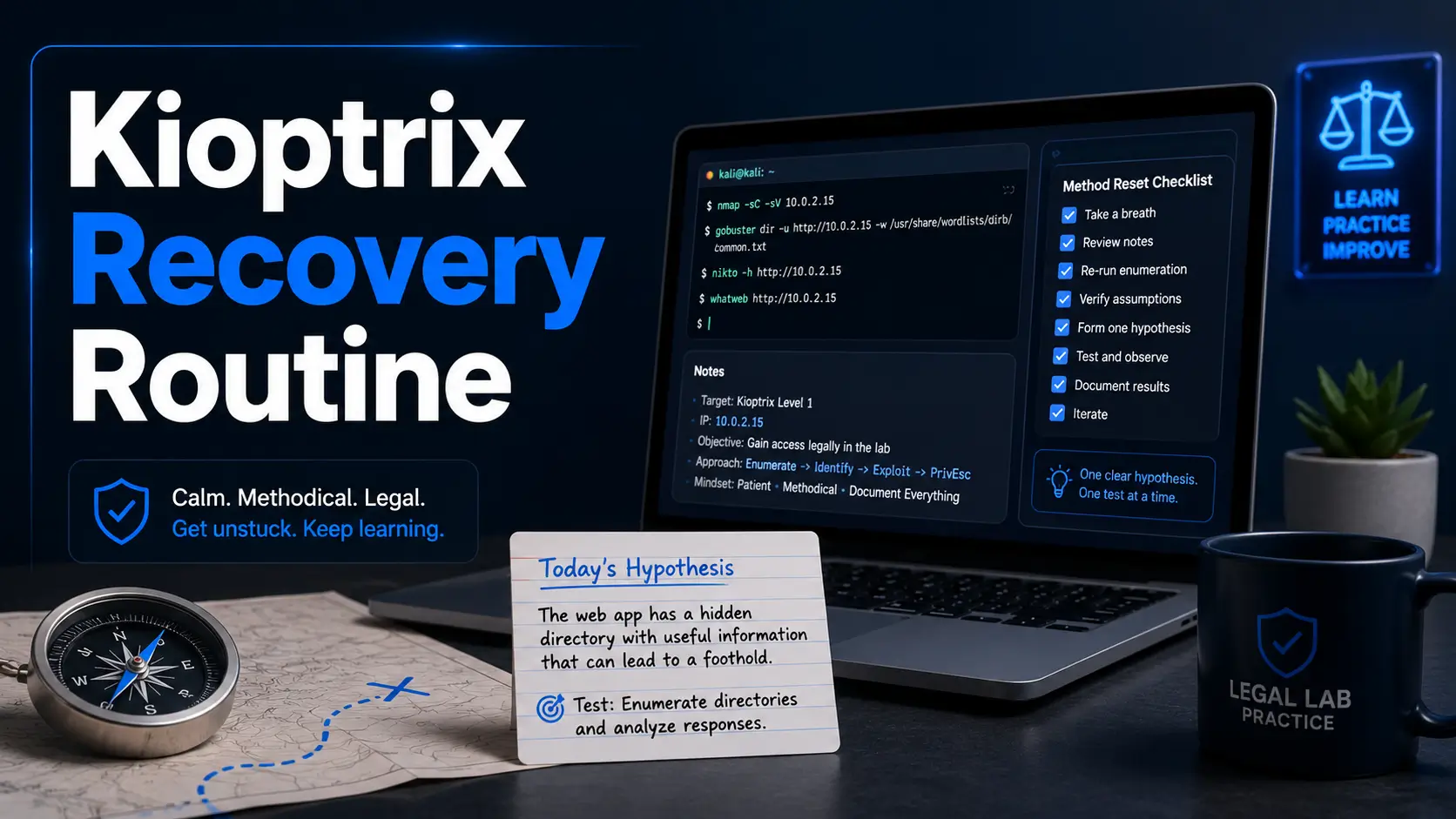
Reconstruct a Kioptrix lab’s current state with a dated timeline, known changes and unresolved gaps before choosing a restart or restore.
Practical cybersecurity guides, labs & compliance
Reconstruct a Kioptrix lab’s current state with a dated timeline, known changes and unresolved gaps before choosing a restart or restore.
Write one Kioptrix claim that a reader can trace to its evidence. Use the wording examples, explanation outline and evidence map to connect methods, observations, assistance and limitations.

Verify a specific Kioptrix claim by checking prerequisites and choosing evidence that adds information. Use the worked example and verification worksheet to record confirmed, contradicted or unknown conditions without overstating a failed test.
Organize a Kioptrix investigation around one permitted question. Check the environment, preserve an observation, evaluate its explanation and complete the cycle record with the next decision or unresolved task.
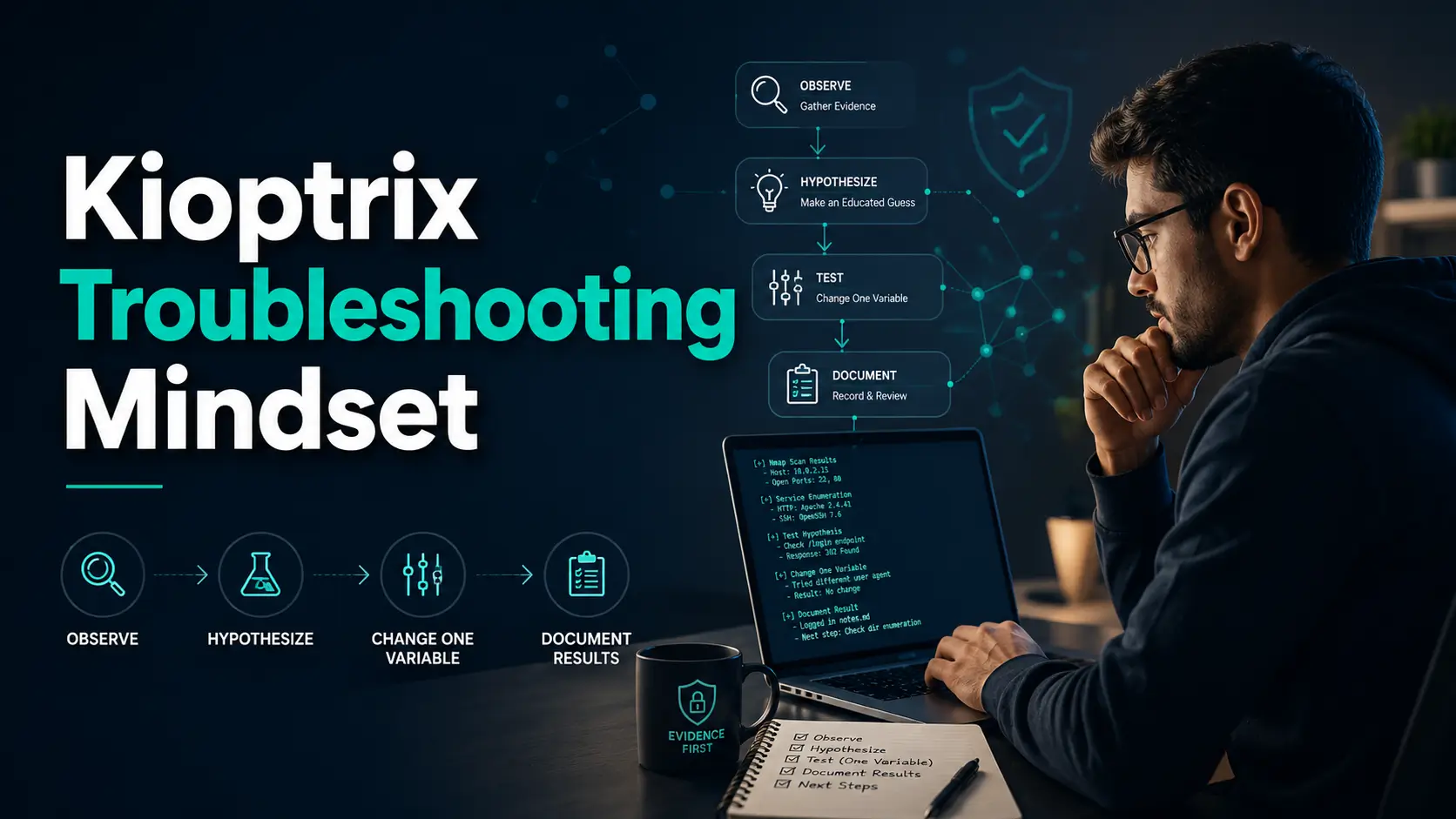
Find the first failing or unproven stage in a Kioptrix task. Use the worksheet to retain exact output, target state and controlled comparisons, then choose whether to investigate, recover or request guidance.
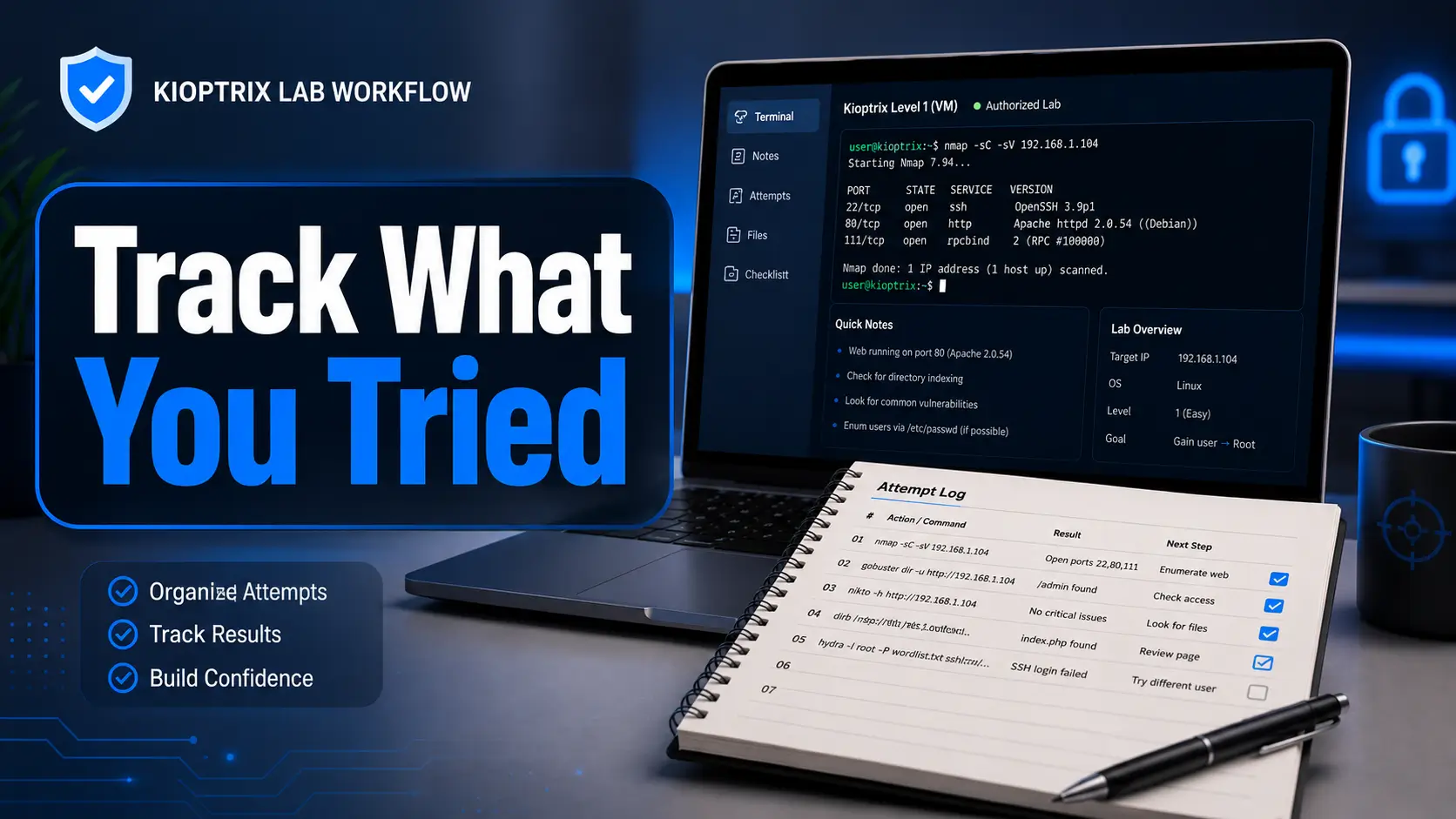
Keep Kioptrix notes that distinguish attempted checks from supported conclusions. Use the attempt-comparison log and resumable session header to retain expected results, actual output, changed conditions and the next question.
Review a Kioptrix practice habit against an actual session record. Use the worksheet to inspect omissions, assistance, costs and limits, then decide whether to keep, adapt or remove the habit.
Choose the next Kioptrix study task from your goal, missing evidence and available time. Use the activity selector and study decision record to distinguish concept study, lab practice and named assessment objectives.
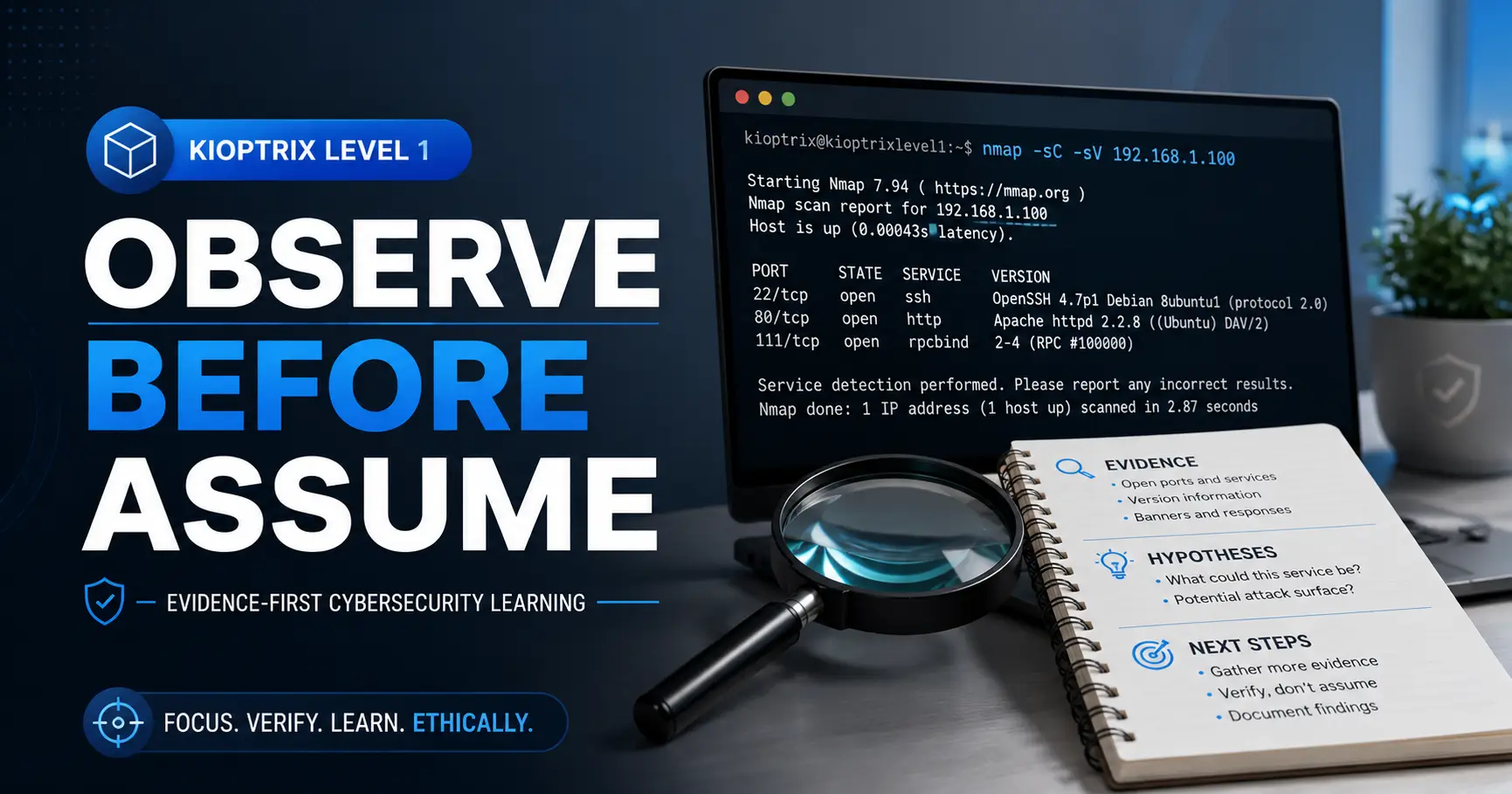
Write Kioptrix Level 1 notes that separate literal results, interpretation and claims still to test. Use before-and-after examples and the observation ledger to preserve context and contradictions before drafting a finding.
Keep a chronological Kioptrix log connecting each question, action and result to its original artifact. Use event and unresolved-question templates to record repeat checks, visible corrections and the current closing state.