Kioptrix Lab Workflow: Manage Tabs and Tools
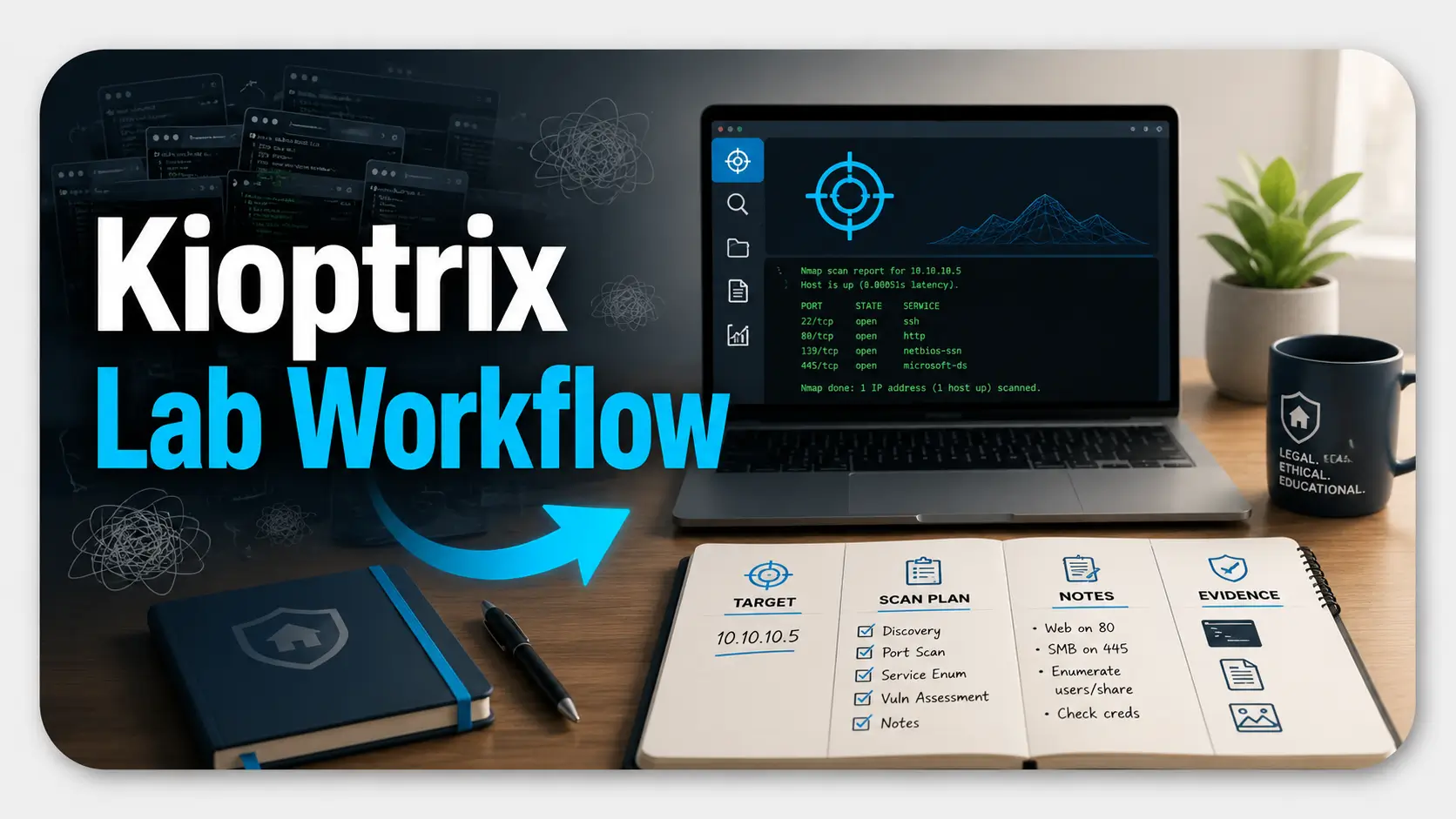
Keep one active Kioptrix question and a queue of evidence-backed leads. Use the working board to record why a tool change is needed, when to return to a parked lead and what remains unverified.

Practical cybersecurity guides, labs & compliance
Keep one active Kioptrix question and a queue of evidence-backed leads. Use the working board to record why a tool change is needed, when to return to a parked lead and what remains unverified.
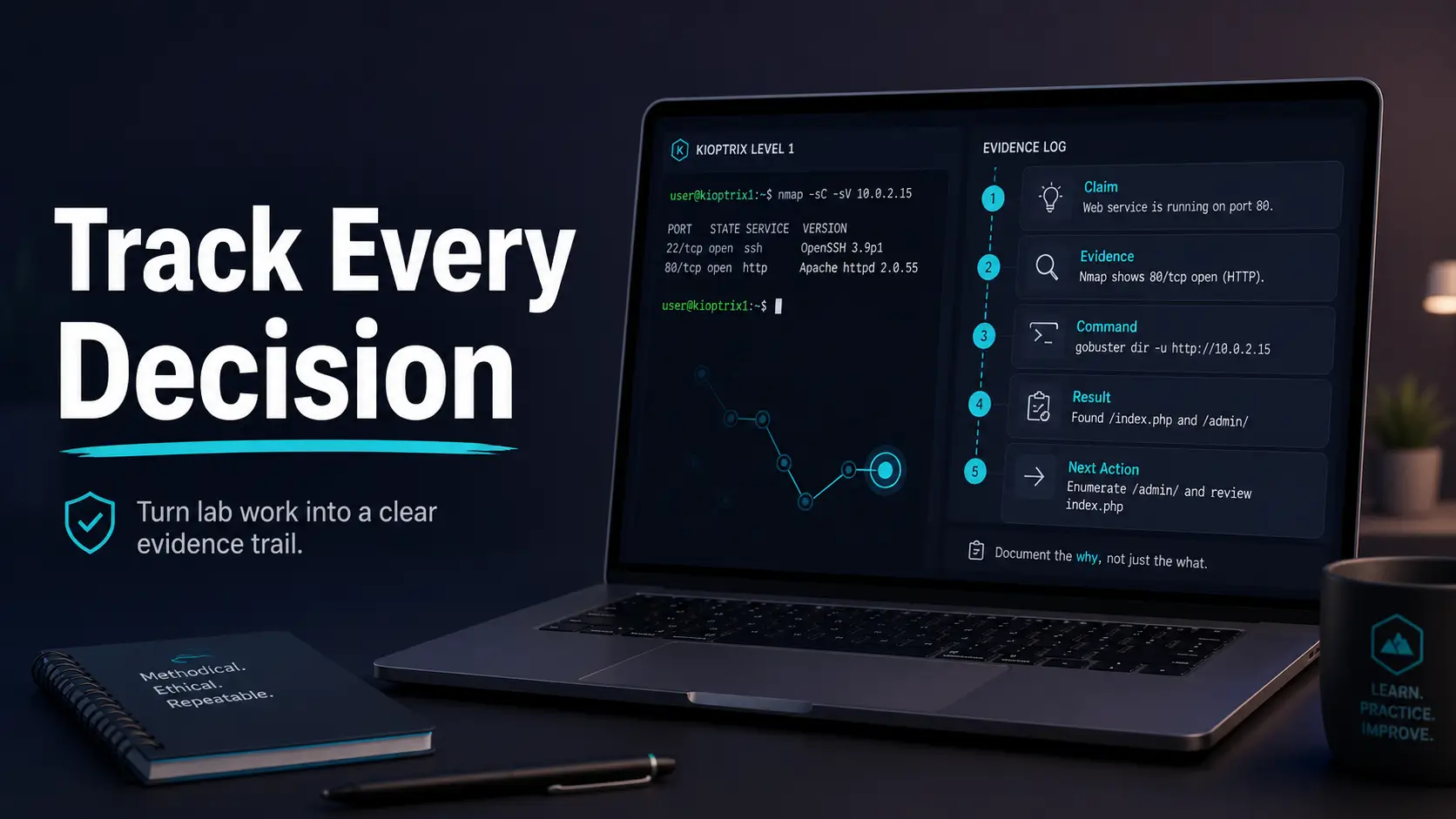
Classify a failed Kioptrix check as a bounded negative, incomplete, inconclusive or contradicted hypothesis. Use the closure record to retain prerequisites, output and alternatives before deciding to recheck, revise or pause.
Turn a Kioptrix session lesson into a reusable concept note. Use the extraction card to retain prerequisites, an observed example, exceptions and source links while keeping the original attempt intact.
Track a Kioptrix artifact from capture to conclusion with its ID, time, target state, action and location. Use the provenance register to link interpretations and preserve originals when creating reviewed copies.
Create a resumable Kioptrix session note with environment identity, the question, action, literal result and evidence path. Follow the worked record structure and close with a precise next question instead of mixing guesses with observations.
Reopen an old Kioptrix session by tracing its strongest claim to the original evidence. Use the reconstruction record to identify missing context, changed conditions and checks that belong in a new attempt.
Keep one Kioptrix observation with its time, target state, action, output path and interpretation. Use the evidence card to choose text or visual records appropriately and prepare a separate reviewed publication copy.
Troubleshoot a Kioptrix failure by separating local syntax, VM state, target identity, transport and application behavior. Use the baseline checks, symptom branches and one-variable record before changing several settings.
Organize a Kioptrix Level 1 investigation in four steps: scope, observe, check and conclude. Use the worksheet and reasoning example to link a specific question with retained evidence and a usable handoff.
Build a repeatable Kioptrix plan around one small, useful task and a saved restart note. Use the adjustment record to review missed sessions, setup demands and missing capabilities before changing the schedule.