Kioptrix Decision Tree: Yes, No and Unknown Branches

Choose the next Kioptrix check using confirmed target identity, actual responses and an explicit unknown branch. Includes a worked hostname example.
Practical cybersecurity guides, labs & compliance
Choose the next Kioptrix check using confirmed target identity, actual responses and an explicit unknown branch. Includes a worked hostname example.

Compare Nikto and Nmap NSE by the specific permitted question and checks selected. Record tool revisions, request scope and potential side effects, then review the evidence each run actually produces.
Compare Dirb and Gobuster with the target context, wordlist, recursion, filters and pacing recorded. Use response baselines and candidate validation to assess coverage rather than treating a larger result count as better evidence.
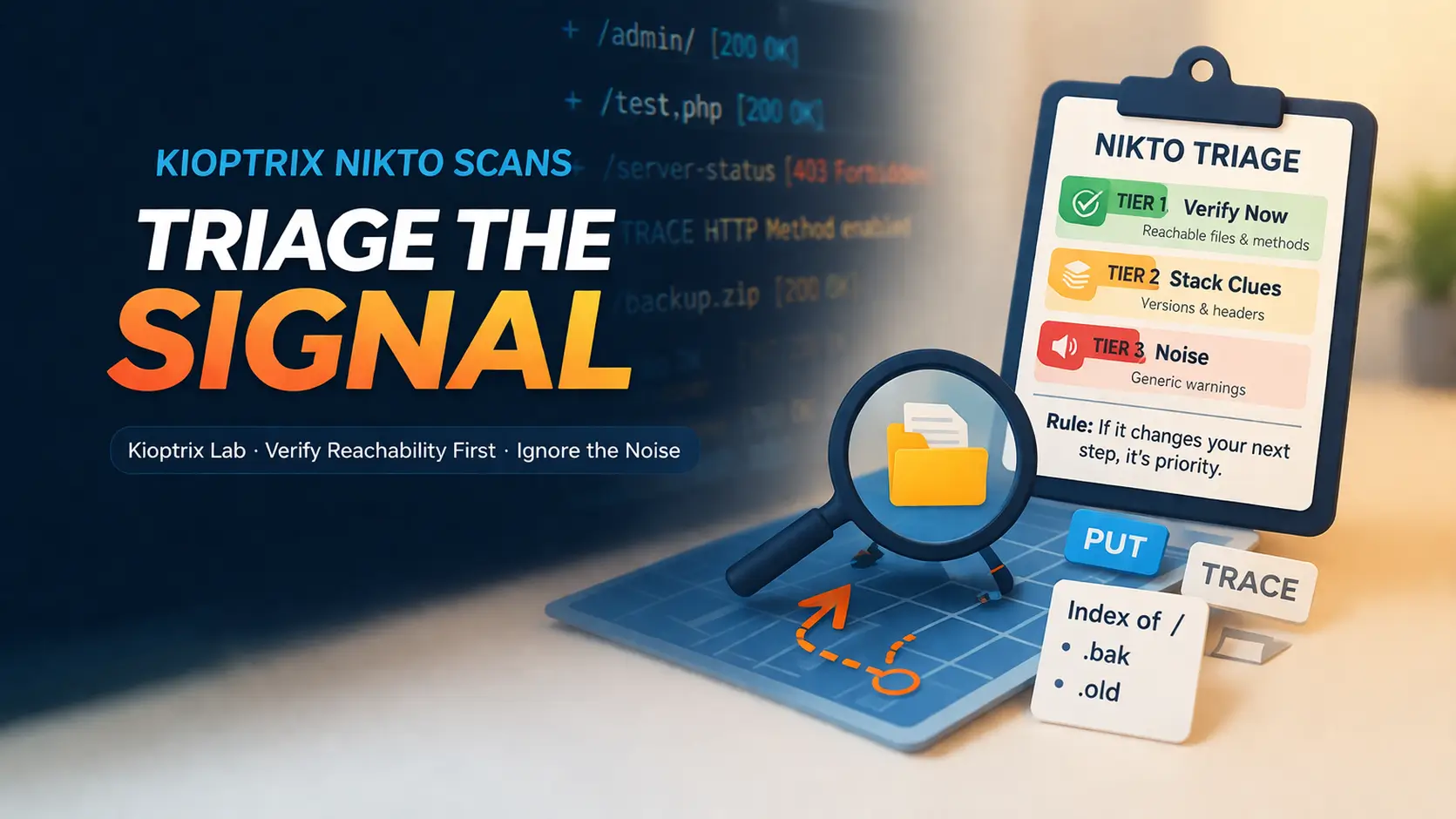
Review Nikto alerts as candidates by preserving request context and checking the matching response. Use the interpretation table and finding record to assess applicability, missing prerequisites and a proportionate next check.
Debug a copied Kioptrix command by checking target values, prerequisites, syntax and the expected result. Preserve the first error, identify the failing layer and make one justified change before retrying.
Turn a port scan into a reviewable service inventory. Record scan coverage, distinguish labels from service identity, observe application behavior and check vulnerability prerequisites before choosing the next step.

Review Metasploit practice through target applicability, payload assumptions, connection conditions and actual session evidence. Use the working note to retain prerequisites and failed attempts instead of switching modules without a reason.

Read a Kioptrix enumeration walkthrough as an example to compare with your own image and evidence. Record configuration differences, alternative explanations and unresolved prerequisites before adopting a published conclusion.

Interpret Apache scan clues with the exact request, hostname context, redirects and raw response. Use the origin review to distinguish frontend or proxy behavior from verified server-build information.

Recover from Kioptrix enumeration errors by preserving the first failure and identifying its layer. Use the recovery checklist and working note to change one assumption, choose a bounded next check and retain unresolved questions.